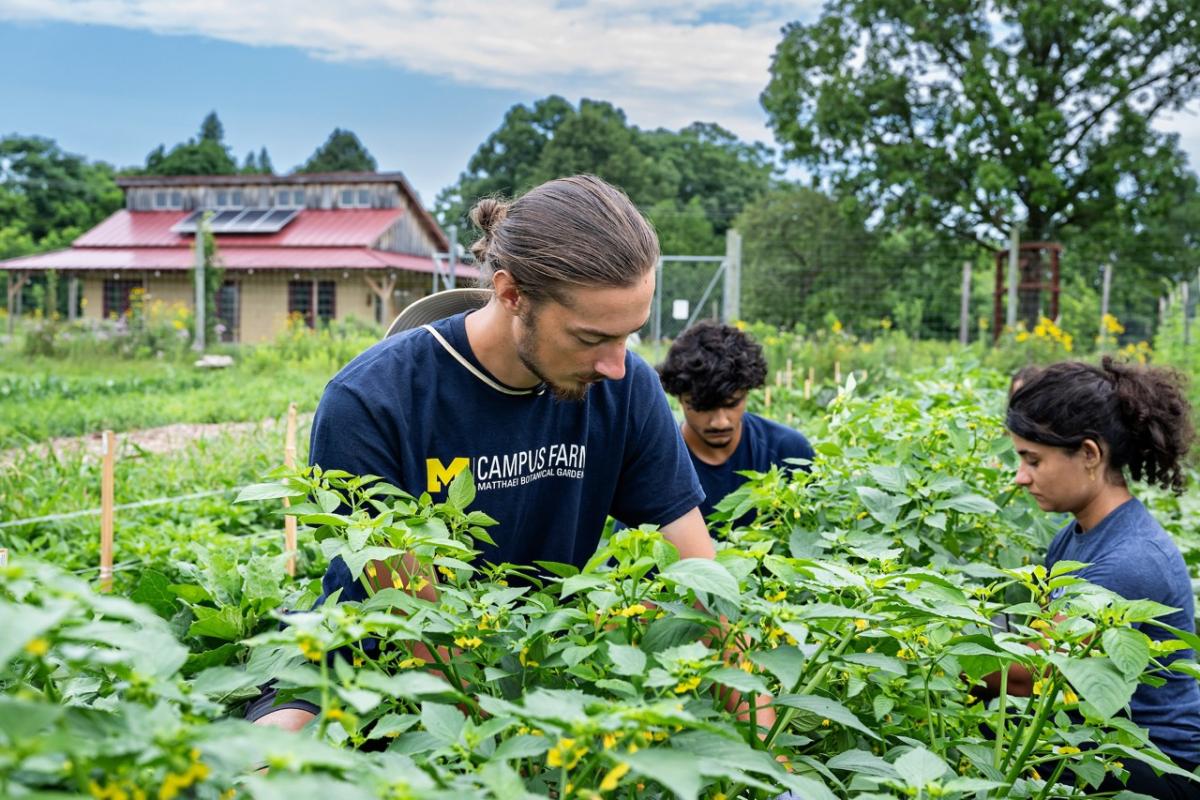
In early 2022, University of Michigan Campus Farm students set an ambitious goal: make the farm carbon-neutral by 2026.
Working with the Office of Campus Sustainability, the Center for Sustainable Systems, and Environ 391 Sustainability and the Campus, students calculated the farm's carbon footprint, identified its largest sources of emissions, and developed a plan to reduce them. Over the past five years, that work has led to major changes in how the farm operates.
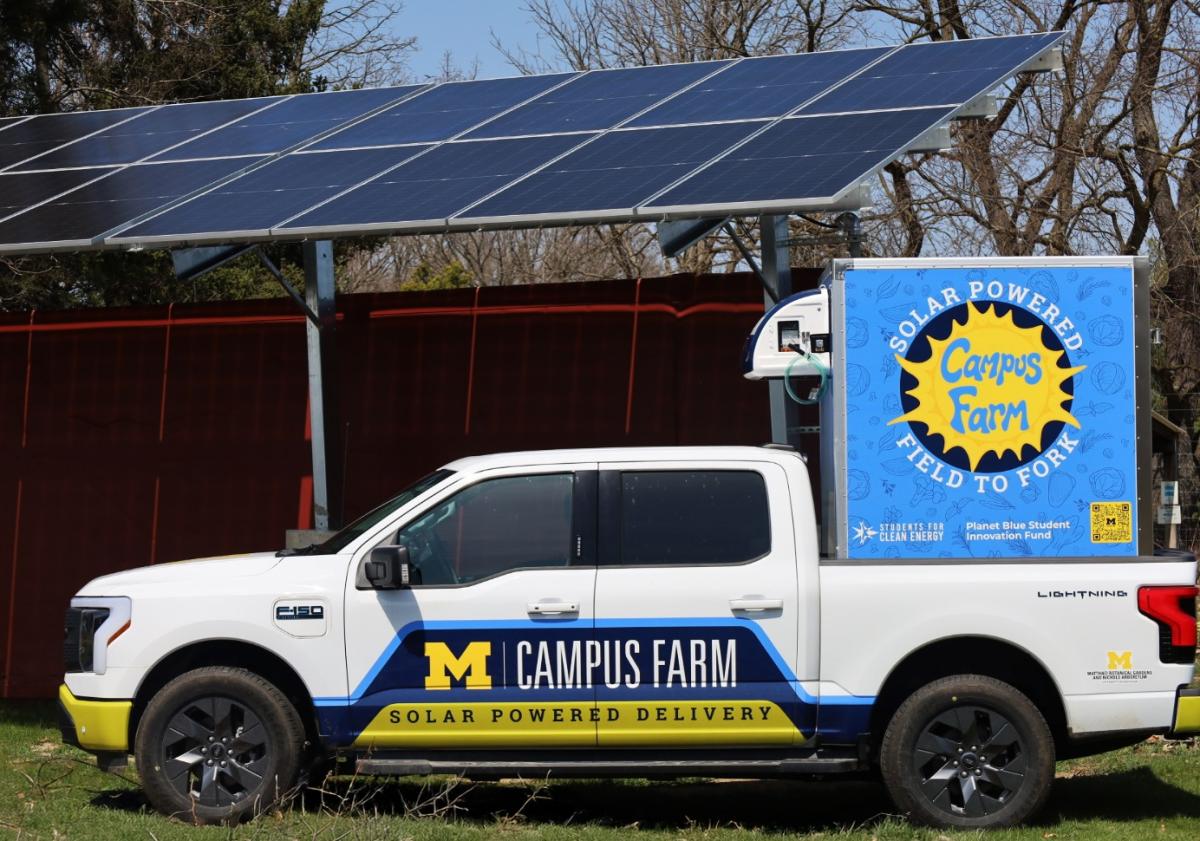
With donor support, an electric delivery vehicle was purchased to replace a gas-powered delivery vehicle. The farm's produce cooler was converted from grid electricity to a solar-powered system. Together, these projects addressed two of the farm's largest operational sources of emissions while creating new opportunities for student learning and applied research.
The projects completed over the past five years have enabled the Campus Farm to achieve carbon neutrality across the operations it directly manages. The largest remaining emissions are associated with shared greenhouse and building infrastructure outside the farm's operational control, with opportunities to address those emissions in the near future.
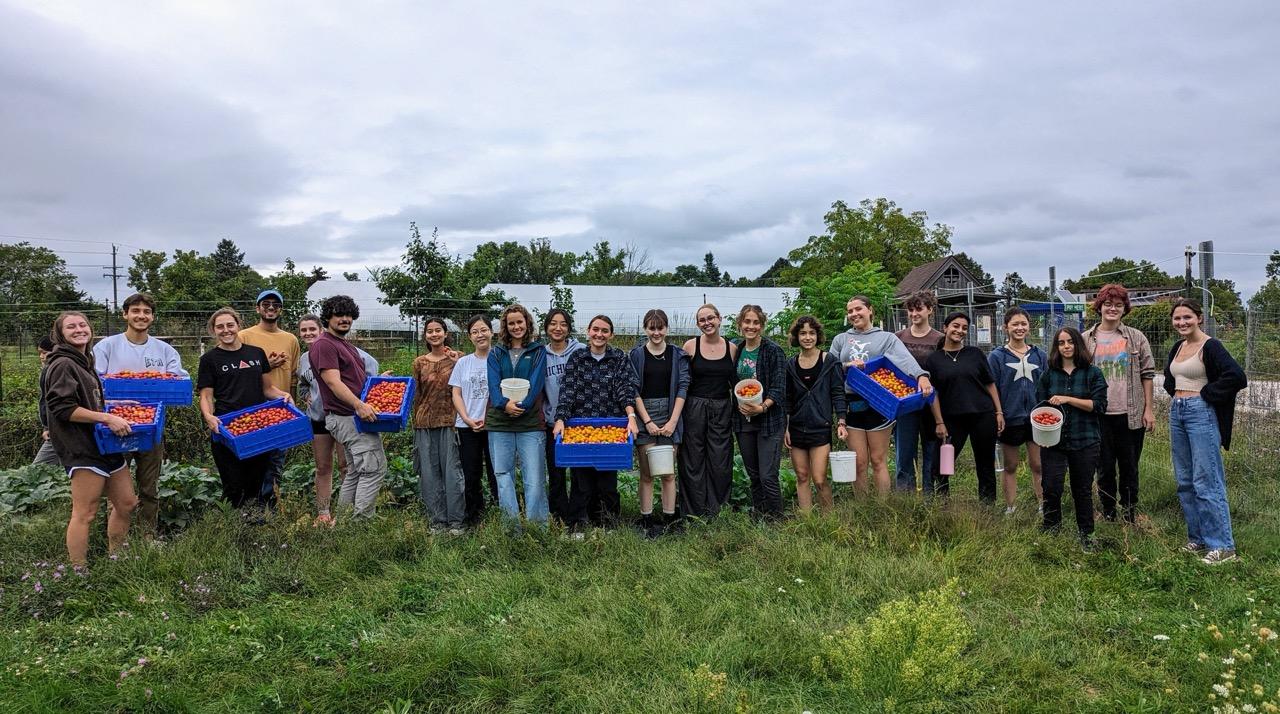
From the beginning, this was a student-led project. Campus Farm student managers researched the farm's emissions, worked with campus partners, including Planet Blue Innovation Fund and Students for Clean Energy, secured funding, and saw projects through from planning to implementation in collaboration with MBGNA staff.
“The Campus Farm serves as a living learning lab for sustainable food systems work on campus. It creates opportunities for authentic and high-impact teaching, learning, and leadership development,” said Jeremy Moghtader, Assistant Director for Campus as Lab. “The farm’s carbon neutrality initiative and its successes are a true testament to the power of Campus as Lab as a way to make our campus more sustainable while providing learning opportunities for the next generation of sustainability leaders and problem solvers, while demonstrating to MBGNA visitors and students across campus that a more sustainable and carbon-neutral world is possible.”
While there is still more work to do, this milestone marks the completion of the operational goals students set five years ago to demonstrate the importance and the possibility of creating a more climate-friendly campus and food system. It also reflects what makes the Campus Farm unique: students have the opportunity to shape the place where they learn, turning ideas into projects with lasting impacts on the farm and the university community.
It’s an accomplishment worth celebrating, and one that belongs to the students who shaped the original vision, those who carried it forward in the years since, and the donors and campus partners who supported them along the way. One that serves as a testament and physical example of the positive impact Campus as Lab has on the delivery of high-impact research, teaching, learning, and demonstration in climate-forward solutions.