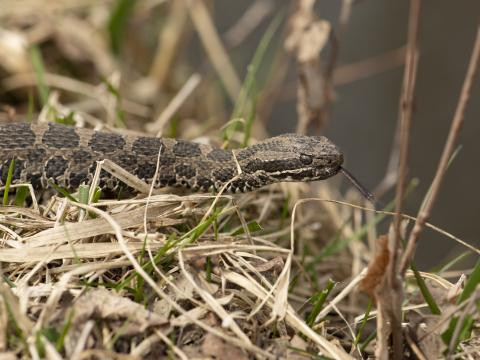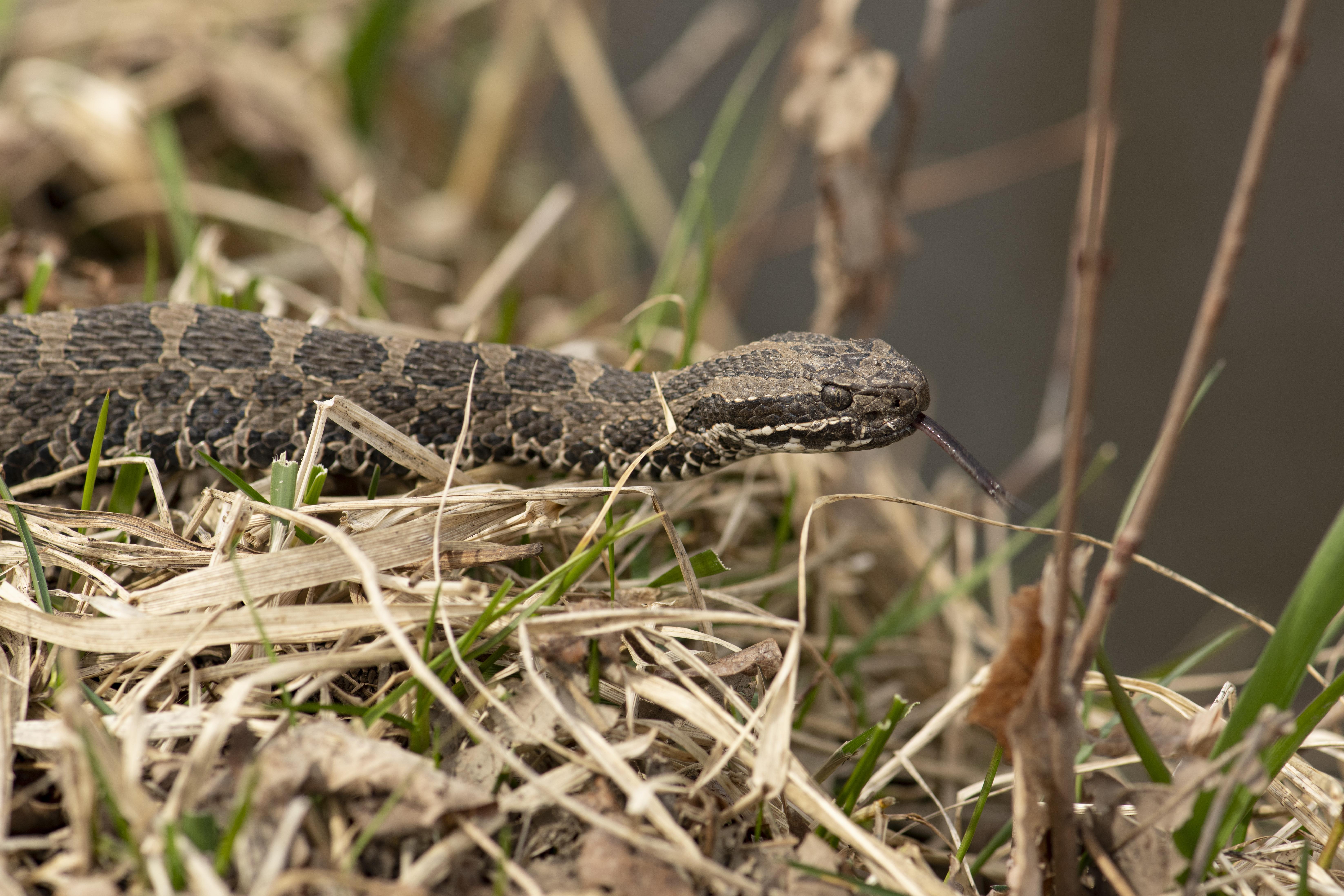
Matthaei Botanical Gardens is the proud home of a resident population of Michigan's federally protected Eastern Massasauga Rattlesnake (EMR). As the days shorten and birds embark on long-haul flights to their second homes, our resident population of massasauga rattlesnakes is also set to slither on a short-distance local migration of their own.
Massasaugas spend summers in dry open upland prairie and savanna sites where they hunt, mate, and regulate their body temperature by basking in the sun. In autumn months, they migrate short distances, usually less than a mile, to lowland sites like fens, marshes, wet meadows, and open floodplain forests where they overwinter underground, often brumating in crayfish burrows, partially submerged below the frost line. “They generally share the crayfish burrows, but sometimes they'll use chipmunk burrows or even just the hollows underneath an old root,” MBGNA Natural Areas Specialist Steven Parrish shared. “They will even share these burrows with other snakes, crayfish, and frogs.”
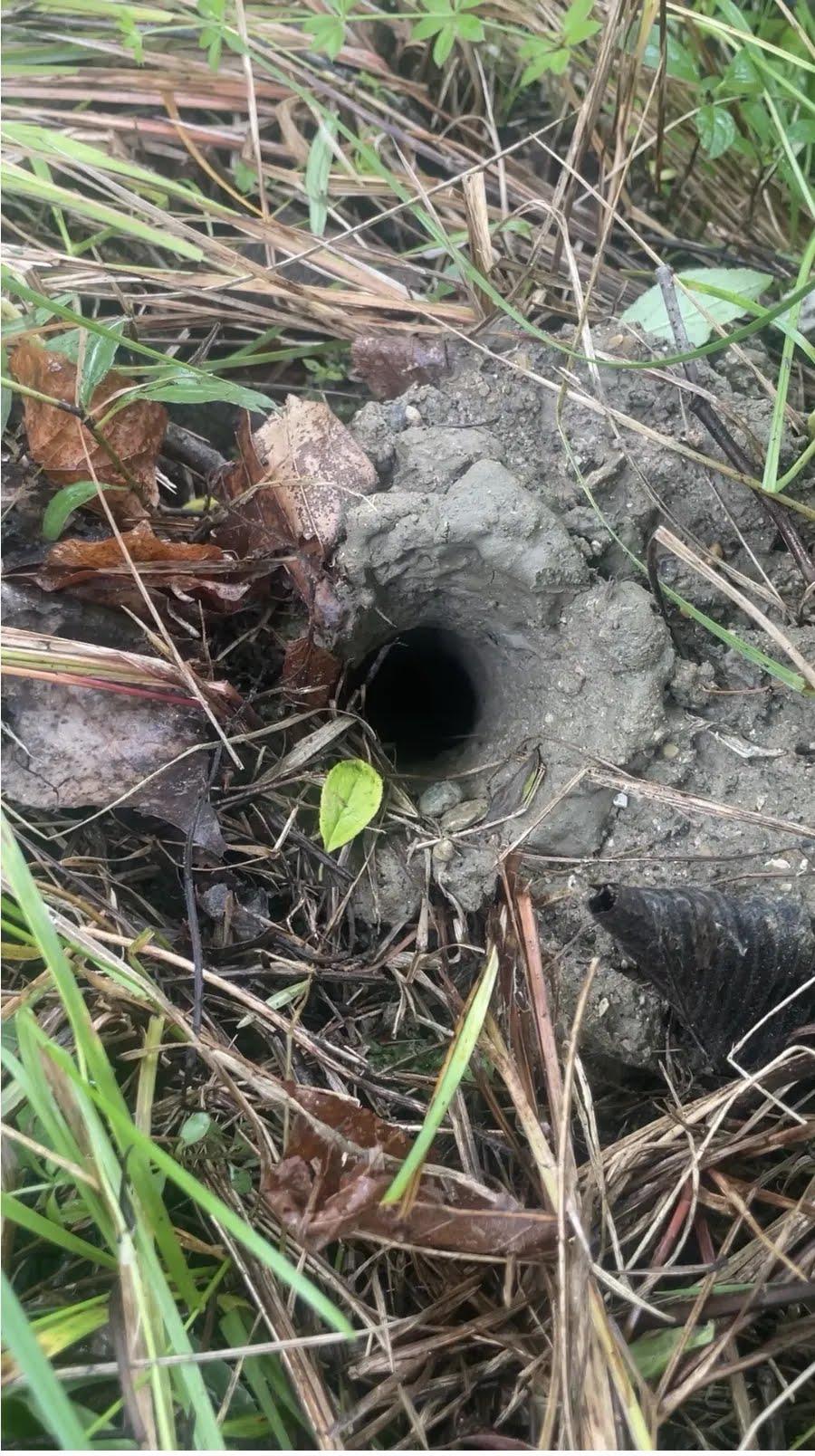
They’ll start heading to their burrows soon, as temperatures continue to drop. “They're still active now since it's still fairly warm,” Parrish shared. “Last week we saw a neonate in the Bonsai Garden, so we know they're still around. They're still relatively upland, but working their way down to the wetland habitats, along the creek in the fen, and around Willow Pond, where they will ultimately hibernate, or brumate, which is what the amphibious reptiles do to slow down their metabolism. But they haven't gotten in there yet because it's still relatively warm.”
Brumation is the reptile equivalent of hibernation; they can survive fully or partially submerged underwater for long periods. “Their metabolism slows way down when it gets cold, as much as 95% lower metabolism rate during the winter, which means they don't require as much oxygen, “ MBGNA Natural Areas Lead Jeff Plakke shared. During brumation, snakes can breathe through their skin for weeks and even months at a time.” When we have these water fluctuations, it's encouraging to me to know that they can breathe through their skin and still get dissolved oxygen from the water. They’ll even sometimes emerge from their hibernacula during the day if it's above 50 degrees. So we've had visitors see them in December before, but they won't go far from their hibernacula. That when it gets cold again, they'll go back down,” Parrish shared. They don’t necessarily return to the same burrow each year, but often return to the same area.
Managing for Massasauga
EMRs have been living on site since before the MBG was founded in 1958, and the resident population is one of the few strongholds left in SE Michigan. MBGNA management practices work to improve the health of the ecosystems present at MBG, with consideration for the well-being of the EMR. Managing EMR involves clearing non-native species through brush cutting and prescribed fire, and planting native species. “We want to consider what is the appropriate habitat for the snake during the summer and the winter, and what prey species they feed on, so that we have good habitat for them, and what kind of cover they need during the summer from predators, and also during the winter, so that they can hibernate,” Plakke explained. “We're largely trying to remove and control non-native woody plants like common buckthorn, glossy buckthorn, honeysuckle, privet, and bittersweet. This helps restore the open structure of the habitat. It also helps to encourage native species and a diversity of plants, which then encourages a greater abundance and diversity of small mammals, insects, birds, and all sorts of things that benefit the Massasauga either directly or indirectly.” In winter, when the ground is frozen, the natural area team uses a forestry mower to clear non-native vegetation. “Two years ago we did 15 acres. Last year I did 20 acres,” Parrish shared. “So we're knocking out huge areas that are too shady for the snake to effectively find prey and cover. Once that shade is gone, herbaceous vegetation pops up, and then they can have cover. The voles move in; that's their primary prey. So these are steps that we've been taking, and you know, I'm seeing snakes show up in areas we haven't seen them before. After we've done some of these clearings, we're creating corridors to bring these snakes from the wetland habitat up into the uplands for the summer.”
This restoration works to make room for native species to spring up on their own, in addition to planting native seeds and plugs in the cleared spaces. “In the uplands, we have been working for years to establish native plants. Native plants attract large numbers of insects, which then attract other species that eat the insects. So you end up with this grassland habitat that's really good for voles, moles, and mice.” Mike Kost, MBGNA Associate Curator, explained.
Beaver and Massasauga Coexistence
Beavers and Massasaugas have coexisted in the same habitat in Michigan for millennia. Beavers were nearly extirpated from Michigan over 100 years ago. The recent return of beavers in 2023 to MBG has been a welcome development, but has raised concerns that beaver flooding could negatively impact EMR habitat. As beaver activity continues to impact the natural areas at MBG, our land managers are paying close attention to these changes, but are currently cautiously optimistic about the coexistence of EMR and beavers, and think their presence could actually positively impact the EMR. “Beaver and Massasauga have coexisted here in southern Michigan since the glaciers retreated,” Kost explains. “Beavers create the open wetland habitats that Massasauga requires. They create more habitat for crayfish, whose burrows are prime hibernacula for Massasauga. More wetland habitat helps increase populations of small mammals, which are key prey for Massasauga and other species. The downed trees provide great structure that Massasauga can use for basking or for hiding under. Beavers create a mosaic of habitat that shifts over time from open, recently flooded areas to abandoned dam sites with exposed mineral soil and wet meadow vegetation, so they just create a really complex environment.” Short-term beaver-caused flooding is currently impacting about 1 acre of the approximately 120 acres of wetland EMR habitat here on site. “Generally, the presence of a beaver is going to be good news for habitat for the Massasauga,” Parrish concurred. “There's going to be more surface area of wetland habitat, and Fleming Creek is a long creek, so there are going to be areas that are more flooded due to the presence of these dams, but much of the creek is going to largely flow as it was. It's just for that area where the dam is that's going to get a little wider, and that's going to actually produce more habitat for these snakes. So I see that as a benefit when we have these two creatures who, again, have been coexisting for a long time. So I see it as a good thing.”