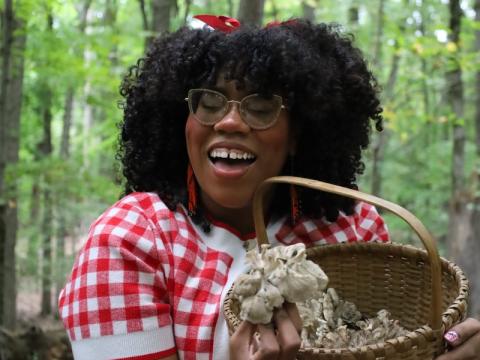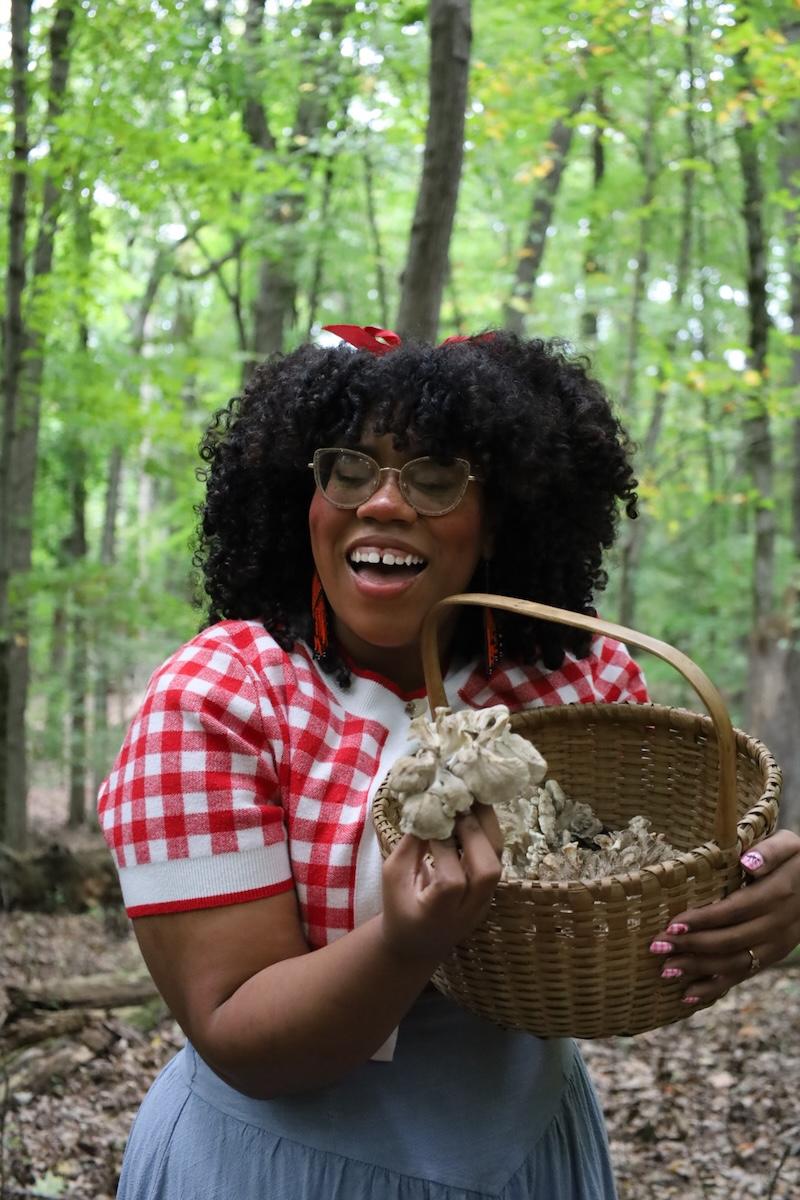
On September 30th, U-M welcomed Alexis Nikole Nelson, widely known by her social media handle “Black Forager,” an award-winning forager, outdoor educator, James Beard Award winner, and New York Times bestselling author, who has been delighting the internet with her joyful videos about foraging and cooking wild food (often with a song or dance to go along) since 2020. A fan-favorite song and dance format, “Is it poison or is it a snack?” invites viewers into the process of identifying wild foods that are safe to eat, and the look-alikes that can mean trouble. The event was co-hosted by U-M’s School for Environment and Sustainability (SEAS) and Matthaei Botanical Gardens & Nichols Arboretum (MBGNA) as part of U-M’s second annual Climate Week.
Fresh off the road from her home state of Ohio, Nelson was game to delve into the forest at Matthaei Botanical Gardens to hunt for maitake, a delectable mushroom that crops up at the base of oak trees in late September in temperate woodlands. “In Japanese, maitake means 'dancing mushroom,” Nelson shared with a shimmy. ”Or Griffula frondosa if you want to talk nerdy to people.”
The hunt didn't stop there; the true forager that she is, along the way she also identified edible nettle seeds, mugwort, shrimp mushrooms, and the seed heads of wild onions, or ramps. She stopped to exclaim at (and poke) exploding Lycoperdon mushrooms and a highlighter-orange slime mold. “You’re welcome for helping you spread your spores,” she said with a laugh.
An hour later, in the kitchen of SEAS PhD candidate, chef, and agroecologist Will Brinkerhoff, the freshly harvested maitake were transformed into vegan “steaks,” whistling with aromatics in a cast iron. In Nelson’s new cookbook titled ‘Happy Snacking Don’t Die,' which debuted last week as an instant NYT bestseller, she has an entire chapter dedicated to this fall favorite mushroom. “It’s called Happy Snacking Don't Die- because I want you to be happy, and snack...and don’t die!” she said with a giggle. Nelson and Brinkerhoff captured their foraging and cooking adventures in a video that will appear on the SEAS and Matthaei social media channels in the weeks ahead.
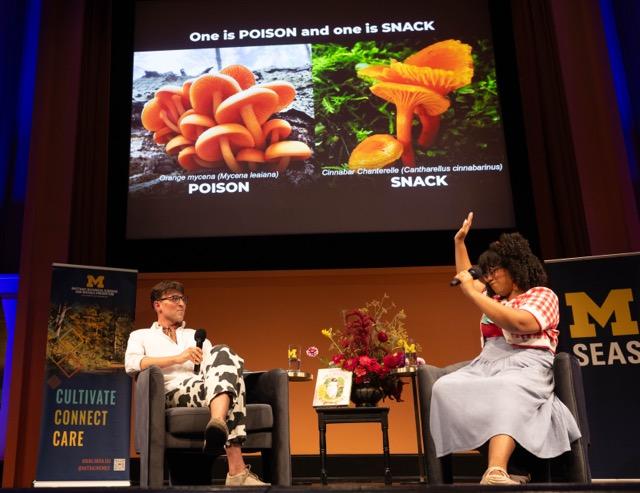
That evening, she was joined by a full audience in the Rackham Auditorium for a conversation about foraging, education, social media, and everything in between. Moderated by Brinkerhoff, she shared a wide range of stories and kept the audience laughing throughout.
Nelson first started foraging as a kid with her mom, treasuring the quiet time they shared looking for nutritious weeds together in their yard. “We didn’t call it foraging growing up,” she shared. And at first, she wasn’t a fan of everything they found. “I was not a dandelion green evangelist until very recently.” She would bring what they found to her dad, an excellent cook, who would incorporate the plants into dinner. “It just seems like I was meant to know a lot about plants.”
Nature provided more than a tasty snack. It was also her refuge. “When I was stressed, I sought refuge in nature. At dinner parties, I would sneak out of the door in my fancy dress and climb the catalpa tree.” Foraging still provides her with this respite as an adult, and she notes that it’s one way to bring people together to advocate for protecting the planet. “There is something so meditative about the headspace you have to be in to forage. When you slow down, you will be forced to reckon with the fact that the world is amazing. And it's worth protecting. And it's worth defending. And it’s worth being excited about.”
Nelson believes eating wild foods invites a deeper relationship with plants.“I think forming relationships, not just with the people in your community but also with the plants in your community, and with the other animals in your community, is so key to being the best community member that you can be because you start learning how to best look out for everybody else around you.”
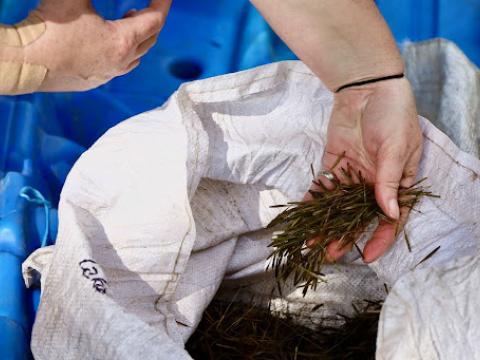
Her educational videos also work to tell the stories of those relationships with plants that have been largely lost over time. During the talk, she shared about the food traditions of two edible plants in particular, American persimmon, and pokeweed. “I will say the Black community was very important in keeping those two foods in the food lexicon. There are persimmon species native to West Africa. So when people were brought and enslaved in the American South, it really felt like a little bit like a tiny taste of a homecoming because it was a recognizable fruit for a lot of people of African descent, and they knew how to work with it already and use the wild yeast on pine needles and brew it into persimmon beer.”
When asked if she worries about her safety while foraging as a Black woman, she shared a story about foraging for serviceberries near a public downtown market, and having someone call the police on her. “I gave them serviceberries because I was scared,” she shared. “Killing them with kindness is my defense mechanism every time I'm given the opportunity. And I also know that comes from a place of fear. It comes from a place of knowing that I'm a six-foot-tall Black body moving through the world and not everybody will afford me the chances that I am due.”
A large reason she started bringing her signature whimsical style into the woods was that she found it invited strangers to be more curious than cautious. “Because they will be like, well, she is a fairy princess, so what is she going to do? Even if she is crazy, what is she going to do? You can only go so fast in those crocs and that skirt.”
For foragers who might feel uncomfortable going out for the first time, she recommends bringing a friend. “If you have someone who is dying to show off how much of an ally they are, make them do it! Put your money where your mouth is! Safely escort your Black friends into the woods, allies.”
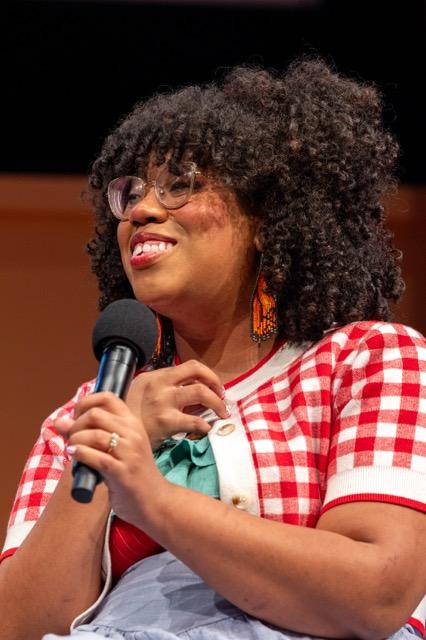
Nelson began filming on social media in 2020, with no expectations. Combining her unique environmental science and theater education background with enthusiasm and humor, her videos quickly began to gain traction. “I tripped and fell and accidentally started doing well. And I didn't know that the kids like plants. When I was a kid, the kids did not like plants, I promise you! They told me over and over again. All the time. So that was news to me.” Since then, she has amassed a dedicated following of more than 6 million across her platforms and launched a career telling stories about wild food.
During the talk, Nelson managed to fit in a speed round of the fan favorite “Is it poison or is it a snack,” replete with a live rendition of the song and dance. While Orange Mycena and Cinnebar Chanterelle might look awfully similar, the audience walked away knowing not to eat the former.
Nelson’s visit brought together shared interests across Matthaei Botanical Gardens and Nichols Arboretum and the School for Environment and Sustainability in environmental education, storytelling, and finding new ways to connect people with the natural world. For SEAS, the event builds on a broader strategy to engage content creators and help students learn about effective, emerging environmental communication strategies that are engaging the next generation of environmental advocates. SEAS and MBGNA plan to build on the success of Nelson’s event to partner to bring in more creators in the future. “Social media content creators are reaching new audiences and bringing people into the environmental movement like never before,” said Carole Love, Executive Director of Marketing, Communications and Outreach and a lecturer at SEAS. “Nelson has millions of followers across her platforms and delivers messages of joy along with the realities of what needs to happen to protect our planet. You don’t get that kind of reach and engagement with traditional news outlets. Our goal is to teach students how to become effective environmental communicators, too, while inspiring the next generation.”