A landscape shaped by glaciers
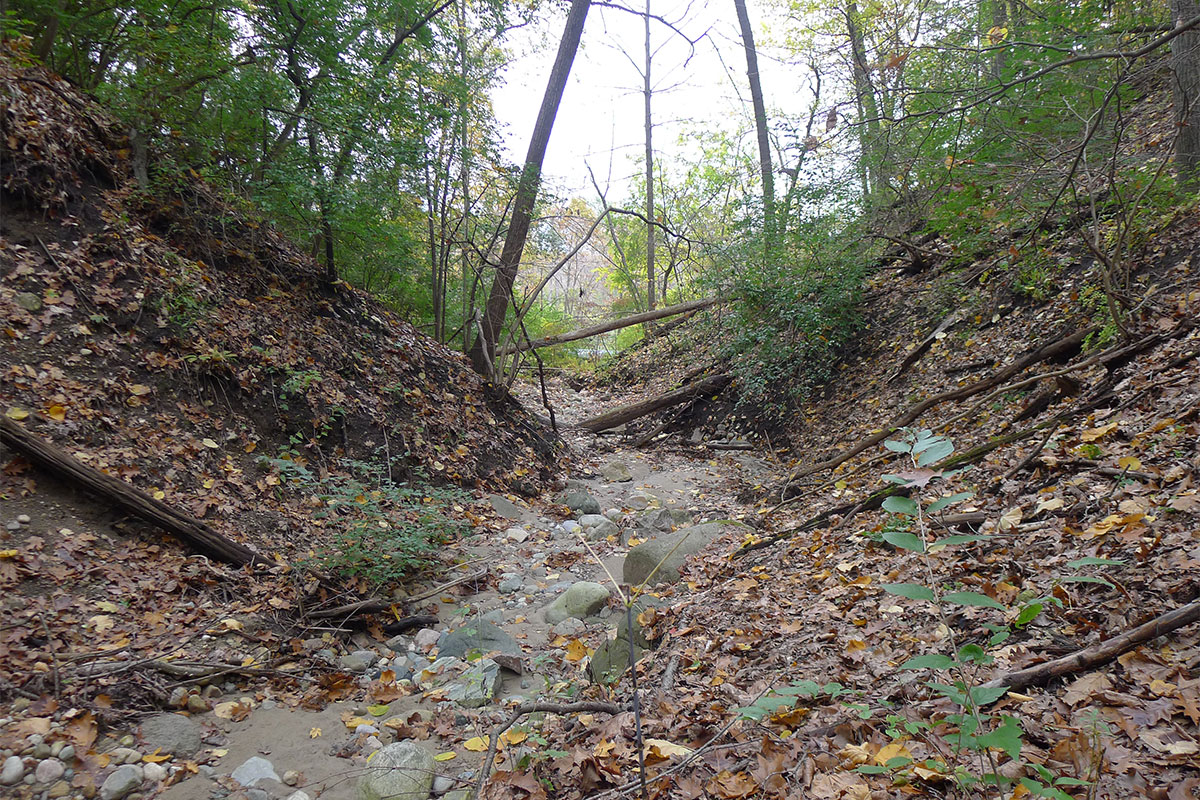
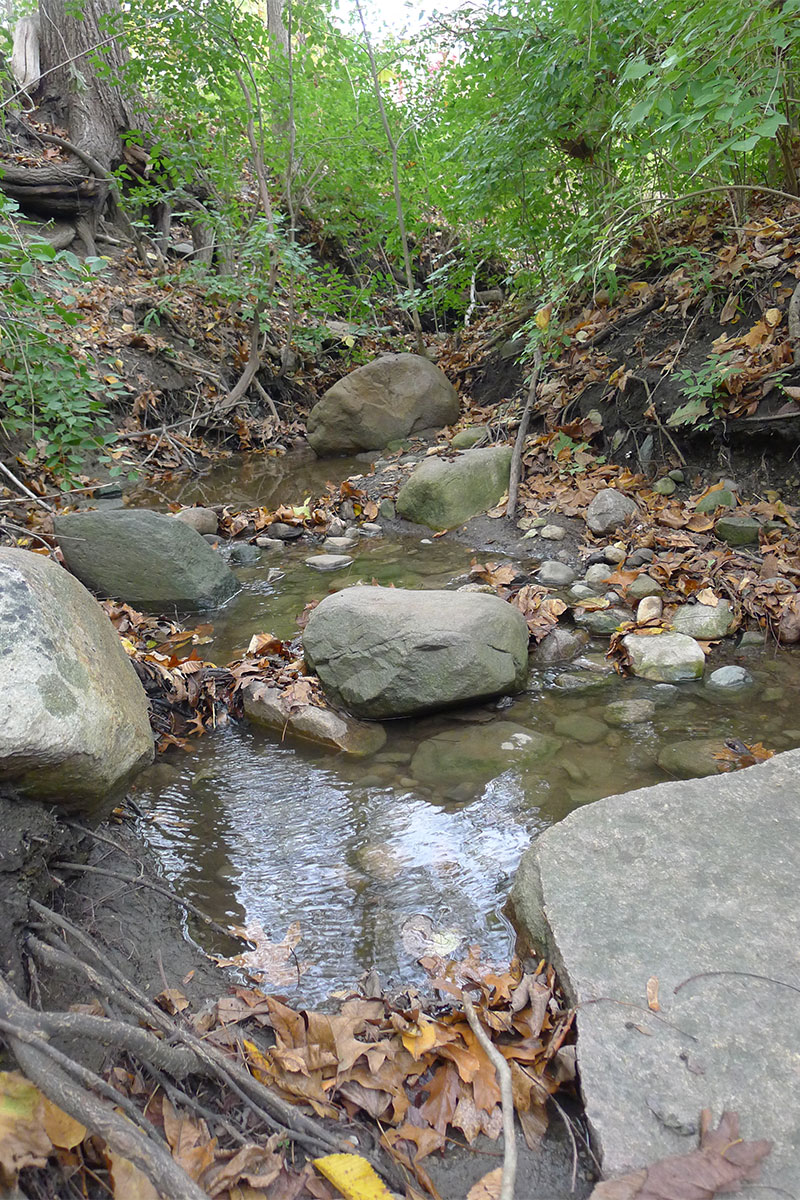
The steep trail through Schoolgirls’ Glen reveals a remarkable landscape in a short distance. The narrow valley cuts through a moraine left by the most recent glacier, with remnants of an earlier glacial deposit beneath. Water continued to shape the ravine long after the glaciers retreated.
How Schoolgirls’ Glen got its name
The glen has been a favorite place to explore for generations. In the 1850s, Mary Clark, principal of a private school for girls in Ann Arbor, reportedly brought her students here in the spring to collect and press wildflowers. Their visits are believed to be the origin of the name Schoolgirls’ Glen.
By the late 1800s, the glen was well known for its scenery and remarkable diversity of plants and birds. Its steep slopes helped protect it from agriculture, leaving it a largely undisturbed remnant of the region’s woodlands.
A changing glen
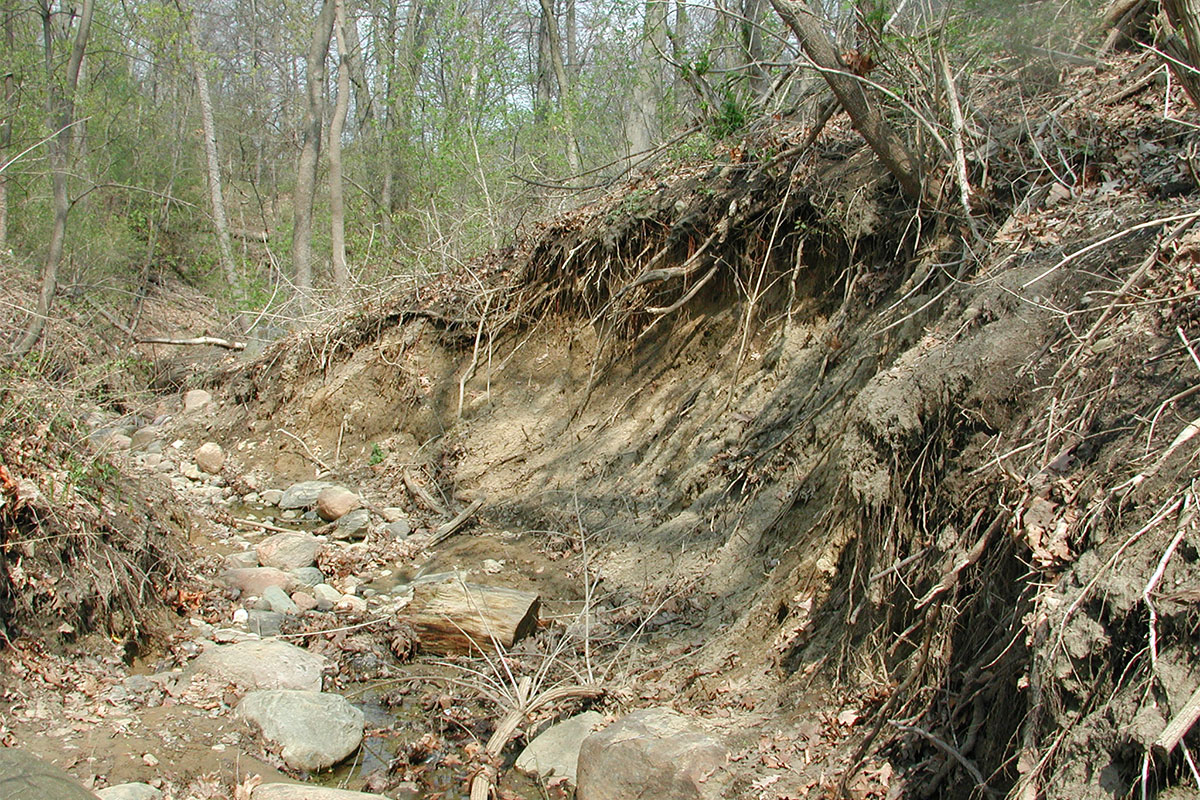
Schoolgirls’ Glen has also been dramatically shaped by changes beyond its boundaries. As the surrounding campus and city developed in the mid-20th century, more pavement and buildings meant that stormwater that once soaked into the landscape was instead funneled toward the glen. During heavy rains, fast-moving runoff eroded its slopes and streambed and carried soil toward the Huron River.
Efforts including native plant restoration, bioswales, stormwater detention, permeable pavement, and other erosion-control measures have helped slow that loss. Today, protecting the glen from continued erosion remains an important part of caring for this distinctive natural area.
Photos