March winds signal the waning days of winter and the early hints of spring. During this month, time spent outdoors connects us deeply to seasonal changes. Using all of our senses, we notice spring approaching. We feel the winds that rattle tree branches and dry the wet, still slightly frozen soil, and on certain days we can catch a warm breeze floating through the air. And, if we listen closely, we can hear sounds of flowing water, snow melting, ice giving way to liquid water and small waterfalls and rivulets everywhere. Lichens are just a little greener on the tree trunks and rocks.
We are part of nature, and we long to be outside, to feel the sun that’s so much higher in the sky now, to listen for Redwing blackbirds, and pull our binocs out to search the skies and branches for migrating birds. Every part of us is thrilled to see Nature, like us, waking up from our human winter torpor, moving into spring, eager to emerge from a long, cold and dark winter.
The ice on Willow Pond has cracked, opened by a stream from Parker Brook, and waterfowl are finding places to eat and rest in the open water before heading further north. Sandhill cranes are starting to dance, with mating behaviors and nest preparation. Beaver are venturing out of the lodges to find fresh branches, rich with sap to feast on. Walking quietly along Fleming Creek, you might hear a loud SLAP! And see a creature with a rich brown coat and a flat wide tail diving back into the water, just escaping from being seen.
The Gnawsons and their kin have been busy along Sam Graham Trees trail; creating new side streams, flooding wetland areas, helping to build up rich floodplain soils through their nearly constant dam production and repair. This keystone species, known as an ecosystem engineer, certainly deserves its name, changing the shape of the landscape, creating new habitat, and perhaps flooding out those species that did not evolve along floodplain ecosystems.
Watching beaver work, or noticing where they’ve been, with newly cleared areas and sharp pencil-point trunks left behind, we can’t help but marvel at their busy-ness and feel slow and lazy in comparison.
One of the earliest of tree flowers, Hazelnut, emerge in March, their tiny, narrow, bright red petals and stamens reaching out into the spring winds to move pollen from flower to flower.
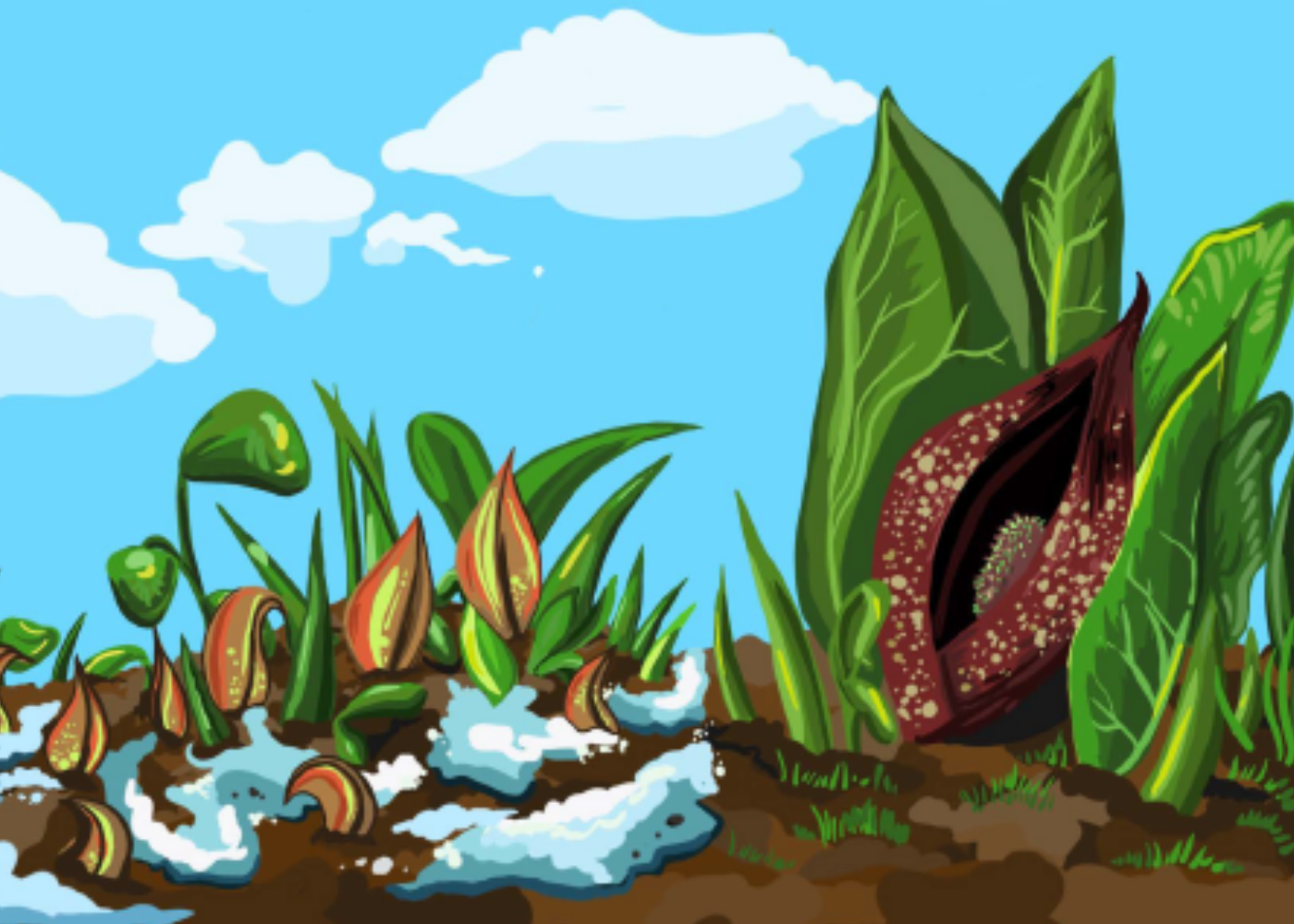
Skunk cabbage has been up for a few weeks now, with its red spathe covering the yellow-ish spadix inside, waiting patiently for flies and beetles who are out in the spring to pollinate them. This plant produces its own heat, raising temperatures inside the spathe to 50-70 degrees F! Their gigantic green leaves aren't up yet, but when they do emerge, they are powerfully smelly when crushed.
March is a time of change for humans too, we shake off the winter, feeling our energy return and stretch our limbs like branches in the wind, noticing something inside us move, like Maple trees that move sugar from root to branch and bud and give us so much sap for syrup. We splash or squish muddy footprints along the trails, breathe deeply the rich wet smells of spring and look eagerly for the smallest sign that yes, spring is here.
Visit Matthaei in March to connect with Nature and welcome spring. Join a Wonder Walk in March, or pick up an Adventure bag with spring themed scavenger hunts, coloring sheets, binoculars and spring plant and animal cards. What will you discover on the trails in March?