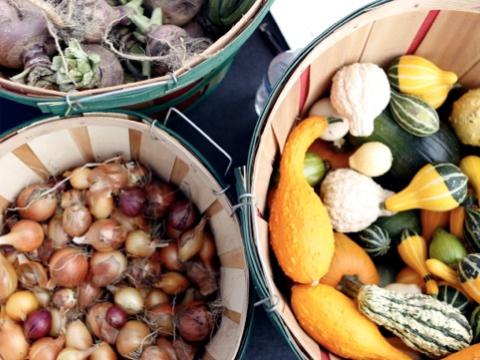
Whether you’re a student getting ready for classes to start, a teacher preparing for the return of your students, a farmer in full harvest-mode, or a squirrel getting after acorns and hickory nuts in preparation for Winter, this time of year is BUSY!
The Fall field trip season is kicking off here at the Matthaei Botanical Gardens; that means the joy and energy of our wonderful field trip students will soon fill the trails and conservatory once again. Two of the many topics that we engage with in our programs are stewardship and sustainability.
Amongst the stewardship initiatives we discuss and the questions we ask our students to reflect on, the topic of ‘climate change’ comes up quite often. The questions are sometimes about the science or ecological impacts, but more often than not, they’re more introspective.
“Are humans bad for the planet?” “What can I do?” “I hope this stays here forever.”
In these kinds of questions, I hear eco-anxiety, which the American Psychological Association refers to as ‘a chronic fear of environmental doom’. This is an intense reality for many young people, and these questions and comments are indications that they care deeply about the planet and their communities. They care for each other and are drawn to action and solution-based thinking.
K-12 Education at the Mathaei Botanical Gardens & Nichols Arboretum has been busy developing and improving programming that focuses on stewardship, sustainability, climate, co-existence, and well-being. Place-based environmental education and immersive learning experiences connect us to our home-place and puts us in perspective. Humans are a part of the Earth and not separate from it. Human beings have been around for a long time, and some have lived in good relationship with the Earth for a very long time. They have shown us that it can be done, and it is a choice to acknowledge that balance, listen to the knowledges shared from the past and the present, and act in accordance with nature. Our action must take into account the fullness of all that nature is, and take into account our role as recipients of nature’s many gifts. Eco-anxiety is a symptom of the climate crisis showing us that the time to act is now, so let’s act together, with nature and with each other!
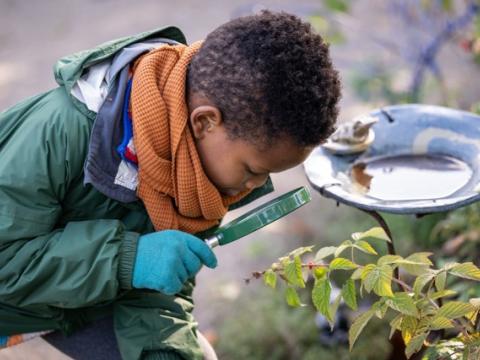
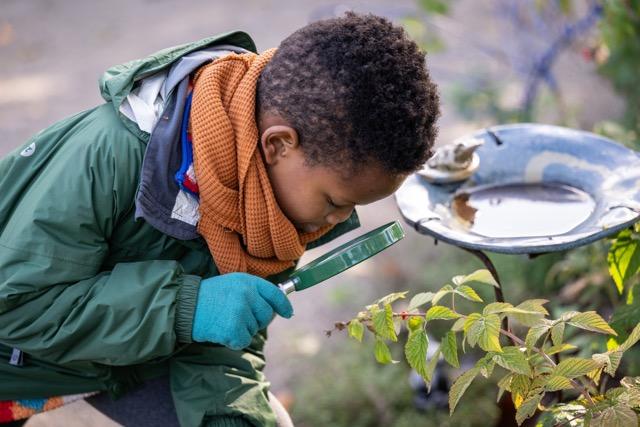
One of the philosophies we share on the K-12 Education team is “In order to care for someone, you must know them first.” This can be an introduction: “Who is this plant? What’s their name?”; “What species of ____ is this?”. This can also mean learning about where they live and what they need to survive. This can mean learning what threats they’re facing in today’s world. This can mean spending time with them in reverence, observation, and curiosity.
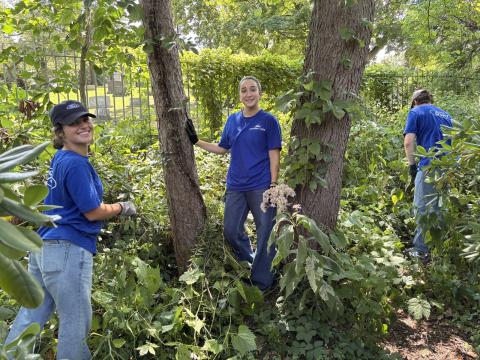
K-12 Environmental Education offers programs that address these questions/topics, and more, as we strive to bring our young ones closer to nature and in deeper understanding of their home-place. Action can look like connecting with local watershed councils, environmental advocacy groups, getting out with organizations to remove invasive species, supporting afforestation efforts, stream restoration, supporting seed collection, prescribed burns managed and run by a trained team, and of course, educating your family, neighbors, and community about topics you care about. No matter how small an action might seem, even just spending more time in nature matters.
Although this time is busy and there seems to be an endless list of to-do’s, just remember that nature is always there, awaiting a visit and connection. Come visit the gardens this month, bring your classroom for an immersive learning experience through our K-12 Field Trips, bring your family to walk the trails, or come spend some time in meditation at the labyrinth. Have hope, get involved, and spread kindness today.