September is a busy month in the vegetable garden. Vegetables and herbs are producing, often faster than you can use them. It's a good time to enjoy what's coming out of the garden and figure out what to do with the extras.
At the U-M Campus Farm, growing food throughout the season provides plenty of opportunities to learn what works. Camille Ingram, Campus Farm Student Communications Manager, shared a few harvesting tips.
If your slicer tomatoes tend to crack or split on the vine, Camille recommends picking them as soon as they start to show some color. They can finish ripening indoors at room temperature, where they're less likely to split or get damaged.
Once they're inside, try placing ripening slicer tomatoes stem-side down to help prevent bruising.
For zucchini, summer squash, and standard-size cucumbers, Camille errs on the side of harvesting early. Picking them around 6–8 inches long generally means more tender produce with smaller seeds. Regular harvesting also encourages plants to continue producing. And if you discover a zucchini that managed to hide beneath the leaves until it became enormous? Don't give up on it. Camille recommends putting those oversized squash to work in zucchini bread.
Too Much of a Good Thing
If September has left you with more produce than you can eat, you don't necessarily have to eat it all now. Herbs can be dried or frozen, tomatoes can be frozen for future sauces and soups, and many crops can be preserved or stored for later use.
And if you simply have more than you can use, share it. Pass extra tomatoes, cucumbers, or other produce along to friends, neighbors, or coworkers. You can also check with food pantries and community organizations to see if they accept homegrown produce. Locally, Food Gathers in Ann Arbor will accept donations of homegrown produce.
What to Do With All Those Peppers
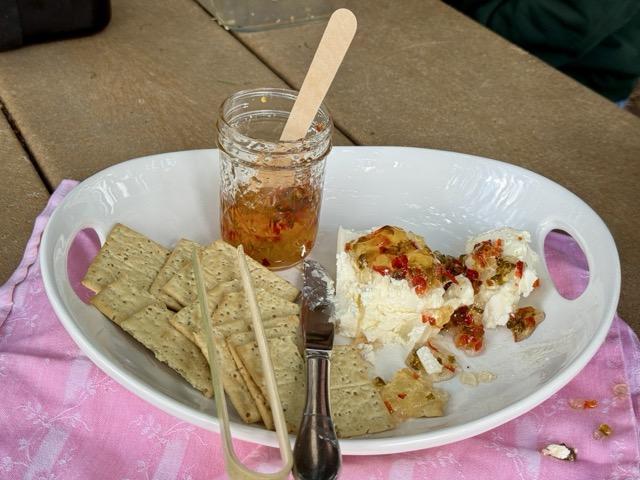
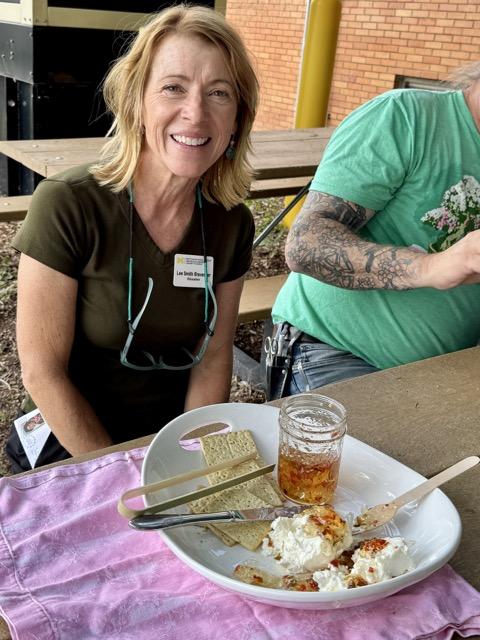
Sometimes the best part of a harvest isn't just what you grow, but the recipes and traditions that come with it. MBGNA staff member Lee Smith Bravender shared one of her favorite ways to use a big pepper harvest: hot pepper jelly. The recipe dates back to her years living in Durham, North Carolina, and working at Foster's Market.
Lee's Hot Pepper Jelly
"We lived for many years in Durham, NC, and for many of those years in the 1990s, I worked as a floor manager and as a gardener for Sara Foster at Foster’s Market. Sara made the best pepper jelly, fashioned after her mother Say’s recipe. After studying, aka eating, her jelly and many others', this is my take on hot pepper jelly. While there are many ways to eat this jelly, the most popular, by far, is with cream cheese (chèvre or brie, if you’re fancy) and crackers as a hospitable, accessible appetizer or snack."
Ingredients
2 cups finely diced red bell pepper
2 cups finely diced green peppers, such as bell and poblano
1–1½ cups finely diced chiles, such as jalapeño, habanero or serrano. Choose whatever chiles you're growing, and adjust the varieties and amount of seeds depending on how much heat you want in the finished jelly.
1–3 tablespoons red pepper flakes
3 cups cider vinegar
12 cups sugar
2 (3-ounce) packages liquid pectin
To make the jelly
In a very large, non-reactive pot, combine the peppers, cider vinegar, sugar and red pepper flakes. Bring the mixture to a rolling boil over high heat and boil for at least one minute. Lee lets it cook until it begins to take on a slightly syrupy consistency.
Quickly stir in the liquid pectin and return the mixture to a full boil, stirring constantly. Boil for another two minutes, then remove from the heat. Skim off and discard any foam that has accumulated.
From here, you can transfer the jelly to prepared jars for refrigeration or process it for longer-term storage using an appropriate, tested home-canning method.
When the Harvest Winds Down
As vegetable plants finish producing, Camille recommends removing spent plants, especially those showing signs of disease. Clearing them out can help prevent disease from carrying over into next year's garden.
And with that, it's time to enjoy the harvest - whether you're eating it now, sharing it with a neighbor, freezing it for later, or turning a pile of peppers into Lee's hot pepper jelly.