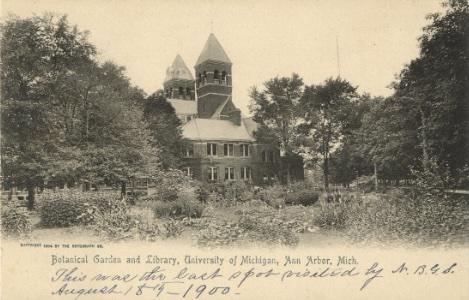
The botanical and medical worlds have long been linked. In fact, the first botanical gardens at the University of Michigan, established in 1897, took form as a small pharmaceutical garden situated near the diag on campus. For thousands of years, humans have turned to the plant world for healing and relief, using herbs and plants to treat diseases and manage symptoms.
Many medicines used today are derived from plants - morphine from poppies, aspirin from willow bark, and quinine, used to treat malaria, is sourced from the cinchona tree are just a few examples.
The gardens and conservatories at Matthaei continue to be a site for medicinal plant exploration through the work of Dr. Roland Kersten. Kersten, an assistant professor of medicinal chemistry at the College of Pharmacy, leads a lab working to discover natural compounds that could contain beneficial properties. “We search the plant world for chemistry that we can ultimately harness, whether it's in medicine and agriculture or other areas where we might be in need of a chemical solution or even a biochemical solution.” The lab employs a combination of “activity-guided discovery,” which utilizes existing herbal medicinal knowledge as a starting point, and a gene-guided approach, which “mines” plant genomes for unique plant chemistry.
The lab is part of the UM Natural Product Discovery Initiative, hosted within the Life Sciences Institute, which works to discover new nature-derived chemicals for curing diseases. Natural products are compounds found in plants, fungi, and microorganisms that contain medicinal properties. The Life Sciences Institute cites that over half of all clinical drugs in use today are derived from natural products.
A long-term goal of the Kersten lab within the UM Natural Product Discovery Initiative is to contribute to a collaborative database of plant chemistry that is easily searchable for specific plant compounds and their medicinal uses, for use by medical researchers and plant biologists alike. As part of this effort, Kersten and his team have collected over 300 plants from the grounds and conservatories at Matthaei. “We have recorded thousands, if not millions, of chemicals from the Botanical Gardens. Every plant can produce hundreds to thousands of natural products. So if you multiply that by 300, that's a lot of chemistry.”
The Kersten lab is particularly interested in unique cyclic peptides, molecules formed by amino acids linked together in a ring structure. “Peptides are an interesting compound class in drug discovery because they can have good binding affinity to drug targets. If they're cyclic, they can be very stable. You want them to be stable in the patient until they reach the target and act on it. They're small enough, so they can even be orally bioavailable, which is generally a desirable drug property.”
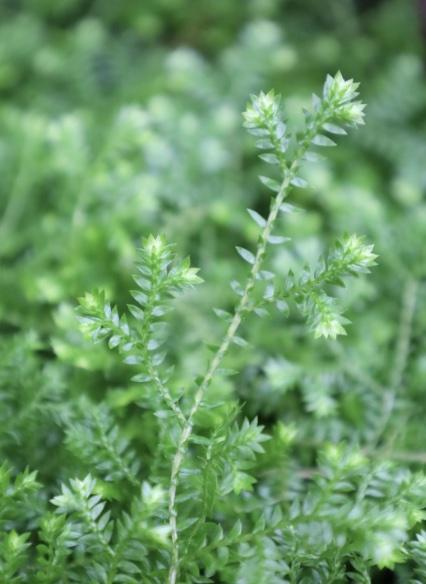
One plant found to have this unique chemistry is Selaginella kraussiana, a small carpet-forming fern that grows on the floor of the conservatory beds. “You wouldn't notice them much,” Kersten explains, “but they make very interesting peptide chemistry.”
The cycads have also turned up interesting chemistry. “There is a lot of cycad diversity present at the gardens, which is great. One prime example is two specimens of Encephalartos altensteinii that contain a very unique cyclic peptide structure.”
After collection, the researchers use a suite of molecular techniques to catalog the plant chemistry, including mass spectrometry, used to identify the chemical composition of a sample, metabolomics, which characterizes all of the metabolites of a tissue, and genomics, which captures the genes encoded in the organism.
While many researchers in drug discovery focus on one particular plant that produces an FDA-approved drug, such as Taxol, one of the most used anti-cancer medications derived from the Yew tree, the Kersten Lab takes a global view. “My lab tries to incorporate a broader perspective. We are always interested in discovering new chemical entities from less explored parts of the plant world with the rationale that they might have new activity for use as a drug.”
Thus, the rich diversity of our botanical gardens is a critical site for this research. “The Botanical Gardens are, in a way, living museums for these specimens. What's so important to me as a chemist is to conserve their chemistry, and the genes that encode the production of these chemicals. So that's where the Botanic Gardens are really important. Having fresh live plant material is essential for our research as growing a cycad from seeds to access its genes would be impossible for my lab.”