In my role as Nature Play Coordinator, and the primary informal educator for the early years at MBGNA, I’ve been thinking and reading and having conversations about approaches to sustainability education & learning with young children. I have been particularly curious about pedagogies of Thinking With and Common Worlding. As I hold these approaches aside MBGNA’s Nature Play pedagogies, I see some beautiful alignment, and am simultaneously called to consider some deep questions, trial some new fresh ways of thinking.
Essential to Thinking With and Common Worlding pedagogies, is the intentional placing of our human selves in direct and sometimes messy relationship with complex and diverse socio-ecological communities, not only human culture, and not only human-centric. Rather we investigate interdependencies, life-sustaining communities shared with all manner of other beings, forces, essential entities, biotic and abiotic, past and present and future. As with Nature Play, the essence of both of these frameworks is a relational approach, acknowledging interdependence, and finding ways of learning how to live well together with and across differences. This objective of living well together with interdependence and care is at the heart of Nature Play as well.
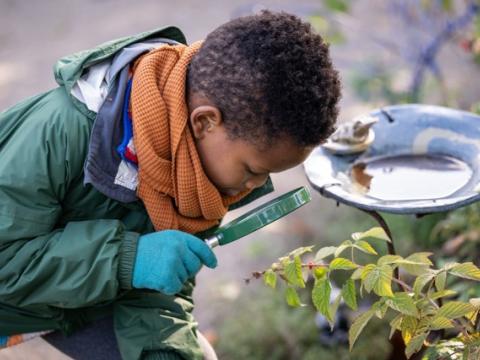
One way I am trying out some Thinking With is by engaging in some self-chosen Nature Play, the type of play that slows me down: taking an intentionally observant and curiosity-heightened walk within trees. Perhaps April in SE Michigan is an ideal time for learning to Think With, as it is a time of extraordinary changes outdoors. If you’d like to try Thinking With, too, feel free to adapt some of my plan, described below here. While I am doing this with an adult friend, I know it would be more fun with children. Lucky you if children are readily present in your household and life; I hope you will invite them to join you. Just as they are experts at Nature Play, children are pretty great at Thinking With, too. They are naturals at it, and they can teach us a fair bit about Thinking With.
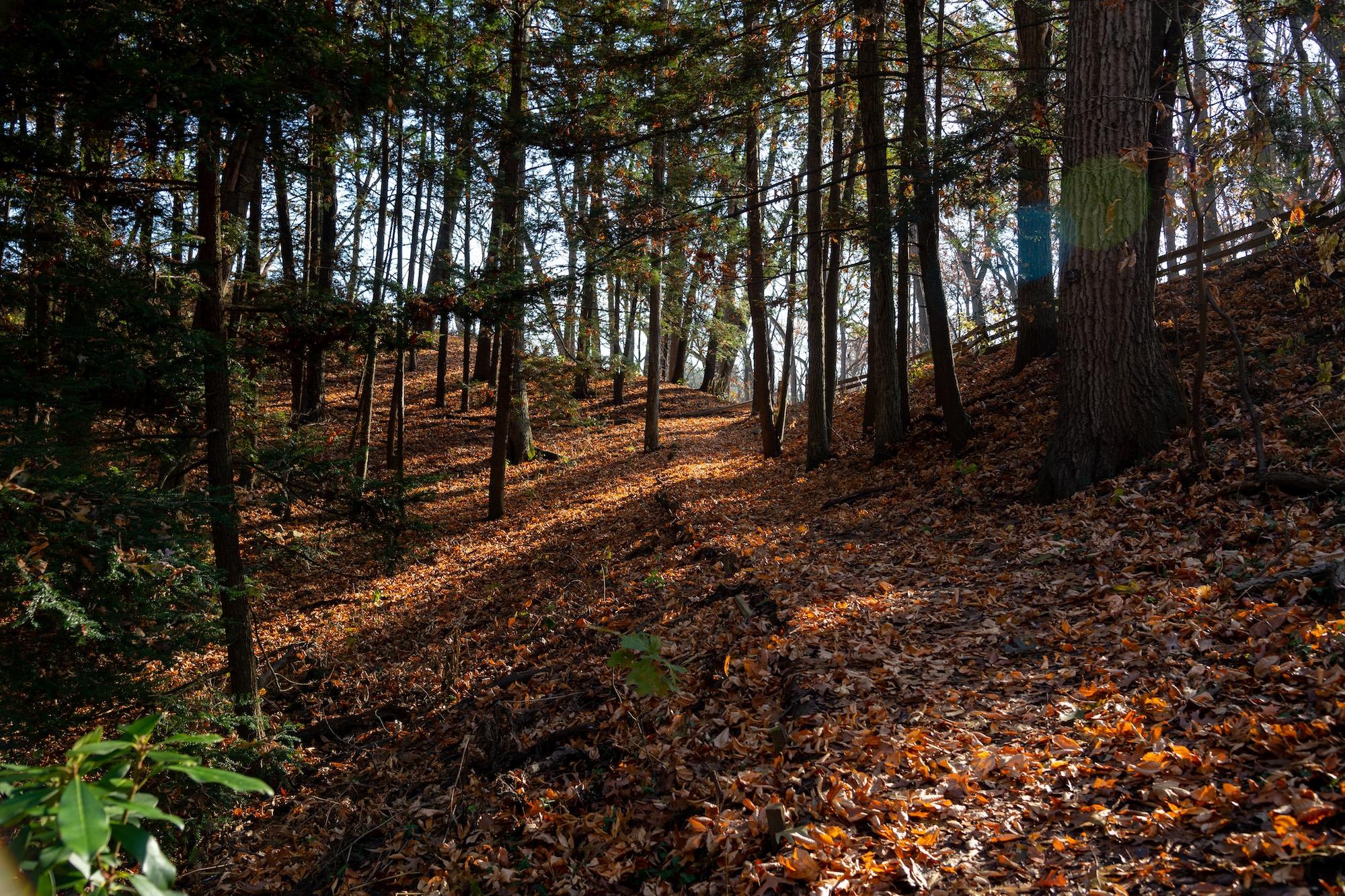
This is what my Thinking With approach this month will look like: Identify a specific, local, and easy to get to stand of trees. Commit to returning to these trees on a regular basis during the month of April, twice or once a week, depending on how easy it is to get my human self to the trees. Notice what I notice. Wonder about what I observe. Consider interdependence with all that I observe. Notice the changes week to week. Consider the past, present, and future of this place; of these trees. What happens within myself? What is revealed? What does this Place want to teach me? This April, the month of Earth Day and Arbor Day, I’m going to try Thinking With(in) the Trees, and invite you to try for yourself, too.
https://climateactionchildhood.net/
Haraway, D.J. (2016) Staying with the trouble: Making kin in the Chthulucene. Duke University Press

Lee is a dedicated educator and horticulturist who uses her background in literacy education, sustainable garden design, and community-based initiatives to champion the importance of outdoor play at MBGNA and beyond. Her exploration of the health benefits of nature access is motivated by her belief in the transformative power of the outdoors, her affinity for diverse plant cultivations, and her love for outdoor experiences.