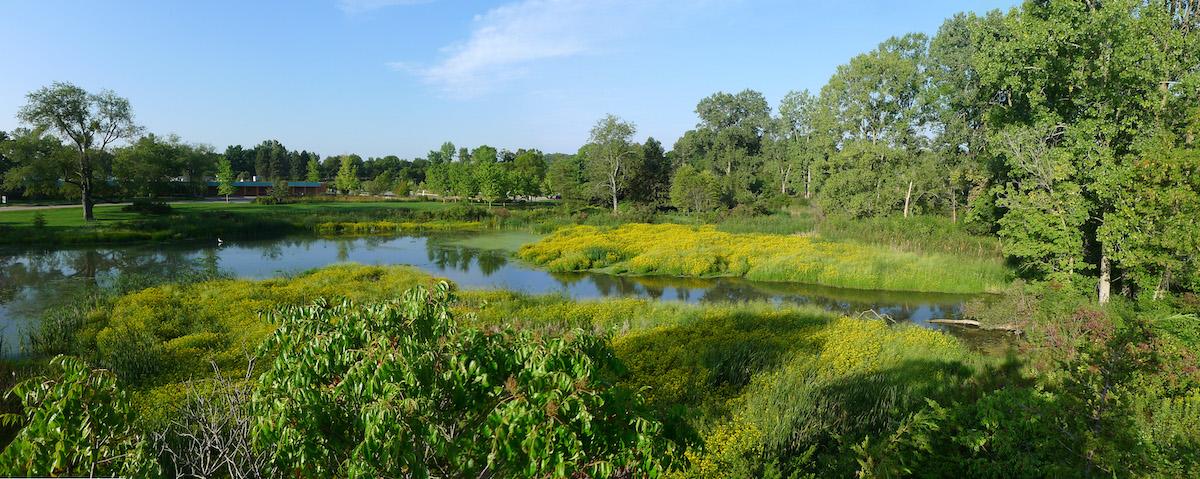
Willow Pond is a hallmark of the botanical gardens; serene, beautiful, and often a place to glimpse egrets, sandhill cranes, and herons. Created as a human-made pond to capture sediment runoff, this artificial wetland still provides essential ecosystem services as a watering hole and as habitat for local wildlife. Its openness and access require annual intervention to keep the narrowleaf cattail (Typhus angustifolia), a highly competitive non-native species, at bay. This plant’s easy success in the ecosystem can push out native plant, fish, and wildlife species, and make viewing and accessing the pond difficult as it forms a dense thicket.
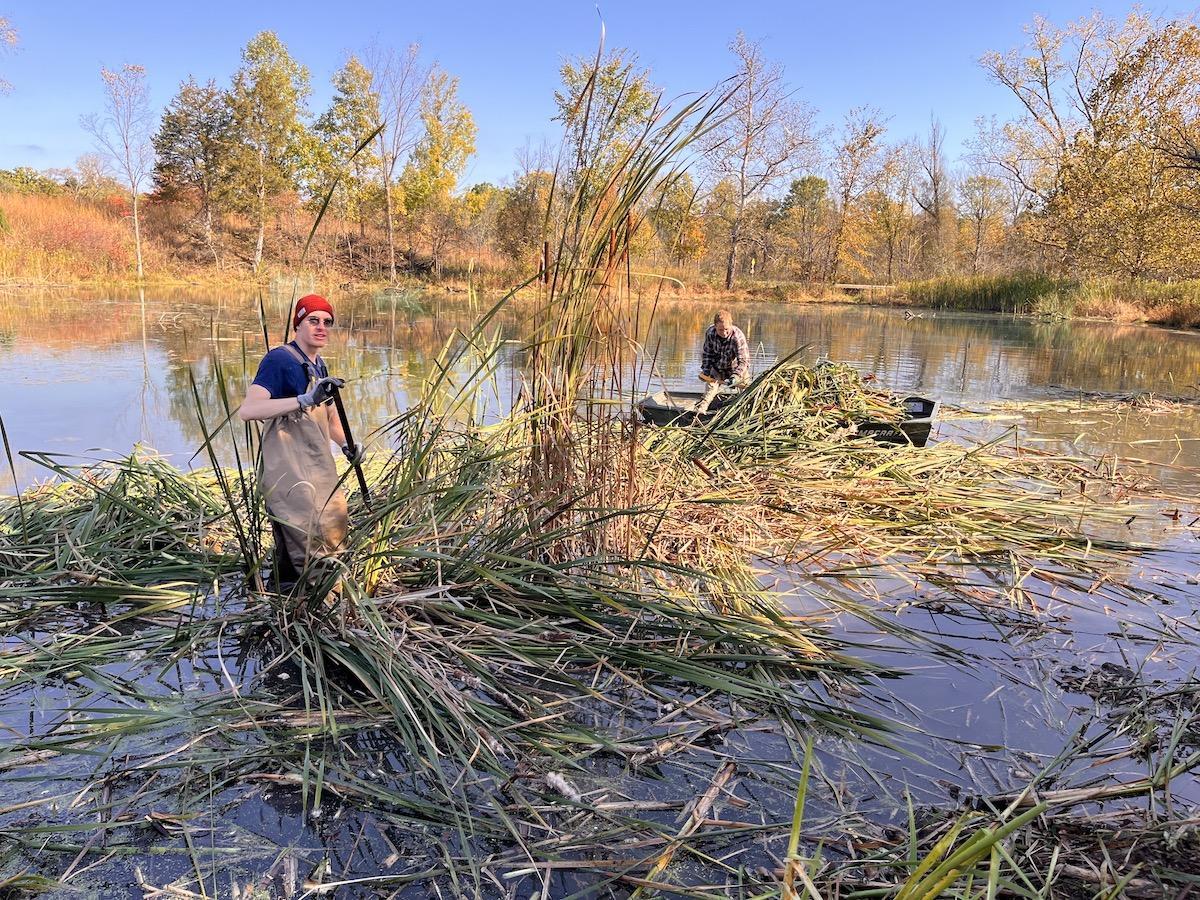
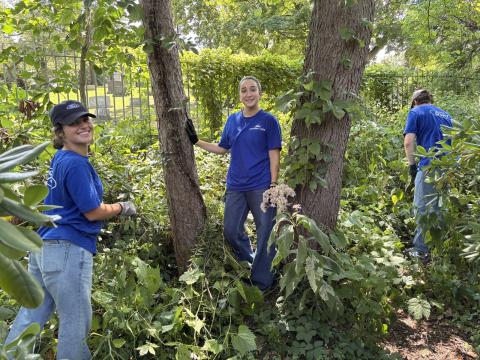
From 2011 to 2019, narrowleaf cattail in the gardens was managed with an aquatic-safe herbicide that consistently controlled its spread. In 2022, with an eye on the most sustainable management option, the gardens shifted to manual control techniques, including cutting back above-ground reeds with a sickle and underwater cutting. Our natural areas specialists experimented with repeated cuts during the growing season to find an effective method. While this method is more labor-intensive, the team views it as the most sustainable option moving forward. Steven Parrish, Natural Areas Specialist here at MBGNA, shares that “Spraying is not sustainable. We’d always have to do some kind of spray annually.” The result of manual removal is an abundance of organic material that has uses in paper-making and basketry. MBGNA has already connected some groups and community members to this material and plans to continue finding outlets for using the strong reedy stalks instead of composting them all. If you are interested in using cattail, please contact: Steven Parrish, [email protected]