July at MBGNA is all about color, transformation, and noticing at a slower roll. It is the very heart of summer with brilliant blue skies, long, late golden-orange sunsets, and 10 different shades of green. Baby bluebirds have fledged, dragonflies and damselflies are emerging, and tadpoles are transforming into frogs. Trees are fully leafed out, providing much-needed shade, and fruits are ripening after June’s flower blooms. It seems summer has set in.
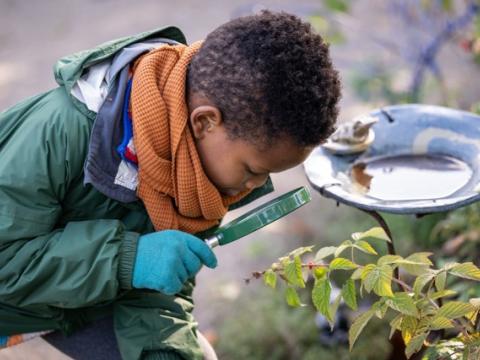
Deep, immersive, and experiential learning is happening all around us in so many ways. Families and visitors eager to immerse themselves in the wonders of our spaces pick up Activity Bags, scavenger hunts, and maps in the lobby and hit the trails to explore. Kids know their way to the Gaffield Children’s Garden, and are drawn to search for tadpoles and frogs in the fountains.
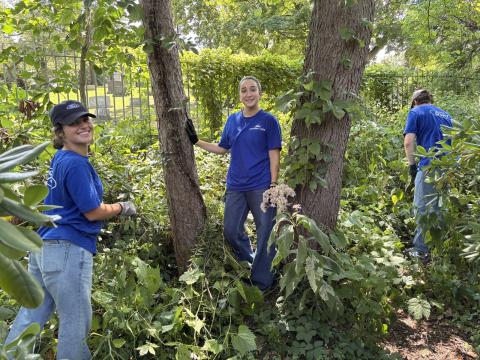
Summer field trips and programs center a sense of curiosity about the world around us, with slower, intentional strolls and closer looks. High school teens from around the country and world are visiting MBG for the first time during pre-college UM programs. They are learning about human interdependence with healthy, resilient ecosystems and thinking about their own personal connections to the land, and are introduced to one of the best gems of the University of Michigan. Interns are fully embodying the living, learning lab of MBGNA, bringing so much joy, creativity, and new ways of thinking to our shared spaces.
Our UM colleagues are making MBGNA a retreat space and are taking part in Nature and Well-being themed workshops. Learning how to build their own relationships and practices with nature for resiliency and well-being.
The slow roll of summer is upon us.
Recently, during a pre-college field trip with Jenna Munson’s (Earth and Environmental Science) Michigan Math and Science Scholars, I was reminded why this work of immersive, field-based learning and relationship building with Nature is so essential to human development. What better living, learning lab than spending time outdoors exploring relationships in nature?
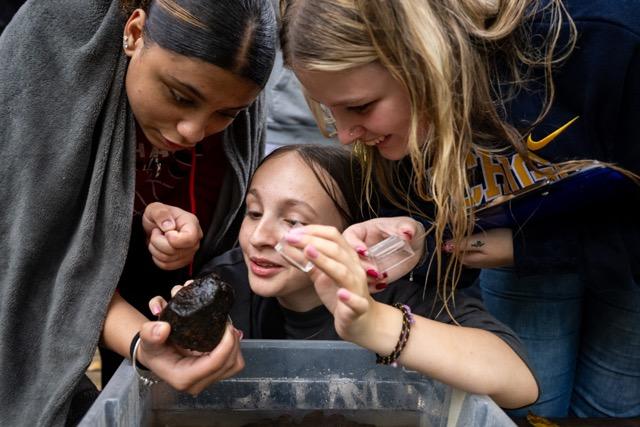
During the Ecosystems and Stewardship program, high school teens learned how to make field observations, conduct simple biodiversity counts, explore concepts of ecosystem services and consider personal actions they might take to steward the land that gives so much to us.
High school students are wonderful. They are creative, smart, curious, caring, and frankly, funny.
Together we walked the trails, stopping often along the way. We looked for evidence of beaver activity; wondered about the structure of dams along Fleming Creek, noticed the flow differences and water clarity in different waterways, and did quick field sketches, interpreting the world before our eyes. Students used a quadrat square to focus on biodiversity within a small area (who knew how many different species of clover you could find in our non-sprayed lawns?). And they considered their own feelings and relationships with nature.
Slow roll learning at Matthaei is a specialty of Education and Learning here. We don’t rush; we give in to the sights, sounds, and smells. We stop when we’re curious about something and linger as long as needed. We center feelings about Nature. There is surely a full lesson plan with desired outcomes, but the real plan is immersive learning, and the desired outcome is relationship building. Relationship building takes time.
Walking back to the building, I was honored to have some heartfelt conversation with a smaller group of teens. The switch was thrown…they were genuinely excited about what they learned, zeroed in on how it connected with who they are. They told me about their hopes for future study and possible careers; research about Nature and Wellbeing, ecosystem stewardship, and education through publishing, exploring different biological science pathways. They see themselves as stewards, eager to get started.
What more could you ask for on a summer day?