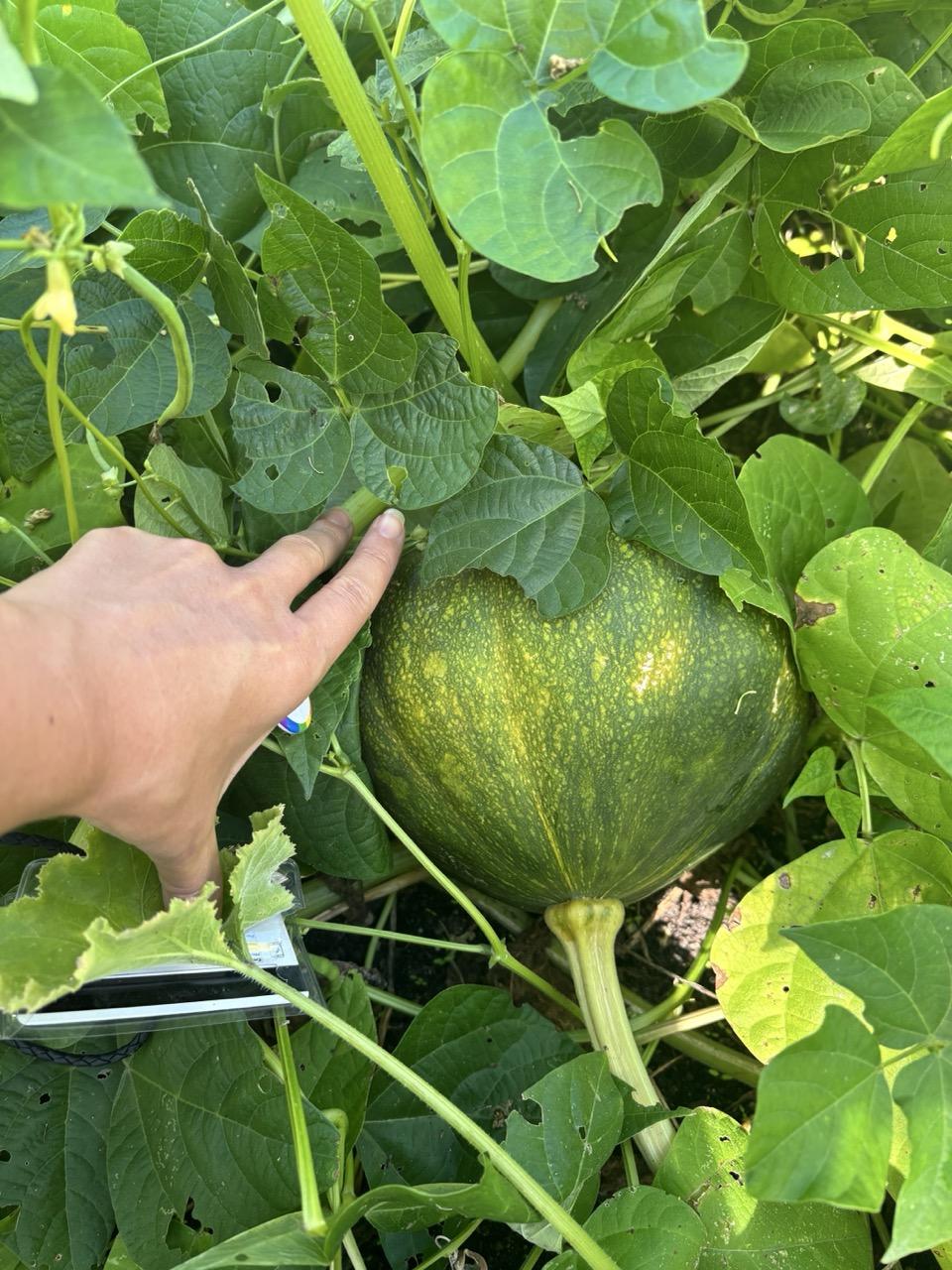
The University of Michigan has one of the largest ethnobotanical collections in North America. Within it are many seeds belonging to tribal nations, not as property, but as relatives, seed kin. Seed rematriation is the work of reconnecting seeds to their communities of origin so they can be restored as living kin. This work is critical for restoring food sovereignty and fostering ecological resilience. The Indigenous Collaborative Garden (ICG) is a small protected garden between two greenhouses here at Matthaei Botanical Gardens. Started in 2017, the garden has served as a site for seed rematriation work, collaboration between tribal nations and the university, and as a place to learn and share about indigenous foodways and agricultural practices. The garden was born out of conversations with Tribal leaders and elders about rematriating seed relatives held in UM’s collections. The garden is a place to grow out and return these seeds to their original communities of origin.
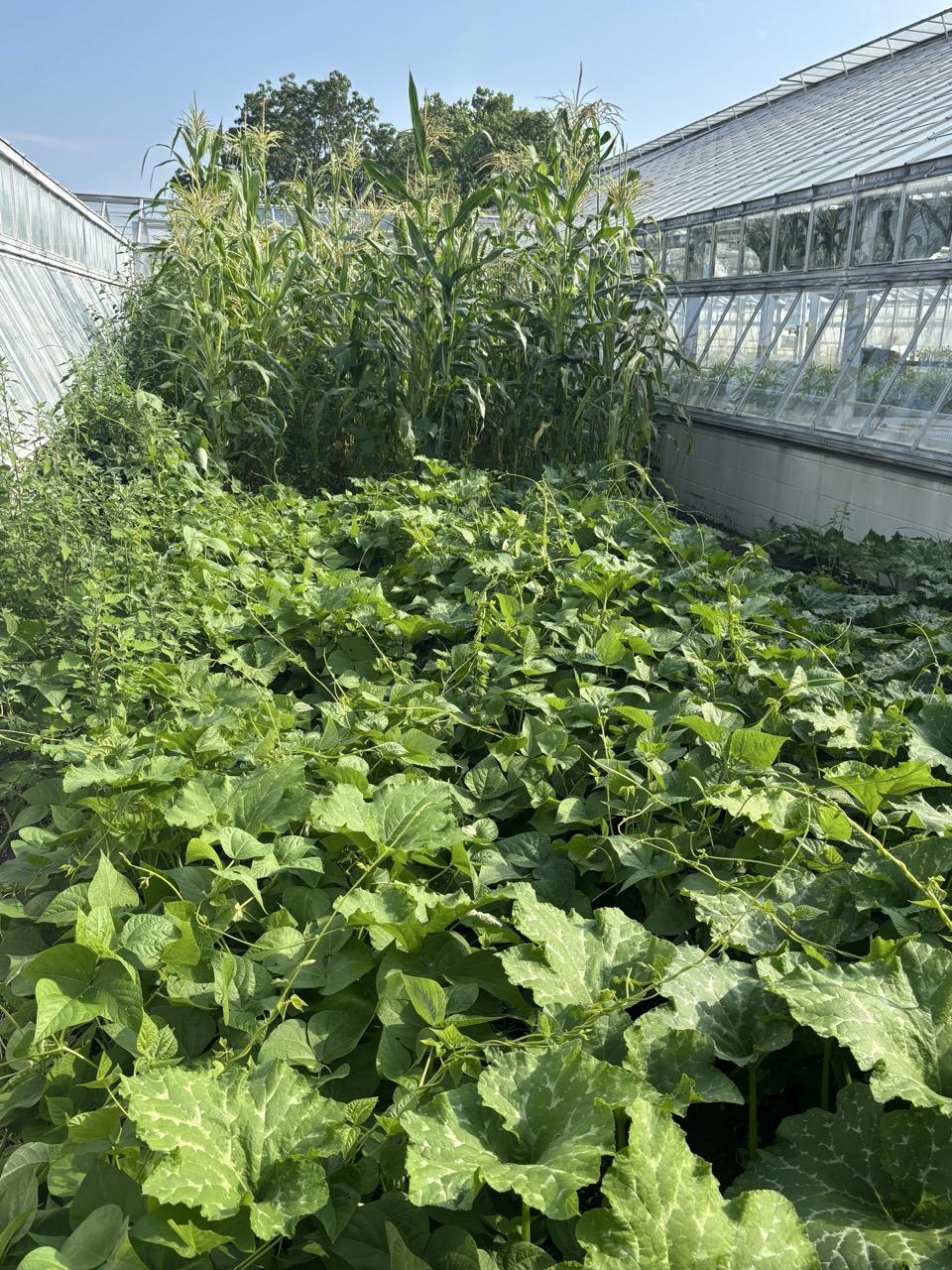
Since its inception, no seeds from the collection have yet been grown out, but the space remains available for that purpose, and continues to be used to help support culturally significant crops. The seeds that have left the ethnobotanical collection have been returned directly to their lineal descendants or community of origin, at their request. The garden continues to be a place for seed rematriation work and relationship-building. Each season, Indigenous community members work to decide what will happen in the space. As Shiloh Maples, a seedkeeper and steward of the garden, has shared, “Everything is grown in a way that Tribal partners think should be done. This usually includes ceremony and using traditional agricultural practices. Those same partners determine what happens with the seeds and foods gathered at harvest.” This past season, community partner Kaya DeerInWater, a seedkeeper and forager, was connected to the garden through Shiloh Maples and brought seeds from the bundle he keeps to grow out in the garden.
Kaya is a bio-cultural restoration specialist with the American Indian Higher Education Consortium, supporting tribal colleges and universities nationwide. “I get to work on land-based projects and how to reconnect to the lands within communities using storytelling and narrative traditions and Traditional Ecological Knowledge, ” he shares. He also farms land south of Grand Rapids and tends a bundle of Anishinaabe seed relatives: “I have a lot of varieties of our Anishinaabe corn, beans, and squash, and I have too many varieties for how much I can take care of as one person. And so I'm always looking for opportunities to collaborate with other growers and like-minded individuals who see the importance of keeping these heritage varieties alive and vibrant and continuing the relationships with our traditional foods and our traditional seed relatives.”
The ICG provided this opportunity for collaboration this past season, and provided a space for growing out many of the seeds Kaya keeps, including a selection of Potawatomi ceremonial flint corn.“There were only about 200-300 seeds left of this variety, period. And so Shiloh offered the ICG as a space that could help increase the number of seeds that were available for this variety so that we could keep growing it. We held the planting ceremony and feast in May, and that was a great time.”
Corn is a staple for Indigenous foodways here in the Great Lakes, Kaya explains, with each nation holding distinct ties to the varieties they keep, and each having specific uses and purposes; “There's ceremonial corn, there's corn for flour, for bread, there's corn for hominy, there's corn for popcorn. From an academic standpoint, it's our intellectual property. But from a spiritual standpoint, they are kin, and we are in ceremony with them. For us Anishinaabe people, for the native folks of the Great Lakes, seeds are seen as relatives. Because plants are our relatives, we view them as our elders, and we view them as kin. And they're alive, and as our relatives, we treat them differently. They're not commodities. So we don't sell our seed. We receive their gifts. And to be gifts, they need to be kept as gifts. As soon as they enter the market, they lose some of their vibrancy. Those are the teachings that my mentors and elders have shared with me. It’s a huge responsibility to carry seeds, to carry seeds of your ancestors, and to know the work that goes into preparing for every season, and the work that goes into caring for those seeds. Not only the plants when they're growing, but the seeds in the downtime, so that you can feed yourself and the next seven generations. And so that's why places like the Indigenous Collaborative Garden are so important, because without the support from the community, that variety of corn probably would be gone forever. It was a once-in-a-lifetime opportunity.”
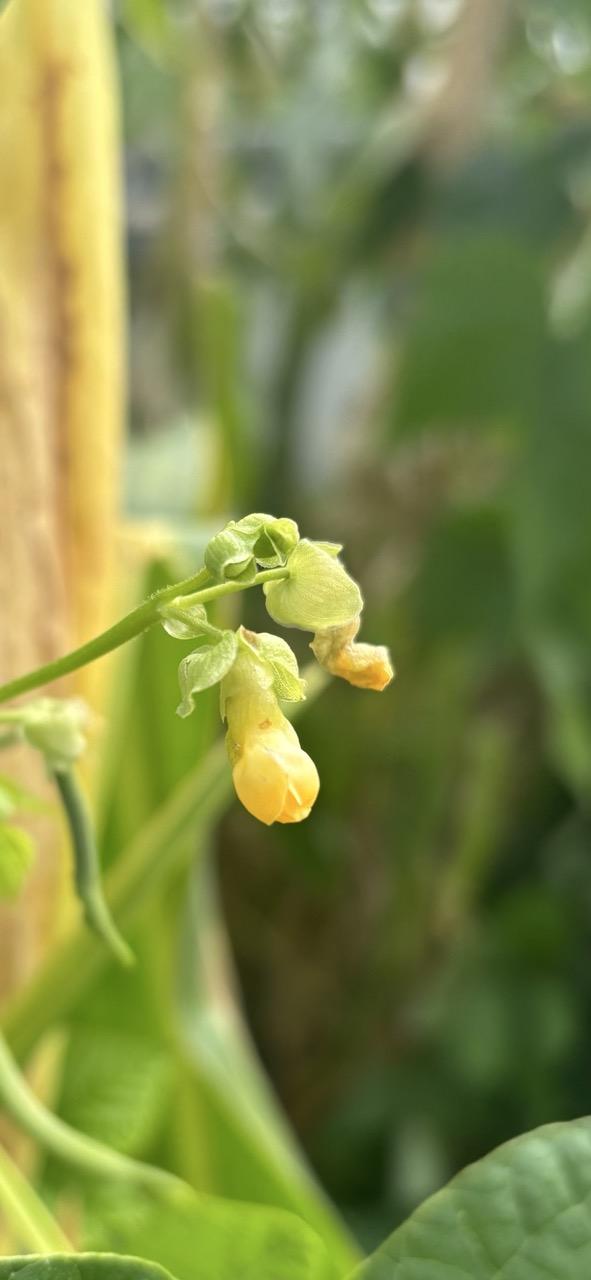
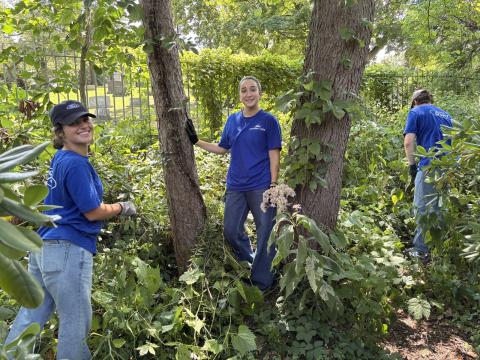
This responsibility was shared in the ICG this past season, as ICG interns helped care for the seeds on site as they grew. Through this work and an Anishinaabe plant walk that Kaya led, he was able to connect with the students working in the garden. “It's always so great to see the firelight in someone when they realize, 'Oh, these seeds are important. And I actually have a little bit of land. I can create a garden this year. I could have my own food. I could be a little more food-sovereign and share with my community. So, yeah, I'm really thankful that I got an opportunity to work with Matthaei this year.”
Kaya’s hopes for the newly grown-out seeds? “Hopefully, those seeds will be able to go out to new homes, and so more people will grow them. The goal is never for one person to have all the seeds. That's a pretty precarious spot for our heritage varieties, and so hopefully, in the future, we will inspire new folks.”
Looking further into the future, Kaya envisions a future where places like the ICG become more widespread. And eventually, not even necessary. “I really hope that in the future there will be more spaces like it, and people have more opportunities to get the support they need to grow all of our traditional varieties. And I really hope that in the future, there's a resurgence of interest and knowledge in how to steward our seed relatives, so that ultimately, places like the ICG don't need to exist anymore. That would be an amazing spot to be in, but my guess is it's going to be some years before something like that happens.”