If you’re a gardener in Michigan, chances are you’ve encountered Japanese beetles. These metallic green insects may be small, but they can cause significant damage to your garden, landscape, and lawn if left unchecked. Fortunately, there are several effective strategies you can use to manage and reduce their impact without resorting to extreme measures.
Let’s take a look at what you’re up against and how to handle it.
What Are Japanese Beetles?
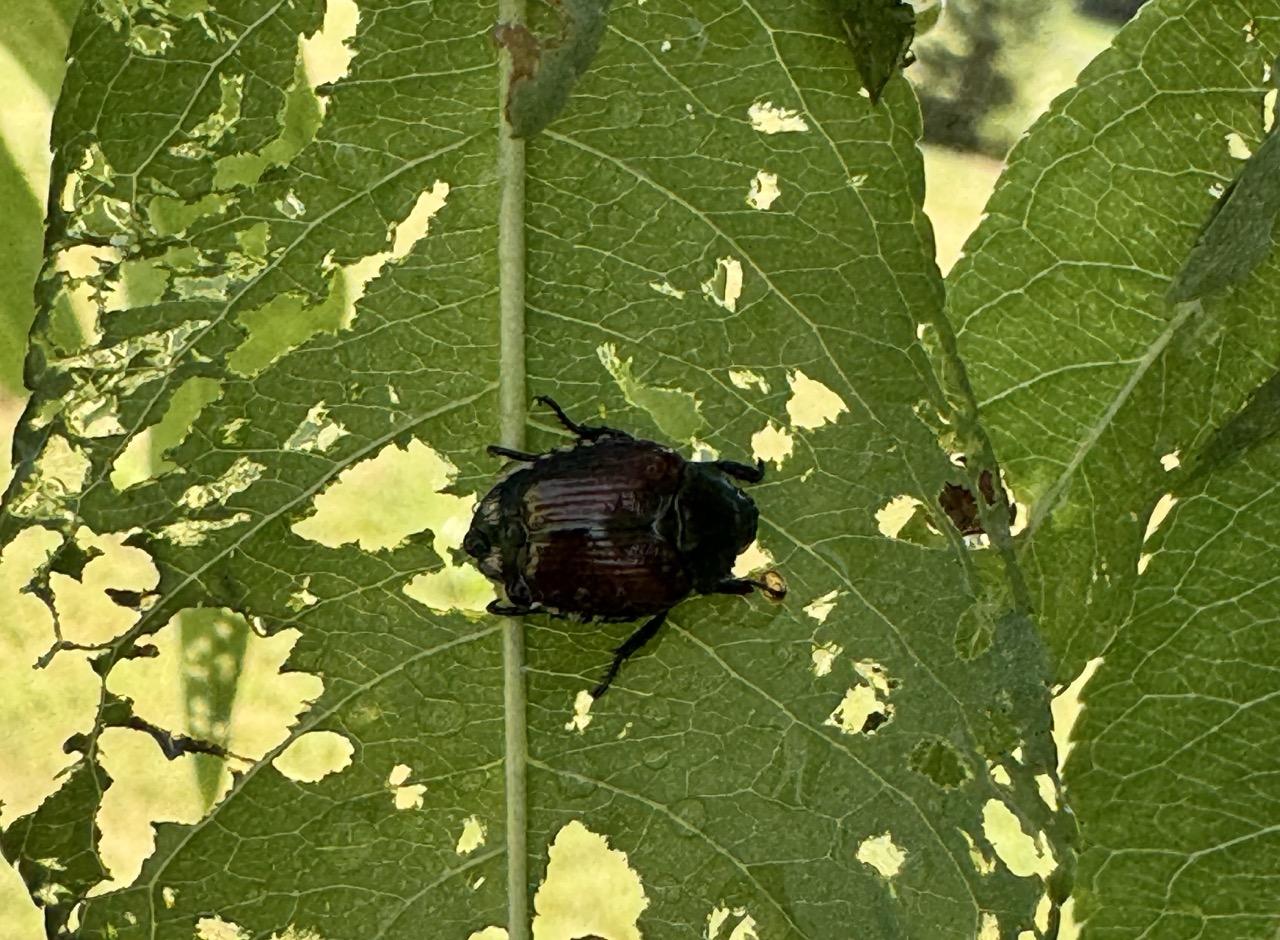
Japanese beetles (Popillia japonica) are an invasive insect species first introduced to the U.S. in the early 1900s. In Michigan, they’ve become a widespread garden and landscape pest. The adults are about ½ inch long, with shiny green bodies and copper-colored wing covers.
They do damage in two main ways:
• Adults feed on the leaves, flowers, and fruit of over 300 plant species, leaving behind distinctive “skeletonized” foliage.
• Larvae (grubs) live in the soil and feed on the roots of grass and other plants, often causing brown patches in lawns.
Peak adult beetle activity typically occurs from late June through early August in Michigan.
Signs of Infestation
• Leaves appear lacy or “skeletonized”
• Flowers are chewed or missing petals
• Clusters of beetles are visible during daylight hours
• Patches of dead or dying grass in late summer (grub damage)
Early detection and consistent treatment can go a long way in preventing larger infestations.
Effective Control Methods
Hand-Picking
The simplest (and surprisingly effective) method is to remove beetles by hand. Go out in the early morning or evening when they are less active, and shake or knock them into a container of soapy water. This kills them quickly and doesn’t harm your plants or beneficial insects.
Tip: Avoid squishing them, as crushing releases a scent that can attract even more beetles
Row Covers
Use floating row covers to physically block beetles from reaching plants, especially during peak activity. This method is best for vegetables and smaller shrubs. Just be sure to remove covers during pollination if the plant depends on bees.
Neem Oil and Insecticidal Soap
Neem oil works as a deterrent by interfering with the beetle’s feeding and reproductive cycles. It’s safe for most plants and less harmful to pollinators if applied early in the morning or late evening.
Insecticidal soaps can also be used to reduce beetle populations, but always read the label and test on a small section of the plant before full application.
Grub Control with Milky Spore and Nematodes
To reduce next year’s beetle population, target the grubs in your soil.
• Milky Spore: A naturally occurring bacterium that kills Japanese beetle grubs. It can take a year or two to become fully effective, but it offers long-term benefits.
• Beneficial Nematodes: Microscopic roundworms that seek out and kill grubs. These should be applied in late summer or early fall when grubs are near the soil surface.
Caution with Beetle Traps
While pheromone traps are available, they often attract more beetles than they catch. If you do use them, place traps at the edges of your property, far from the plants you’re trying to protect.
Planting With Purpose
If you’re designing or modifying your landscape, consider the beetles’ preferences.
Japanese beetles prefer:
• Roses
• Grapevines
• Basil
• Beans
• Linden trees
• Hibiscus
Plants they typically avoid:
• Boxwood
• Forsythia
• Lilac
• Dogwood
• Magnolia
• Ornamental grasses and most ferns
By choosing resistant varieties or strategically placing more vulnerable plants away from the garden’s center, you can minimize damage.
Integrated Pest Management: A Long-Term Approach
No single method will eliminate Japanese beetles entirely, but combining several strategies is the key to long-term control. Hand-picking, targeted sprays, soil treatments, and thoughtful planting can collectively reduce the impact on your garden year after year.
Final Thoughts
Japanese beetles are a frustrating pest for Michigan gardeners, but with a consistent, integrated approach, you can protect your garden and lawn. Monitor your plants regularly during summer, treat early and often, and don’t hesitate to adjust your landscape to discourage future infestations.