In August, we're celebrating Water Week, highlighting the many ways water connects the landscapes we care for to the Great Lakes and beyond. Across Matthaei Botanical Gardens and Nichols Arboretum, ponds, wetlands, streams, and gardens all tell part of that story. Our Great Lakes Gardens are one example, featuring plant communities inspired by ecosystems found throughout the region.
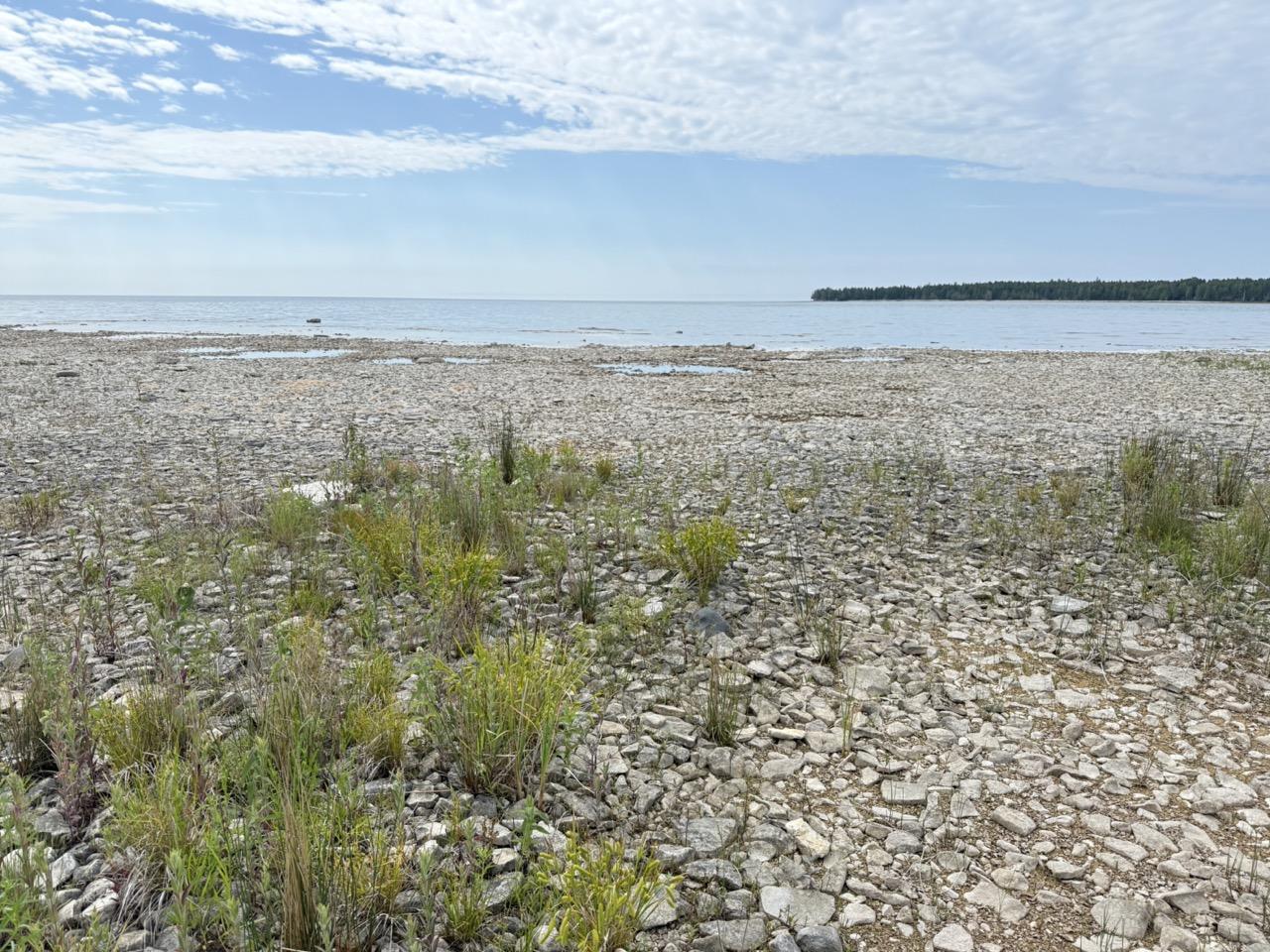
One of these ecosystems is the Cobble Beach, characterized by its rounded boulders and hearty plants. This garden might look familiar from beach days up north, as cobble beaches span large swathes of shoreline along Lake Michigan and Lake Superior.
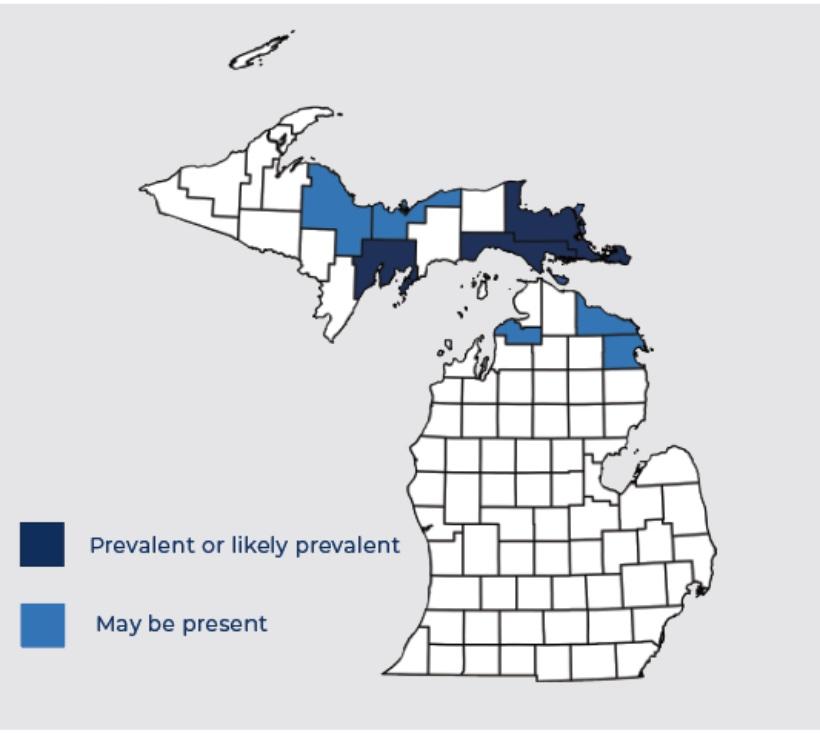
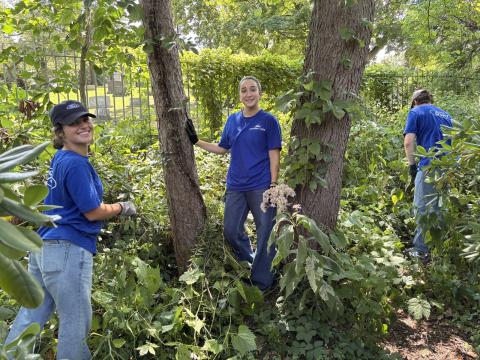
Cobble beaches are defined by change; wave action, water fluctuations, and ice scour create an environment of constant disturbance, stripping soil and preventing dense vegetation from developing. While the ecosystem is sparsely populated by plants, the vegetation that is able to grow is adapted to thrive in these challenging conditions. In our garden, disturbance comes in another form, from the skilled hands of our horticulture team and dedicated volunteers who weed and care for this garden. As Calla Butler, our Native Plant Gardens Horticulturist, says, “We act as the disturbance - we are the waves.”
Cobble Beach is one of Calla's favorite Great Lakes Gardens. Below, we walk through some of the hearty plants that are found along the rocky beaches of our Great Lakes, and here in our own Cobble Beach Garden. The next time you find yourself on a rocky shore in Michigan, take a moment to look at your feet and see if you recognize any of these small but mighty plants!
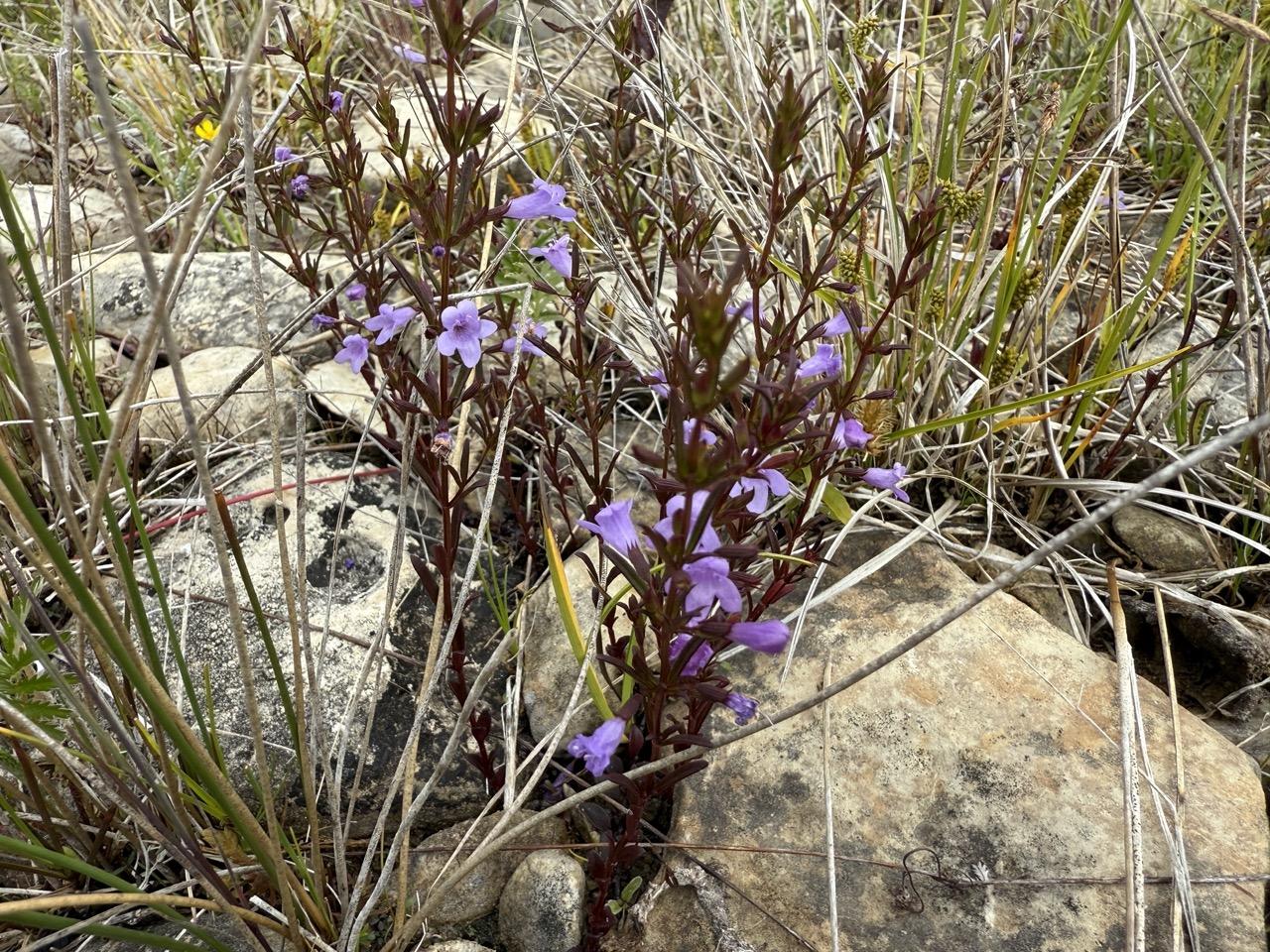
Limestone Calamint (Clindopodium arkansanum)
Like its name suggests, this little plant thrives in limestone-rich environments, making a happy home in the limestone lakeshore pavements of the cobble beach ecosystem. A habitat specialist, it can persist with the near-constant wave action and high winds of a lakeshore environment. Its small purple flower is the perfect size for tiny bees who pollinate it. If you find some, try brushing it with your fingers! It has a strong spearmint scent.
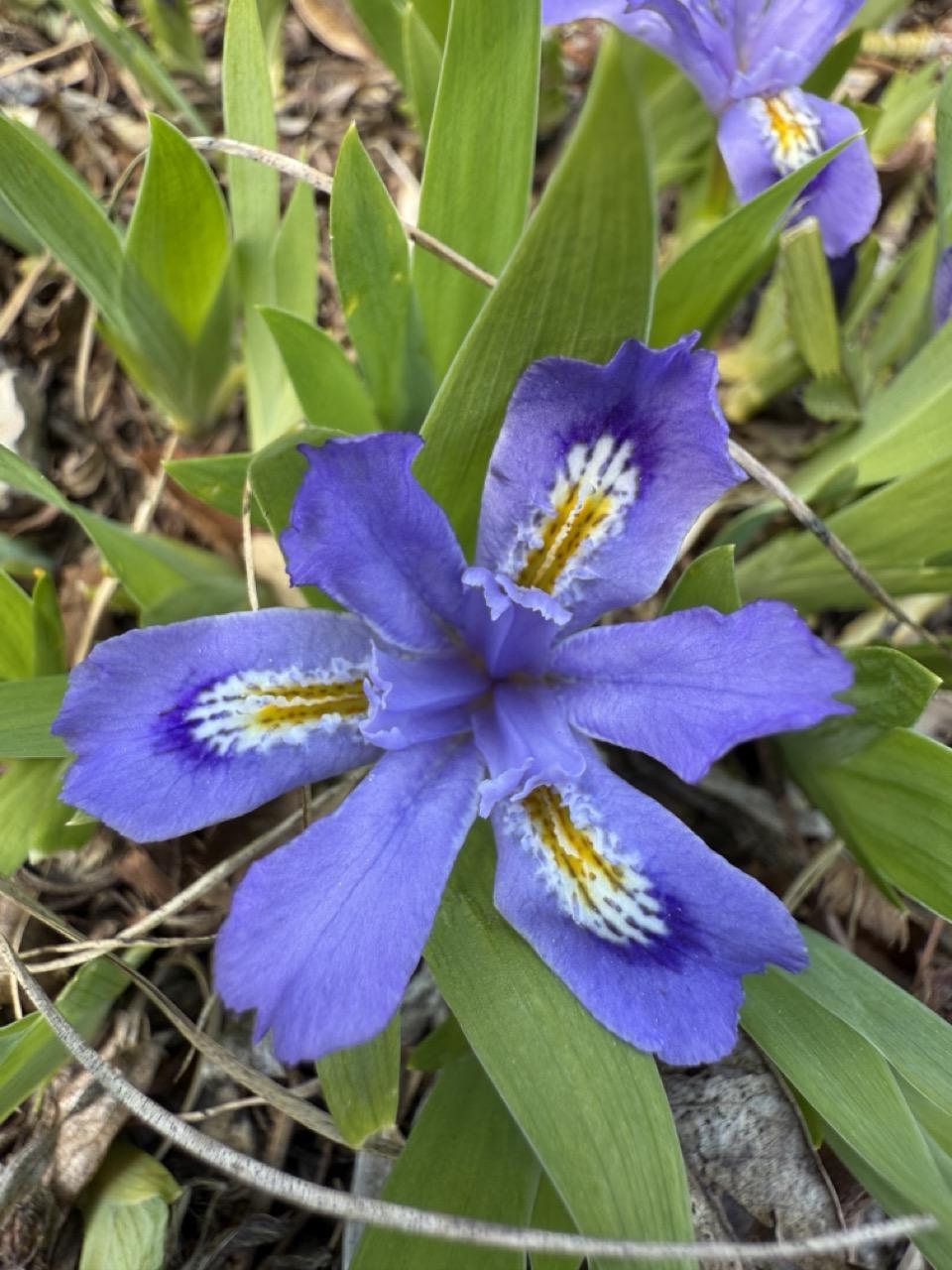
Dwarf Lake Iris (Iris lacustris)
This delicate lakeside beauty is Michigan’s state wildflower! The flower is endemic to the Great Lakes, meaning it exclusively grows here and nowhere else in the world. Due to habitat loss and ecological disturbance, this tiny iris is threatened both in the State of Michigan and federally. To see these plants in their natural range, you usually have to travel to the northern lower peninsula or southern upper peninsula. Or, you can come see at Matthaei! Dwarf Lake Iris usually blooms in the Great Lakes Gardens in early May.
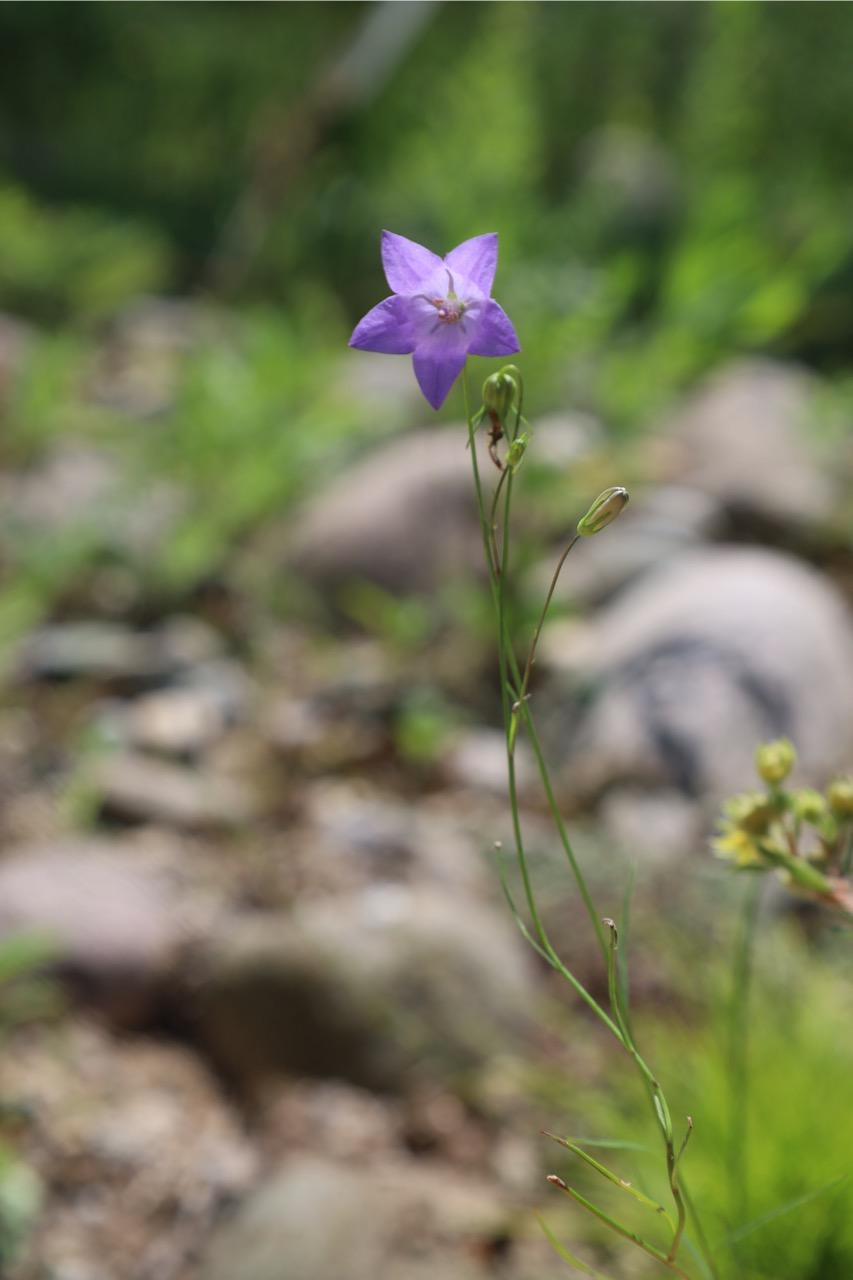
Harebell (Campanula rotundifolia)
This perennial wildflower is in the bellflower family and looks the part with its nodding bell-shaped blooms. Harebells are adaptable, able to thrive in the rocky terrain of a cobble beach, but also in meadows and prairies, and on dunes. The flower is known by many names, including bellflower, witch's thimble, and fairies’ thimbles. Strongly associated with Scotland, many of these names reference the magical lore of this plant, with tales of witches using a juice squeezed from the petals to turn into a hare. The purply blue hue was used as a dye to color tartans. The Haida, Indigenous to the Pacific Northwest, associate picking the flowers with rain.
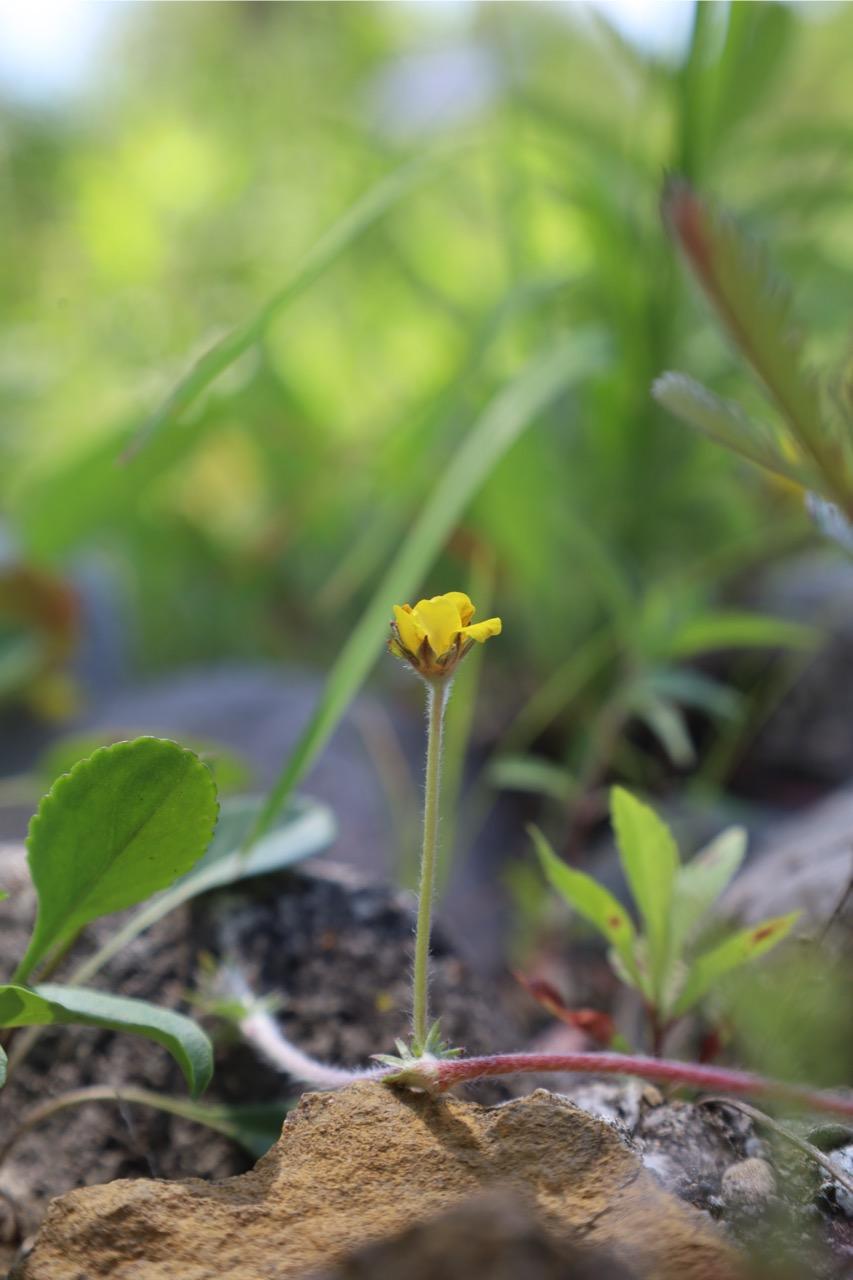
Silverweed (Potentilla anserina)
The common name for this plant comes from the shockingly bright underside of the leaf - flip a leaf over and its belly looks coated with silver. Well-adapted to disturbance, silverleaf spreads by stolons (horizontal plant stems) or runners that root into the ground and allow the plant to propagate and spread, similar to how strawberry plants grow. Small yellow flowers sprout from the stolons as they run.
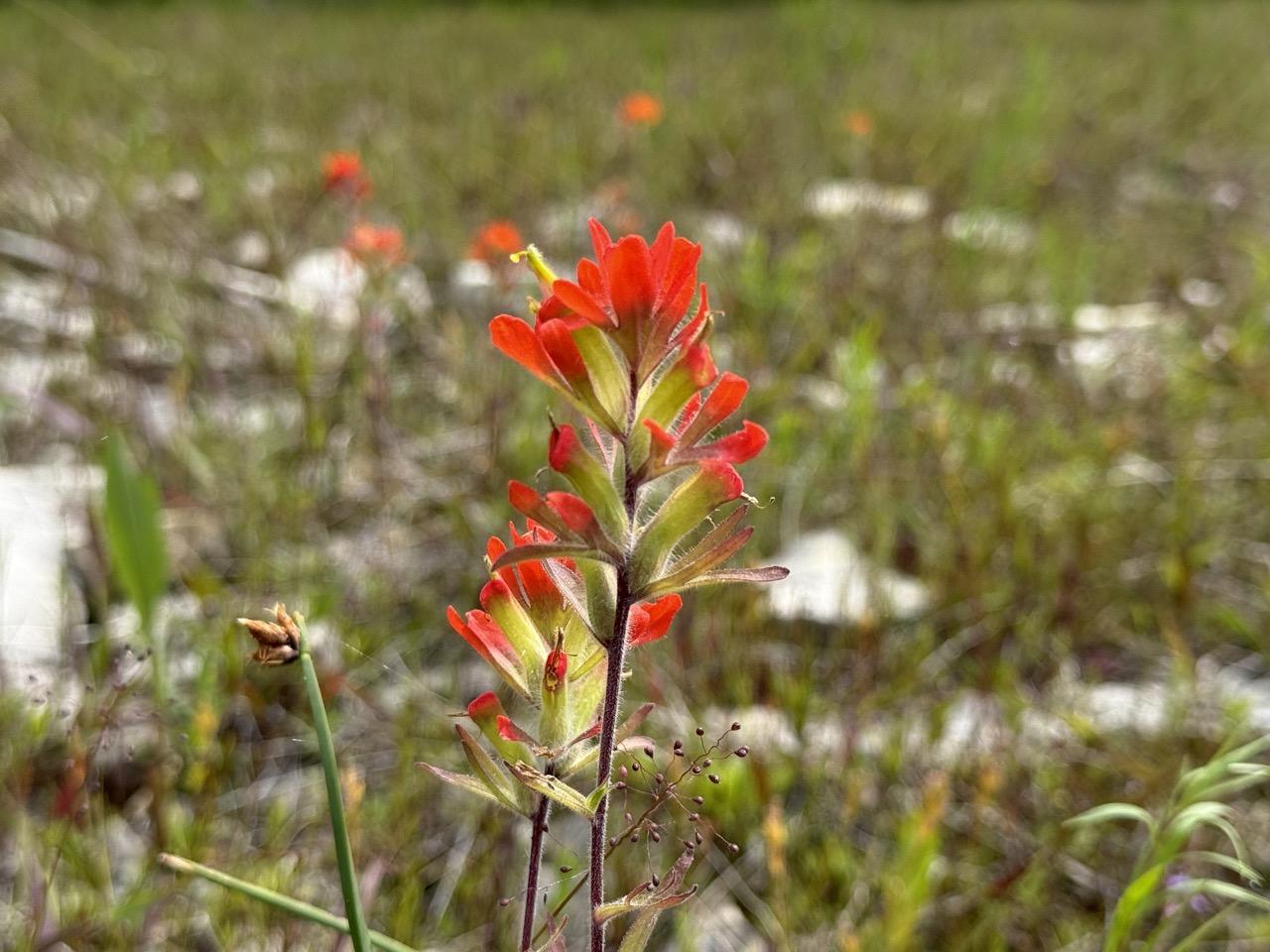
Paintbrush (Castilleja coccinea)
Whether on a cobble shore, a sand dune, or in a prairie or woodland, paintbrush flowers stand out in any of the landscape where they grow, sporting showy bristles that appear as if they were dipped in red paint. Similar to Christmas euphorbias, the plant’s bright red brush is not actually comprised of petals, but “bracts,” which are modified leaves. Easily identifiable and endlessly charming, a lesser-known aspect of the Paintbrush is its “hemiparasitic” abilities. Paintbrush plants can photosynthesize and survive on their own, but can also siphon nutrients from surrounding sedges and grasses.
Paintbrush plants are biennial, taking two years to complete their life cycle. In the first year, an individual produces its “basal rosette,” or leaf cluster at the base of the plant, and does not flower until the following season.
Resources:
Benda, C. D. (n.d.). Plant of the Week: Indian Paintbrush (Castilleja coccinea). US Forest Service. https://www.fs.usda.gov/wildflowers/plant-of-the-week/Castilleja-coccin…;
MICHIGAN FLORA ONLINE. A. A. Reznicek, E. G. Voss, & B. S. Walters. February 2011. University of Michigan. Web. August 1, 2025 https://lsa-miflora-p.lsait.lsa.umich.edu/#/record/1539
MICHIGAN FLORA ONLINE. A. A. Reznicek, E. G. Voss, & B. S. Walters. February 2011. University of Michigan. Web. August 1, 2025
https://lsa-miflora-p.lsait.lsa.umich.edu/#/record/2501
Owen, W. (n.d.). Plant of the Week: Dwarf Lake Iris (Iris lacustris Nutt.). US Forest Service. https://www.fs.usda.gov/wildflowers/plant-of-the-week/iris_lacustris.sh…;
Ruta McGhan, P. J. (n.d.). Plant of the Week: Harebell (Campanula rotundifolia L.). US . https://www.fs.usda.gov/wildflowers/plant-of-the-week/campanula_rotundifolia.shtml