Wonder is a feeling of surprise, admiration, or awe, often caused by something unexpected or beautiful. As a verb, it means to be curious, feel amazement, or ask a question about something. It signifies intellectual exploration, or as a noun, a marvelous thing (a "wonder" of the world). One of the many things I love about being a K-12 environmental educator is the ability we get to shape the minds and hearts of young ones. Empathy has been regarded by many environmental thinkers as a key element in the recruitment for conservation efforts, serving as a stepping stone between wonder and emotional connection with nature. Wonder leads to spending more time with the land. It teaches and guides us through life as nature can.
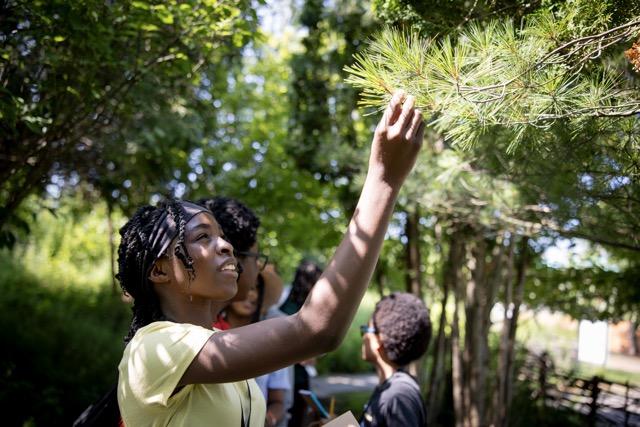
Introducing our students to the wonder and awe of nature creates a learning environment where they are invited to be creative, ask deeper questions, and bring to light a world they want to know. In many ways, I do little more than facilitate these organic interactions and exchanges between natural relations (pupil and teacher). Something as seemingly simple as “why is this flower white and that one purple or pink or yellow?” can lead us down a path of diverse and intentional investigation, that may include, but not limited to “seeing the world through the eyes of pollinators”, “talking about necessity and strengths of genetic diversity”, “considering adaptations of plants and animals to survive in their environment”, “what color flower you’d land on if you were a pollinator”, “what shape of flower would be best to meet your needs as a pollinator”, “how might we give back to the plants that give to us?”. All this, while allowing for a note on stewardship and conservation as we might consider the intricate, deliberate, and necessary relationship of humans and nature, plants and animals.
A couple of spring examples of the interconnection that wonder brings to the learning experience are Spring Beauty (Claytonia virginica) and White Trillium (Trillium grandiflorum). Spring Beauty Mining Bees (Andrena erigeniae) are extreme specialists and get the bulk, if not entirety, of their food source from Spring Beauty to feed their broods in the Spring. This amazingly tight relationship is an example of the reciprocity, interdependence, and intentionality of nature’s beauty. On the other hand, a plant as well-renowned and gorgeous as Trillium need little introduction, but below ground, we honor them as an elder. Trillium are known to live over 50 years as a slow-growing perennial wildflower.
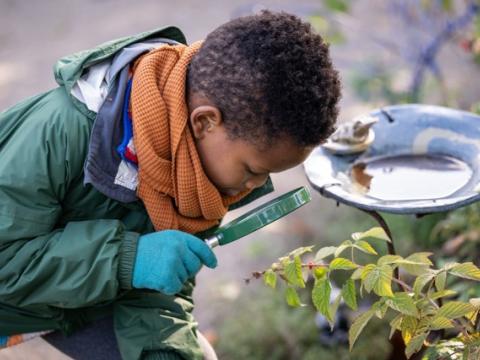
Needless to say, there are many lessons to be learned through wonder as a teacher and nature as a classroom. I encourage each of you to “take a closer look” at the beauty you see before you and to invite your kids along. I have a 6yr old at home, and we practice sit-spots from time to time. Sit-spots are an activity where you might choose a spot in nature (i.e. your backyard, garden, local park, state park, national park, sidewalk, doesn’t matter) to simply sit and observe for any length of time. What do you smell, who do you see or hear, what is happening around you? This is typically a quiet activity, and it takes time to get used to. Don’t give up after the first sit. Of course, with my 6yr old, we do about 2-3 minutes at a time, but as we do it more, that time has gotten longer. We become more aware and generate more questions. If sitting doesn’t work for you, try a silent walk.
This is the point where I leave you to welcome wonder and nature as teacher, and remember that not all teachers are human.