For over a century, beavers were absent from the waterways of southeast Michigan. Overharvested in the fur-trapping trade, they were extirpated by the mid 1800s. But in 2008, the first new sightings of beavers were reported in the area, their return made possible by gradual improvements in water quality and reduced trapping pressure. But their return has been met with varied responses. Beavers are a keystone species, meaning their presence has an outsized impact on their ecosystems. They chew down trees to dam waterways, expanding wetland habitat and increasing biodiversity. While this activity can be an ecological boon in some scenarios, in others it can cause unwanted flooding, property damage, and the destruction of valuable trees. Strategies for coexistence exist, but they aren’t currently accessible in Michigan.
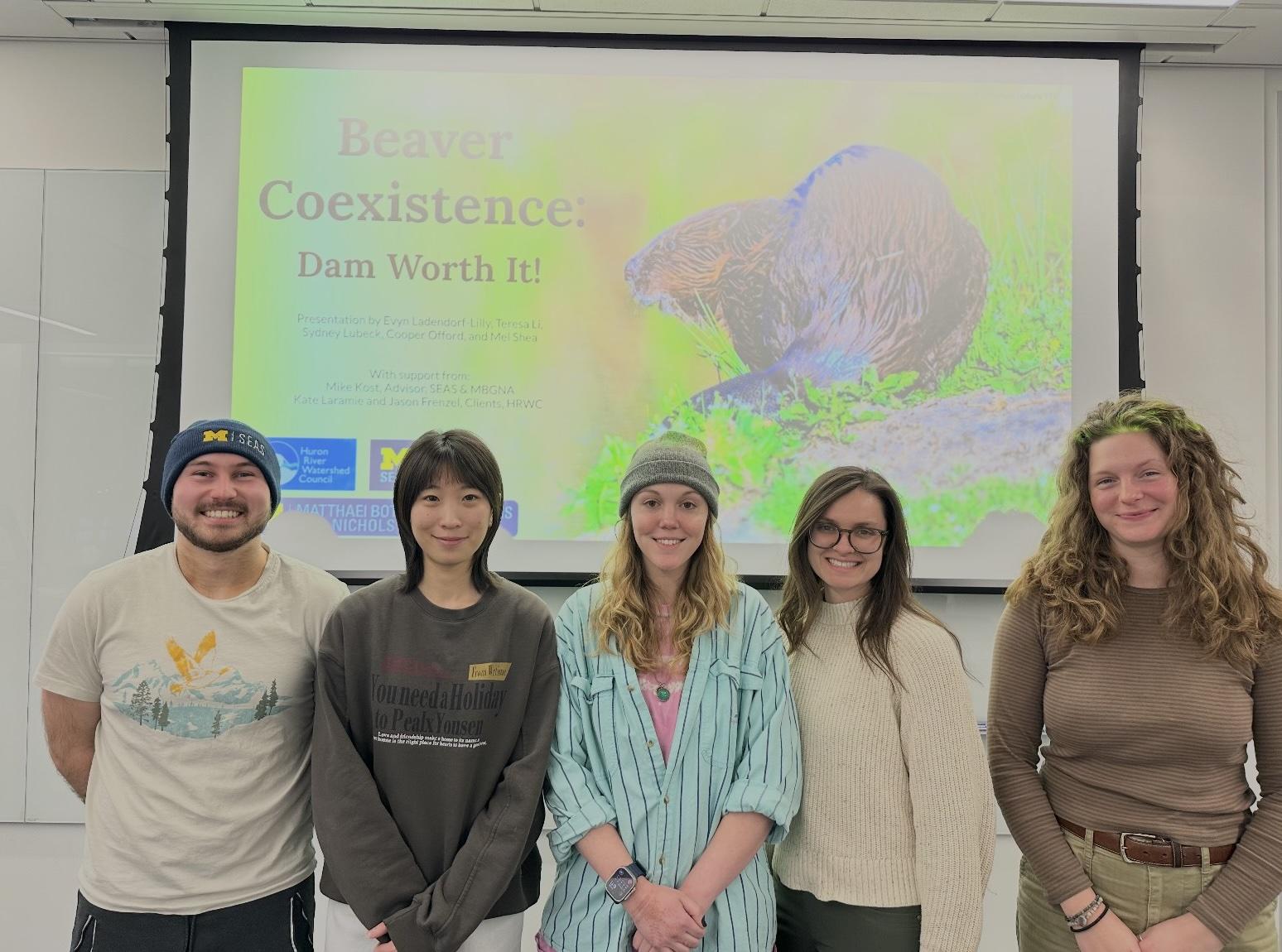
For the past 18 months, a team of master's student researchers at the School for Environment and Sustainability (SEAS) has been working to better understand how we might coexist with beavers as they return to their once-natural habitats. “Prior to colonization and the fur trade, beavers were everywhere, and every watershed was altered by them.” Evyn Ladendorf-Lilly, one of the team’s members, shares. “All of our rivers looked really different, braided streams and a lot of wetlands and marshes and flood plain forests that were entirely created by beavers. But now they don't have as much flexibility. There are a lot of constraints on their activity.” In 2023, beavers were listed as a nuisance species in Michigan, and culling is the most common management practice, but other options exist. Non-lethal strategies, such as pond-levelers and wrapping trees with copper fencing, are effective but not yet widely used or accessible. “Right now, people's only solution is lethal removal. There's no relocation allowed. The coexistence devices are really not regulated, so that's not really an option for people.” Sydney Luneck, another team member, shared.
Advised by Michael Kost, both an associate curator at MBGNA and a lecturer in SEAS, the group has produced deliverables that inform best practices for beaver coexistence and management for MBGNA and the Huron River Watershed Council, as clients. The team’s work addresses three main pillars: habitat assessment, community engagement, and policy.
Pillar One: Habitat Assessment in the Field
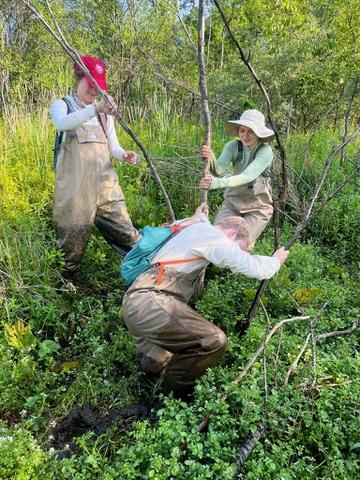
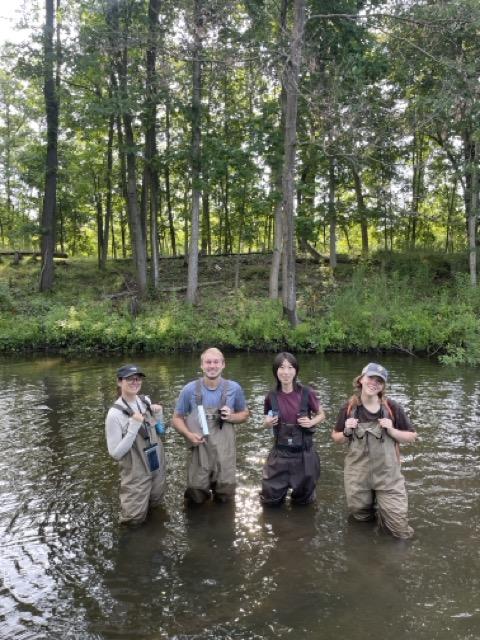
The team's work on habitat assessment focused on ground-truthing a beaver restoration assessment tool (B.R.A.T), developed by Utah State University. The team used the tool to create a model for the Huron River watershed, then field-verified it using vegetation assessments and local beaver activity data to improve its accuracy. They surveyed over 40 sites in one field season, working across private, county-, and city-owned properties. “There's a significant lack of information on what habitat suitability looks like in Ann Arbor, and where they are likely to build the dams.” Teresa Li, another team member, shares. This model could help better understand where beavers are likely to return and build dams in the Ann Arbor area. This fieldwork also revealed key areas for improvement. Notably, the LANDFIRE data, a geospatial database that classifies existing vegetation, was less than 50% accurate. Cooper Offord, another team member, noted that others working with this dataset should ensure it is ground-truthed and correct.
Pillar Two: Community Engagement
The team's community engagement work focused on better understanding the issues and perceptions surrounding beavers in the watershed and interfacing with landowners, municipal managers, and state agencies. “We were not shielded as students,” Sydney shared. “We were aware of all the political dynamics, and this work really gave us a good perspective that progress requires everybody. All opinions need to be validated and brought to the table, and be a part of the conversation.” The team attended conferences, held informational interviews, and created accessible resources about beaver ecology. “It’s really polarized right now. People have strong feelings about it, and any work involving beavers needs to be handled very carefully and consciously. It's really situational. So there's never going to be a guidebook that says for this exact situation, this is exactly what you do. There's so much nuance to it, and it can be really challenging.” Sydney shared.
Pillar Three: Policy
As the third pillar, the team conducted a policy review to determine the status of beaver regulations in Michigan. “As beavers are returning to southeastern Michigan, it's important to get an idea of how beavers are regulated so we can get proper beaver management.” Cooper shared. To figure out the current Michigan beaver policy and where it needs to be to enable coexistence strategies, the team attended informational meetings with the Michigan Department of Natural Resources (DNR) and the Michigan Department of Environment, Great Lakes, and Energy (EGLE) and conducted general research on beaver coexistence strategies across Michigan and other states. The team found significant differences in regulatory agencies' practices regarding permitting for flow devices and other coexistence strategies, as well as significant blind spots surrounding what is actually ecologically important. “We found there are so many knowledge gaps, and that no one is on the same page. We’ve framed our deliverables to fill those gaps in any way we can. With policy, nobody knows what regulations actually apply.” Evyn shared. “We’ve noticed throughout our project how little solid knowledge they're working with, which is so understandable. It’s a really recent reentry.” One coexistence tool, the pond leveler, is a pipe that goes through the dam to control water levels. It helps landowners and managers who want to keep beavers on their landscape, without flooding certain areas. It still allows for many of the ecosystem benefits of the dam, slowing flow, catching sediment, and recharging groundwater. But this tool is not easily available. “What we found is that there's no real permitting process right now.” Teresa shared.
The team identified the need for more robust public resources on beaver ecology, benefits, and non-lethal conflict resolution, and for a regulatory process that considers relocation as a management tool, which is currently not an option in Michigan.
Ecosystem Engineers: Beavers for Restoration
A better understanding of beaver ecology can assist with coexistence. Beavers are critical ecosystem players, their presence drastically altering the hydrology of an area. By building dams and creating wetlands, they increase biodiversity and improve water quality. Wetlands are critical for carbon storage, groundwater recharge, and wildfire prevention. “When we were at the Midwest Fish and Wildlife conference, everyone was talking about wetland restoration.” Evyn shared. “But nobody acknowledges that beavers were creating these rivers that were complicated and meandering, with so much spatial heterogeneity and supporting so much wildlife. There’s almost a lack of acknowledgement of the beaver's place in that history. When ecological restoration people are talking about the next steps we have to take, a lot of times they don't really acknowledge that beavers were the engineers that made that happen prior to colonization.” The team sees how the ecological contributions of beaver could positively factor into the coexistence conversation, especially when it comes to reducing eutrophication, the overenrichment of waters with nutrients, often from agricultural runoff. “If we think about beavers as a tool for restoration and a tool for mitigation, then maybe that'll force us to think more critically about coexistence. The Huron River is dumping so many nutrients into Lake Erie. And if we can limit the amount of nutrients and sedimentation that's flowing in through tributaries going into the Huron River, that would be a huge positive impact. So we've thought a lot about that, about how to measure that as a positive impact, and how to get people thinking about the ways that beavers can help reduceeutrophication.”
Mel Shea, another team member, also dispels the idea that because beavers are reappearing, their populations will expand at an unsustainable rate. “There's a really big misunderstanding that people think the beaver populations are exploding, and they're going to take over. But they have such a high mortality rate, they're not gonna explode to the degree many people think they are. The landscape is so fragmented, and they can be very territorial, so there's not necessarily that much room for them to go beyond their social tolerance.”
MBGNA: A Prime Site for Coexistence
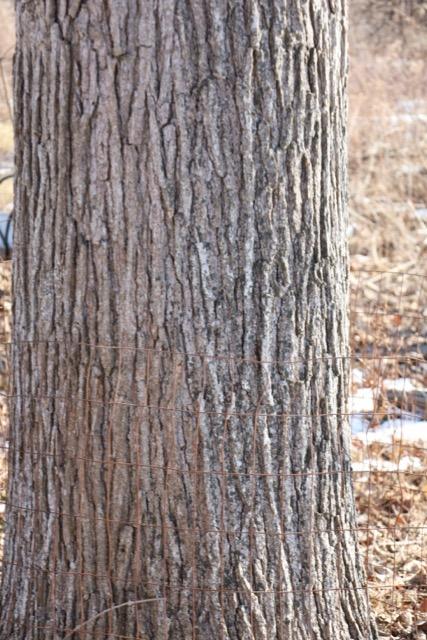
The team identified key opportunity areas for coexistence, sites with low conflict risk and large contiguous land, where cultural acceptance of beaver is possible. “Matthaei provides that perfect scenario where it is possible to actually welcome them and coexist with them and provide this example of what will ecologically happen if we attempt to coexist with them.” Evyn shared. MBGNA is also an excellent place to tangibly educate people about beaver coexistence. Sydney sees this firsthand in her concurrent work as an MBGNA docent. “Beavers are 100% the number one thing kids are excited about. It's really cute. They ask a lot of questions, and those questions intersect with many other environmental education topics. And I think moving forward, beaver are going to continue to change the way Matthaei looks. The first thing that I think about is the trails. It’s a good example of how we can coexist and accept some changes that might happen on Matthaei grounds, like a trail being moved.” Sydney explained.
Lots to Chew On
Before joining this research team, the members all knew a bit about beavers, but now they're all in. As Evyn shared, “I feel like my worldview has been so drastically changed. And not that I wasn't an absolute beaver fan before, but when I came into the program, my interest was in fish and aquatic restoration. I came in with the idea of participating in aquatic restoration. And then I basically learned there’s a little furry guy who does it for you. It's drastically changed the way I've thought about restoration, and what I think my role as a human should be in restoration.” The team hopes that others will shift how they see them, too. “I hope people can recognize that we live here because beavers were here. We only get to exist here because beavers were here. And maybe that perspective could help give some grace with some of the challenges you're going to encounter,” Sydney shared. If you have beavers on your property and are interested in keeping them there, the team has identified some tangible action steps. A first step is to reach out to EGLE to inquire about a coexistence device, demonstrating interest in making coexistence strategies more widely available. The team also supports more Michigan-specific research and the development of local and state beaver management planning.