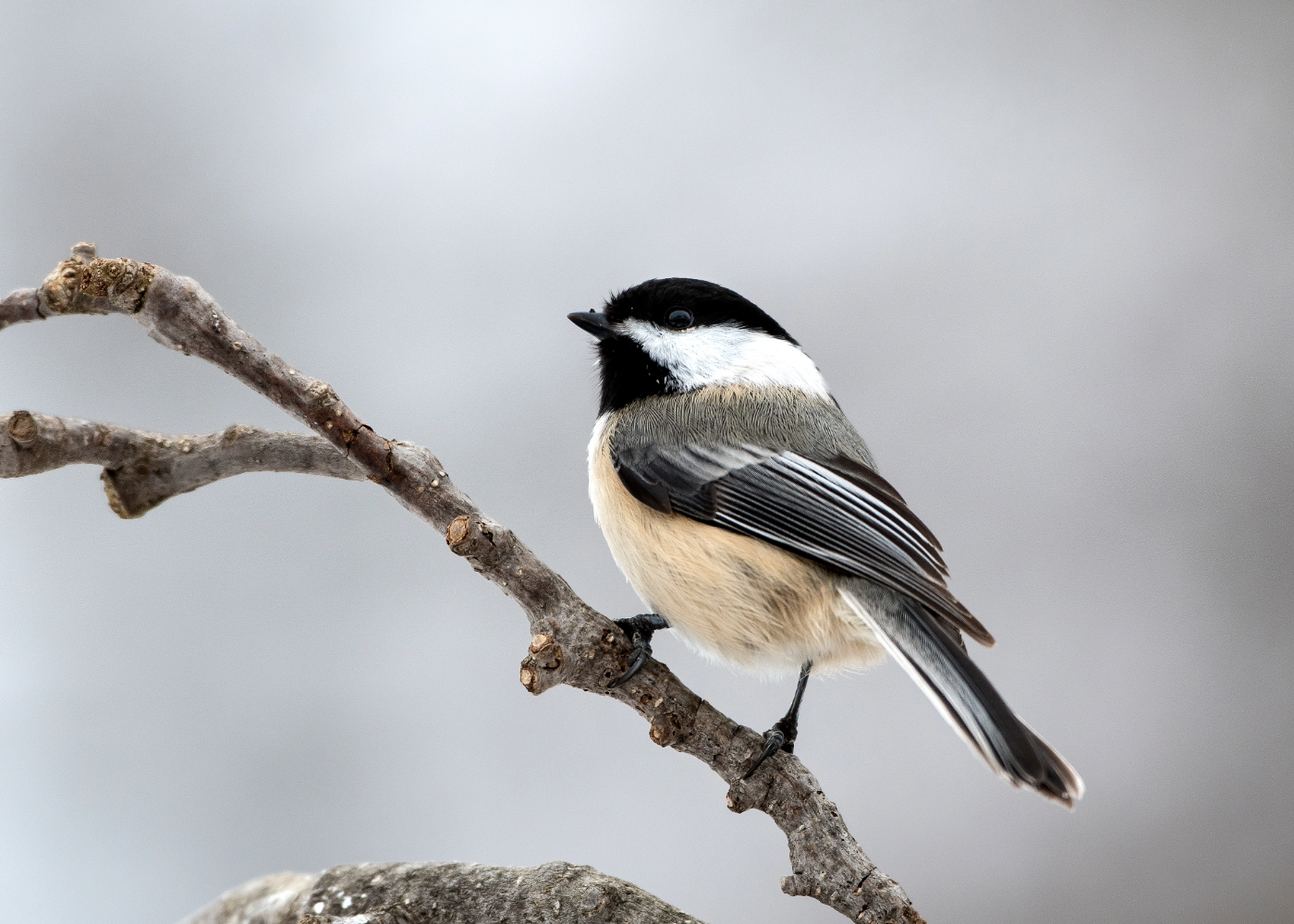
Hello, I’m Chip, one of your friendly local chickadees! Join me in exploring how my neighbors and I handle life in a winter environment. Winter may seem like a quiet time with not much activity, but this isn’t true! Many of our summer neighbors have migrated south for milder temps, but like you I’m a Michigander year-round. And we’re not the only ones. Let’s consider some of the preparations that winter requires!
Finding food becomes a lot harder for many of us in the winter due to the lack of active insects or fresh berries, and a layer of snow that may cover grass, seeds, and nuts. To prepare for winter, many animals store food. Squirrels bury nuts, beavers place tasty branches near their home to avoid venturing out in the cold, but as a chickadee I have one of the more impressive adaptations for storing food. I literally get smarter in the winter! When I hide seeds in the fall, a part of my brain (the hippocampus) actually increases in size! This bigger brain helps me remember where I put all my food so that I can re-find it.
Staying warm is another winter challenge. Many mammals, such as rabbits, will grow thicker fur coats. And have you ever seen a bird looking super fluffy in the winter? She was trying to stay warm! I fluff out my feathers to keep body heat in and the cold out. Many animals find warm shelter in an evergreen tree, an underground den, or a carved out tree cavity, and may even huddle with members of their own species for warmth and safety. And sometimes the best strategy is not to spend a lot of energy trying to stay warm and active all winter but instead go into hibernation. Groundhogs, for example, lower their body temperature and metabolism so that they do not need to eat during the cold months. Some frogs go one step further in embracing the freezing temperatures and freeze solid themselves! In the springtime they’ll thaw out safely! Isn’t nature amazing?!
Bring your curiosity and sense of wonder and come visit my neighborhood this winter! Despite the cold there is so much to discover on a winter walk. Many birds are out visiting their food storages, squirrels entertain with their antics, and a fresh coat of snow reveals the complex network of footprint activity that might have occurred during the nighttime hours. And have you ever taken the time to just admire the incredible branching network of a tree that provides home and resources to so many?? Winter is the perfect time to reflect on the incredible diversity of strategies used to thrive in our seasonal environment. Plus, the health benefits of getting outdoors are many!
The associated booklets encourage nature lovers of all ages to imagine winter from an animal’s point of view and generate interaction with the outdoors during wintertime. These activities also guide you to reflect on ways in which you handle winter weather, helping to create connection between yourself and nature during this chilly time of year. Happy exploring!
Check out the activity booklets here!
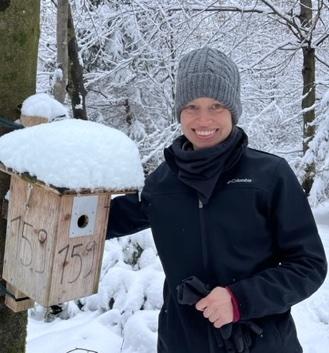
Emily Elderbrock, PhD, is a field biologist who has studied the behavior, physiology, and ecology of wild birds in places such as Ohio, Florida, North Dakota, and Germany. Like the chickadee in this activity, she’s now also a year-round resident of Ann Arbor. These winter walk booklets were created for Matthaei Botanical Gardens as part of the Michigan Conservation Stewardship Program.