As Summer bends towards Autumn, MBGNA has been enthusiastically joining our colleagues from across the University of Michigan in celebrating Climate Week: Together for Tomorrow, September 27 - October 5. This week-long series of engagements and events has been designed to catalyze campus dialogue, innovation, and collective impact, and activate a “vision of climate action that centers celebration, art, joy, and creativity through highly visible student engagement,” to accelerate climate resiliency, and create pathways to a sustainable future.
Education for sustainability is a hot topic in education and learning circles these days, and with good reason. Fortunately, there are many fantastic organizations – including MBGNA and the University of Michigan – developing curriculum for sustainability and climate resilience. As Nature Play Coordinator at MBGNA, I am frequently thinking about what sustainability learning looks like for young children and families with young children. UM’s vision for Climate Week – celebration, art, joy, creativity – places it in direct relationship to Nature Play as we practice it here at MBGNA, and more importantly, how you can engage in it at home.
Early childhood (birth through age 8) is understood to be a critical period for the development of environmental values, internalized perspectives on place, and a sense of efficacy, which may extend throughout life, and so it makes sense to support children’s identity formation as people who value and care for the environment, and to build childhood feelings of efficacy in caring for their most local places and spaces. Evidence indicates that Nature Play supports children as they develop these important identities, perspectives, and behaviors.
Sustainability learning for young children may best look like Nature Play.
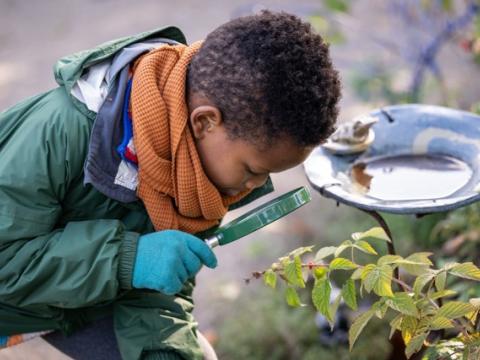
As Nature Play is generally grounded in opportunities for children to play and learn by manipulating diverse natural elements, materials, habitats, and organisms, Nature Play can facilitate an identity with biotic and abiotic elements of the local environments. Nature Play supports curiosity-driven, hands-on investigation, and balances that with a respect for the other creatures and plants which share our environments with us. Seeing oneself as a competent carer of local places – backyards, gardens, parks, schoolyards – can scaffold a sense of efficacy.
Given that both time spent in Nature during childhood and time spent with role models who care about the environment may be the two biggest factors that contribute to environmental stewardship in adulthood, we encourage you to create your own home-based Nature Play. Whether you have very young children, or older children, here are two of MBGNA’s favorite ideas for incorporating more Nature Play into your own family practices.
-
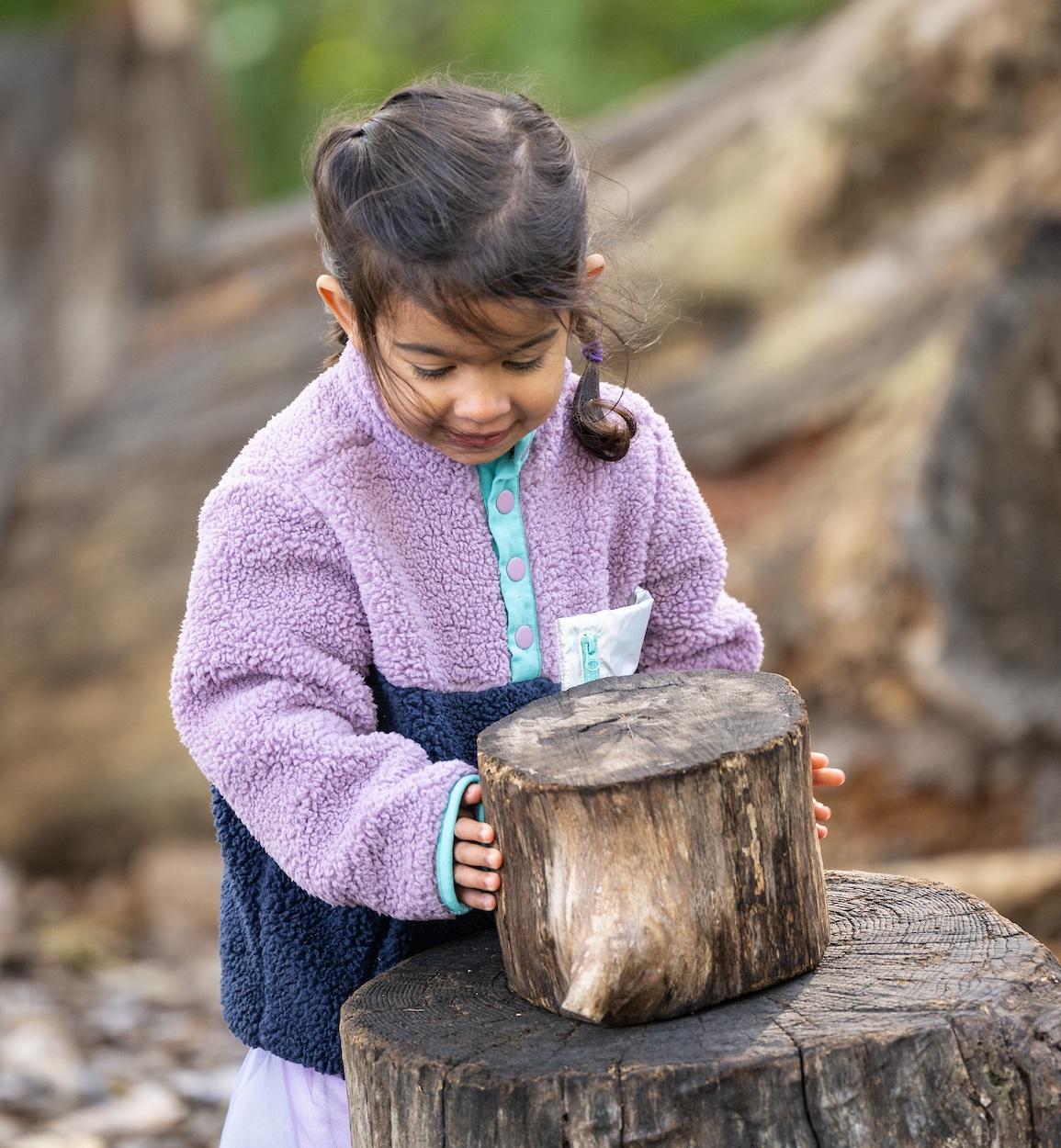
The inclusion of a dedicated space in the yard or home for creating with a foraged collection of loose parts: seed cones, twigs, pebbles, is an easy first step to increasing independent Nature Play for young children in home spaces. Playing with loose parts to create and experiment with miniature “small world” eco-systems in a sand tub can help children work through and grasp larger, abstract concepts. Learn more about Stick Gardens here!
-
Our Nature Benefit game is another easy game for families with a little older children to play together when taking a walk in the neighborhood.

Lee is a dedicated educator and horticulturist who uses her background in literacy education, sustainable garden design, and community-based initiatives to champion the importance of outdoor play at MBGNA and beyond. Her exploration of the health benefits of nature access is motivated by her belief in the transformative power of the outdoors, her affinity for diverse plant cultivations, and her love for outdoor experiences.