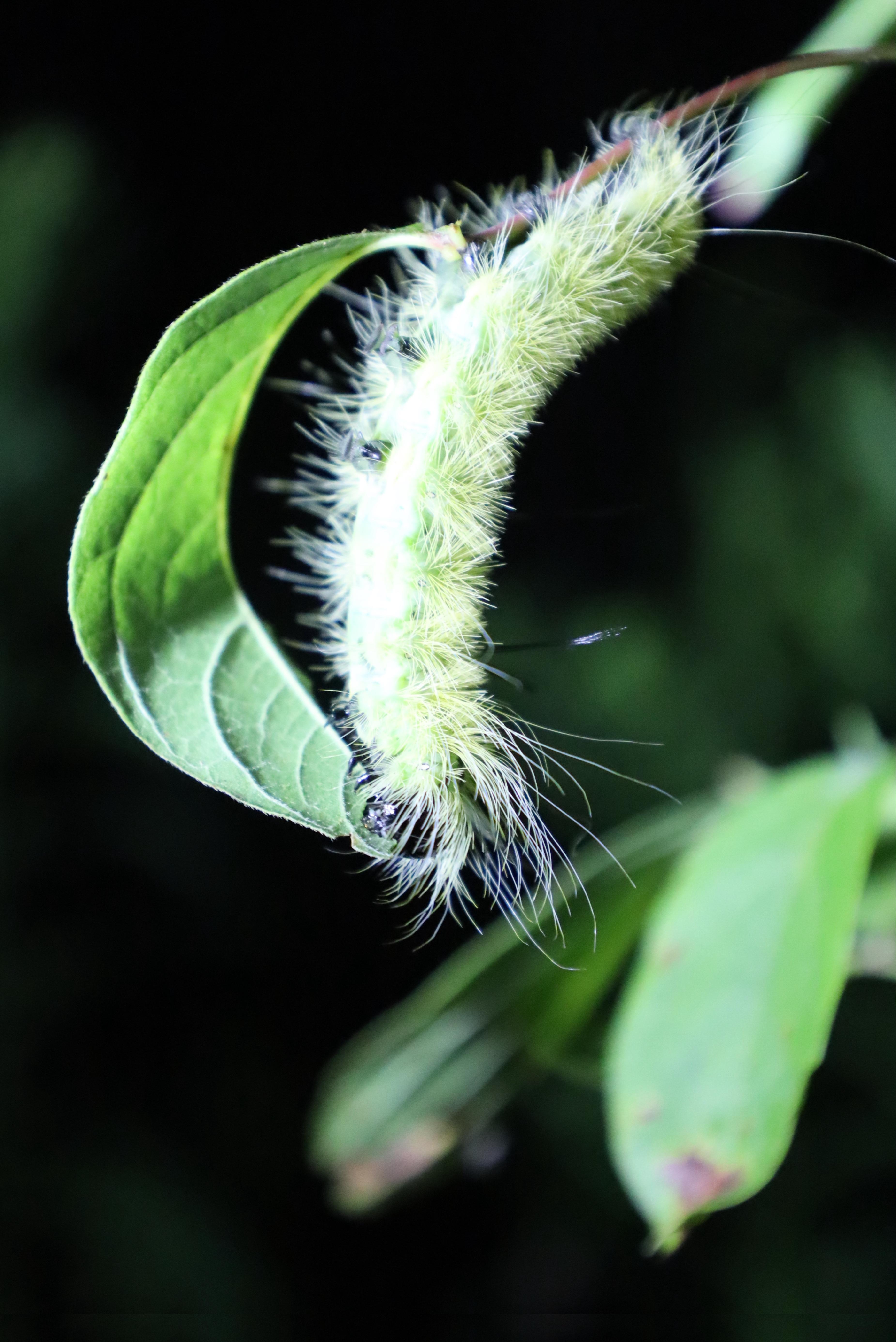
A very fuzzy American Dagger Moth Caterpillar found with a blacklight on a “wavelength” walk. https://www.inaturalist.org/observations/299701223
In the last week of July, moth enthusiasts across the country take time to appreciate the beauty, diversity, and ecological impact of these unassuming nighttime flyers. One part of the National Moth Week celebration involves community science initiatives, such as moth nights, where scientists, both trained and untrained, venture into meadows, forests, and wetlands to monitor and observe moths.
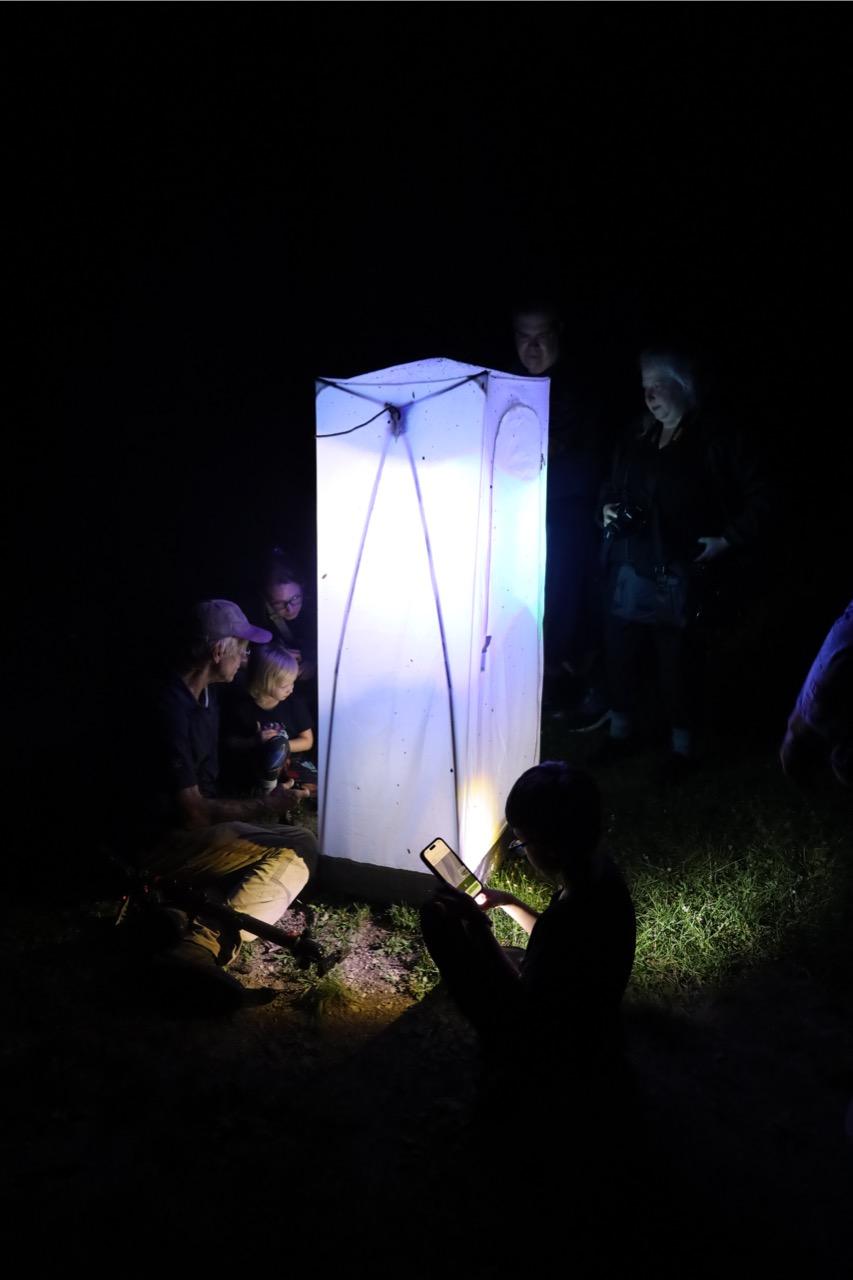
This past Saturday, MBGNA hosted its second moth night of the year, in partnership with the Washtenaw Bird & Nature Alliance (WBNA) and the University of Michigan Entomology Club and Ecological Inventory and Monitoring MS Capstone Team. Moths navigate by moonlight, and specific wavelengths attract them as they make their way through the night. At moth nights, volunteers set up white collapsible wardrobes filled with UV lights at different stations along the trails. As darkness falls, the light-filled columns become a hub of fluttering life. A whole other world, often overlooked, is revealed upon closer examination. Volunteers also bring high-quality UV lights that can be used to take a “wavelength walk,” revealing caterpillars in the vegetation that fluoresce due to certain pigments in their skin.
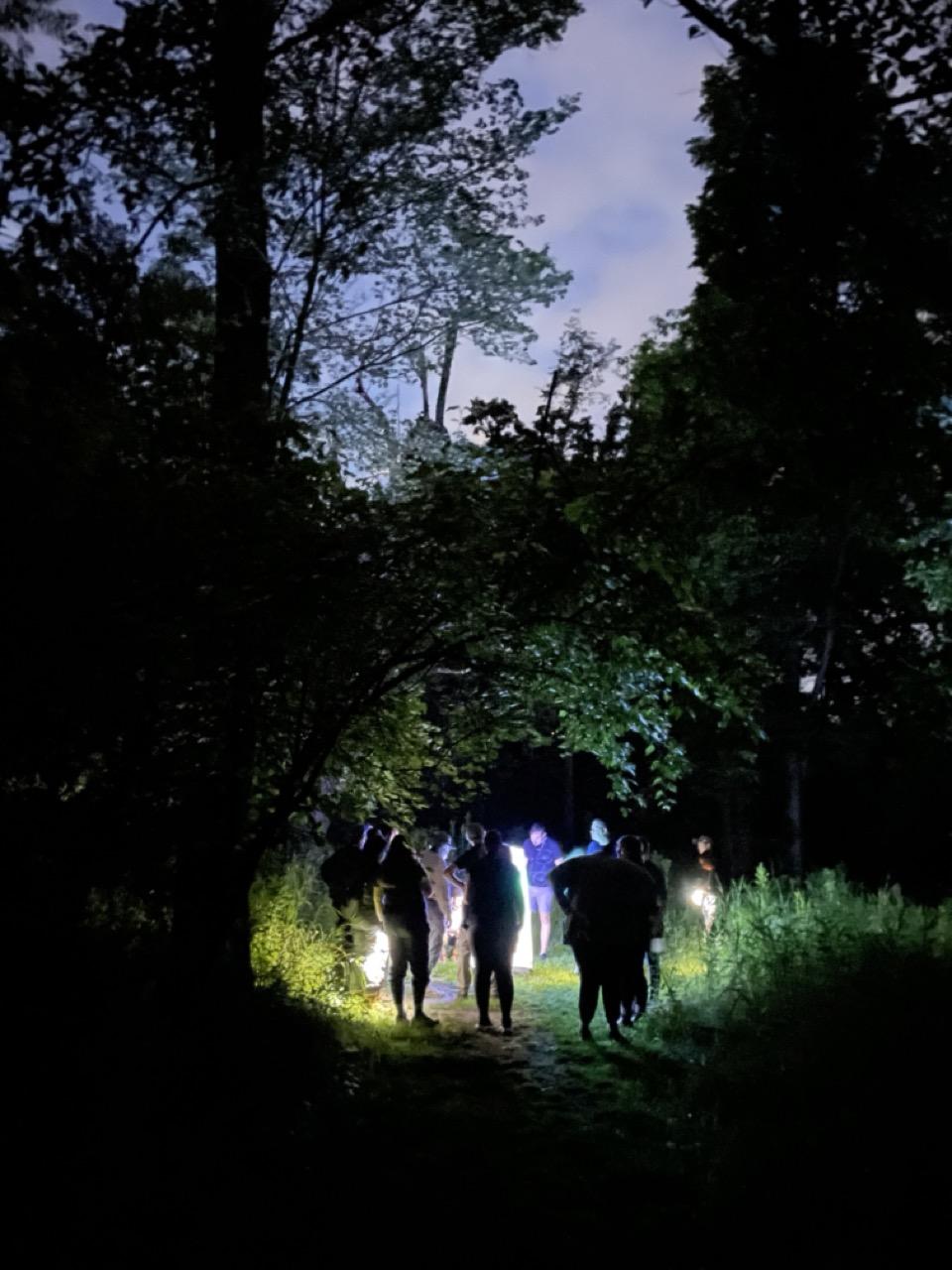
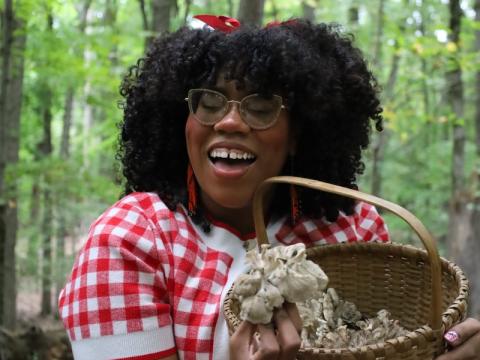
Matthew Spoor, president of WBNA, explains his commitment and excitement around these “bio-blitzes.” “First and foremost, this is an environmental education event. It's about trying to get other people excited about the natural world in some way that might make them care enough to do something.”
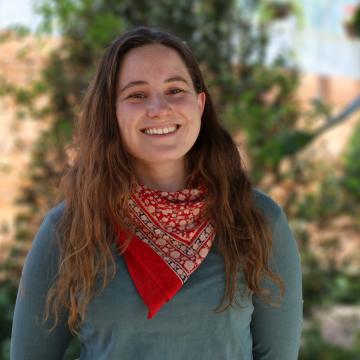
Linnea Lyons is a second-year Master's student at the University of Michigan. For her master’s project, she is conducting ecological inventory and monitoring for biodiversity conservation in partnership with MBGNA, under the guidance of MBGNA curator and SEAS faculty member Mike Kost. Lyons is focusing on monitoring Lepidoptera, the family of insects to which moths and butterflies belong, which are not well-documented at MBGNA. Lyons views moth nights as crucial for fostering a connection between humans and the natural world, particularly the insect world. “I think moths are a good starter kit to get into insects. You know, insects can look a little creepy, with their six legs and antennae. Getting comfortable with insects means that people have an inherent need to protect them.”
Using the iNaturalist app, moth night goers photograph and identify the species they observe, uploading the images to a project page where all observations live. Saturday’s moth night yielded 728 observations, and 187 species. iNaturalist is a free community science database. While its primary function for many users is species ID, the platform also catalogs these observations. Researchers then analyze these observations and identify them to the species level. An observation is deemed research-grade when two people agree on which species it belongs to.
As Lyons says, “At moth night, everyone is a scientist, whether or not you think you are, because, as you are actively using iNaturalist, you are contributing to current research that is in development, working to help conserve biodiversity at MBGNA.”
Breathtaking Not Boring
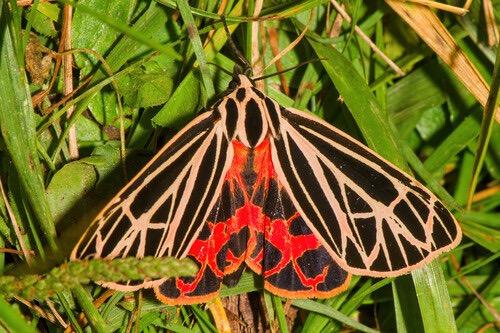
Moths can get upstaged by their butterfly relatives, but in fact, moths far outnumber butterflies and have been around longer. “There are staggeringly more moth species than there are butterfly species,” Spoor explains. “And you know, they're very closely related. They're part of the same order, Lepidoptera, but butterflies are kind of the oddballs of the family, right? They're this offshoot of this group of moths that started flying during the daytime.” And anytime you see a white flower? It's probably moth-pollinated, glowing in the moonlight as these beautiful nocturnal insects take the pollination night shift.
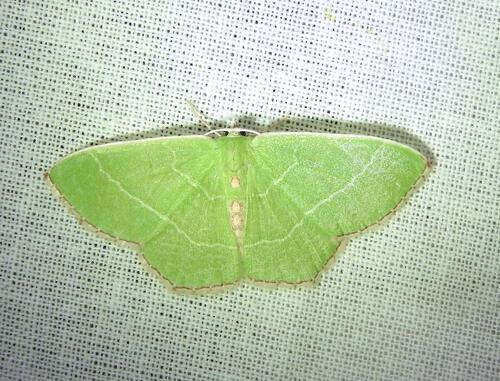
https://www.inaturalist.org/observations/299914079
Glimpsed fluttering around your porchlight or stuck inside your lamp shades, moths can appear bland at first glance. But zoom in, and there is much to admire.. “I don't think people realize until they start looking at these ho-hum moths that, when you start looking at them more closely, they're amazingly beautiful and intricate,” Spoor explains. “The colors that you see, the golds that you see, it's almost like somebody painted them with silver leaf. It's crazy.”
Pearly Pollinators
Moths aren’t just pretty. They are key ecosystem contributors, as pollinators and as a critical food source for birds. Moths are often specialists, raising their young on specific species. Look at moth names and you’ll quickly realize this, as many have their host plant in their name -- Walnut Caterpillar Moth, Verbena Moth, Burdock Seedhead Moth, Catalpa Sphinx Moth, Chickweed Geometer Moth, Bunchberry Leaffolder Moth, Hickory Leafstem Borer Moth, Cottonwood Dagger Moth, just to name a few.
The connection between plant diversity, moth diversity, and ecosystem health is clear. As Spoor explains, “On one hand, it's a very complicated ecology. However, on the other hand, it's very simple.” 96% of land birds require animal protein to raise their young. And most of that protein is from caterpillars. And those caterpillars? Mostly moths. “Moths are such an important service in raising these bird babies.” Spoor continues. “The moths need a place to have their babies, and the birds gotta have their babies. And it all goes back to - the biodiversity of native plants, right? I'm not even a plant person. I'm kind of becoming one, though. You know, I started as a bird person, but it's hard not to love plants, because it's kind of what feeds everything.”
Insect Encyclopedia
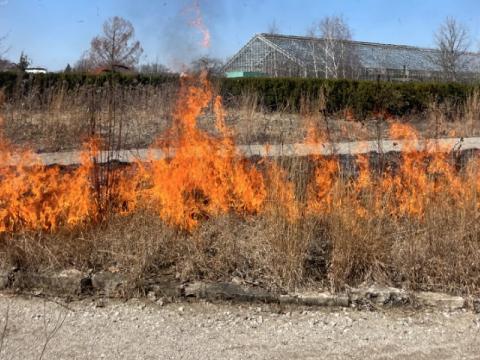
Moth nights are for fun and also for science. Mike Kost explains that the scientific applications of this work are twofold: first, having robust data about species presence can inform land management decisions. “In order to properly manage our land, we need to know what we have on our land. Because we use, for example, fire, and some insects are sensitive to fire. We have to be careful how we're burning, where we're burning, when we're burning, and how frequently we're burning.” Secondly, this data can inform future research. “As a university department, we have many researchers interested in the species we have, and they may be asking a particular question. Knowing what species we have helps them refine and tailor their research questions.”
Lyons further explains the importance of capturing a snapshot in time of the species present, as insect populations are drastically decreasing due to habitat loss and climate change. “Our environments are rapidly changing, and to keep up with these changes, it's really impactful to be able to monitor these things. Taking this inventory now for future monitoring efforts has been really rewarding to me. There will be a record of what was here in the summer of 2025, and that just makes me feel so good, because having this data can help better track if we are losing insects at a rapid pace.”
Moths at Matthaei
Matthaei is an ideal location for moths, hosting a rich diversity of habitats and plant species. “There are spots near that pond, there are spots near the river, and there are spots with prairie plants. You know, this also goes back to the plants that are there, right?” Spoor shares. “The whole point of this adult form is to breed and then lay eggs. To lay eggs, they must find a specific host plant. Finding the right plant community is really important. And that's where places like Matthaei are really important, because there is this diversity of habitat, and a lot of the areas are in really nice shape ecologically.”
As Lyons succinctly puts it, “The more biodiversity that MBGNA hosts with its plants, which it does a fantastic job of doing, the more insect populations we are likely to see.”
Plant diversity and insect diversity are intimately linked, Kost explains. “These species are essentially netted together. We know that these insects are dependent on these plants because nearly all the insects have a host plant, and sometimes they're very particular. They just have a particular group of plants, and that's all they eat, such as sedges or cherry trees -- a very small group of plants -- and they're 100% dependent on those plants. Keeping insects, like moths and butterflies, around requires maintaining their host plants.”
Get Outside!
If you want to get involved in supporting biodiversity, there are numerous ways to contribute. Spoor encourages active participation in restoration work. “It’s about restoring that biodiversity to the landscape. And without that biodiversity, none of this would be possible. But with that biodiversity, we're going to get these moths, we're going to get whatever you love, salamanders, frogs.” Don’t know where to start? Spoor maintains A2nature.org, a webpage that tracks all conservation events happening in the area.“And the beautiful thing is, you can attend one of these events and participate in a little invasive species removal, making an actual, tangible difference. The work you did will have an impact. There will be a native plant there that wasn't there before. And because of that native plant that wasn't there before, there will be some sort of insect, something, some life form that will benefit from that.”
And these impacts don’t stop with the plants and insects, with so many species dependent on one another, Kost explains. “We've lost 3 billion birds since the 1970s. Habitat loss is the number one reason, but it's also because there aren't enough insects for those birds to eat; they starve to death. You know, it's quiet. It's not like they go down screaming. They're not able to reproduce. But we can make a difference in that simply by protecting and stewarding natural areas, making sure that they're not full of invasive species, they've got their native flora, planting native plants in our yard, donating to the groups that are preserving and managing land, and volunteering to help remove non-native plants and plant native plants”.
Lyons echoes these calls to action, adding that part of this work is just slowing down to observe the natural world around us. “I just really want to encourage people to pause when they step outside, or when they are on MBGNA land, and take a moment to observe what's around them as they walk. I’d encourage people to step outside and slow down for a little bit.”
If you’re sad to have missed last night, don’t worry! There is another coming up in September. And because moths spend most of their lives as caterpillars, emerging as moths for a short span of a few days to a few weeks, there will be new species to observe and wonder at.