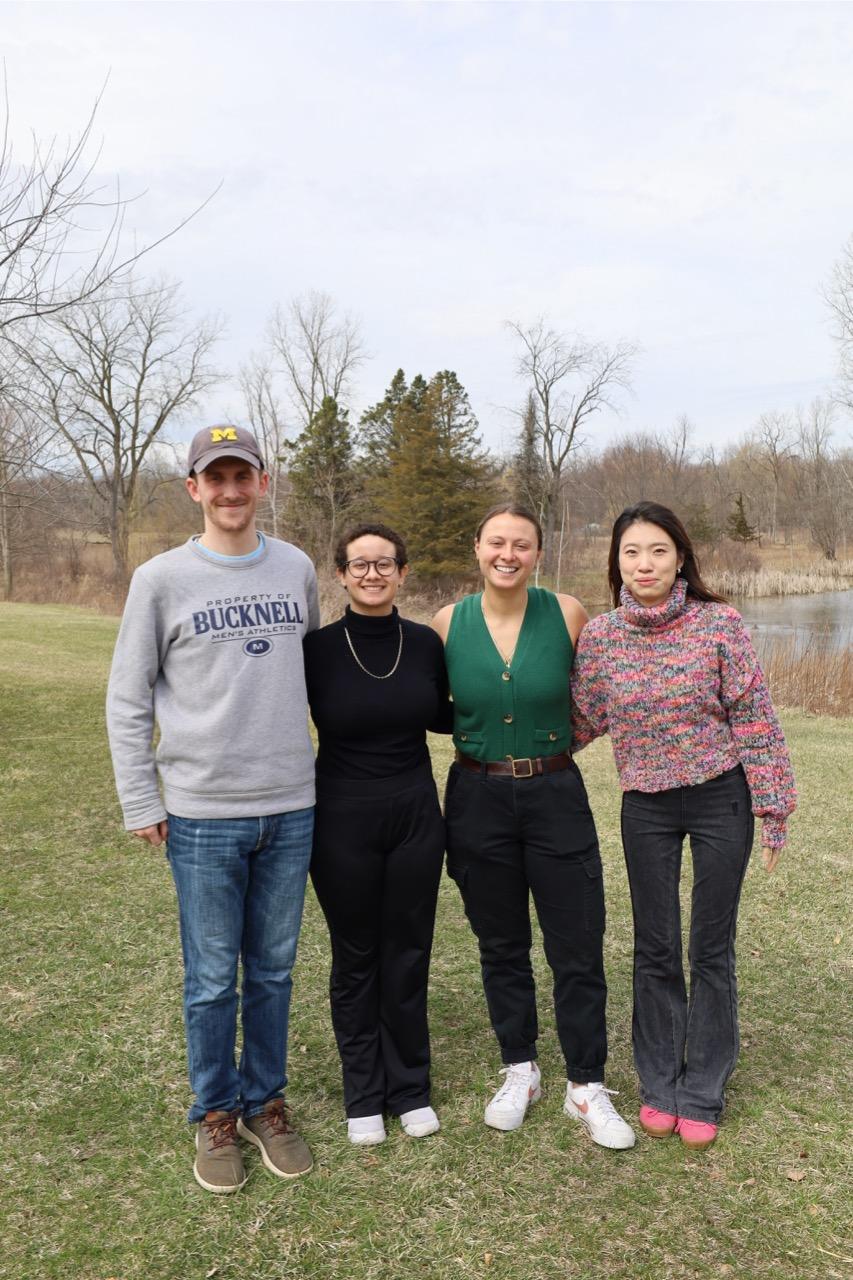
For the past 16 months, a team of SEAS researchers has been conducting ecological inventory and monitoring for MBG properties. Ally Audia, Linnea Lyons, Brendan Arnold, and Roserain Luo worked together to conduct a set of studies across MBGNA’s properties, with guidance from their faculty adviser, Mike Kost, both an associate curator at MBGNA and a lecturer in SEAS. The team focused on five areas: invasive and native species monitoring, oak regeneration, botanical surveys, and a community-engaged insect inventory. This work comprises many separate but intersecting projects that aggregate under a single umbrella of informing best practices for biodiversity stewardship.
Oak Regeneration Management at Nichols Arboretum
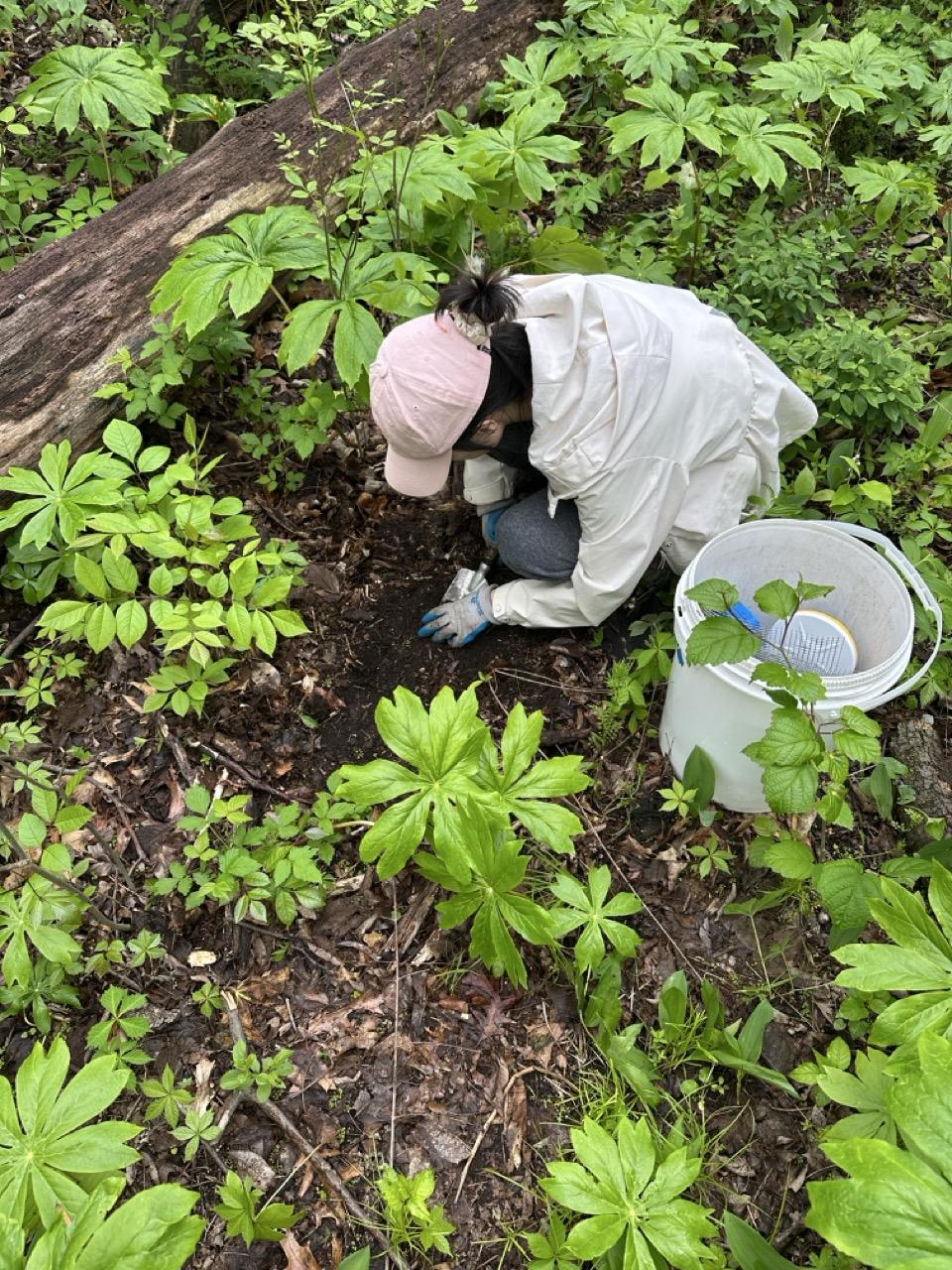
Roserain focused on limited oak regeneration within forests at Nichols Arboretum, a long-standing management challenge. Limited oak regeneration occurs when mature oaks don’t successfully regenerate. Over time, this can lead to changes in forest composition as shade-tolerant species like red maple move in. The phenomenon is an issue for many dry-mesic southern forests (oak-hickory forests), exacerbated by fire suppression and deer browse. Roserain’s efforts build on past work by Mike Kost and his interns, Grace Bianchi (2023) and Zoe Bugnaski (2024), including baseline regeneration surveys and the installation of cages to protect hundreds of planted oak seedlings. Her work this past year has refined the seedling protection strategies, informed by data from the last few years and advice from Jacueline Courteau, a visiting scholar with MBGNA. She added chicken wire and hardware cloth to protect oak seeding against deer browse and small-mammal damage, and updated the survey of existing oak seeding to track survival, growth, and browse pressure. “The key takeaway for oak generation is that failure is not driven by a single factor.” She explains. “Canopy conditions, deer browsing, and small-mammal disturbance interact in complex ways. In early establishment stages, mortality represents a key bottleneck for regeneration, and adaptive management informed by monitoring can substantially shift the regeneration outcomes.”
Non-Woody Invasive Species Management at Matthaei Botanical Gardens
Brendan worked to monitor herbaceous invasive plant species in wetlands at MBG. This work largely focused on the invasive hybrid cattail (Typha x glauca) present in wetland ecosystems at MBG. He collaborated with MBGNA’s GIS specialist, Julie Rotramel, to create high-accuracy maps to monitor cattail presence. He also ran two pilot experiments. The first builds on a 2024 study initiated by Mike Kost and Selena Smith, with intern Emily Schultheis, to better understand how mechanical removal processes, like repeat cuts, can exhaust underground rhizome resources. Another sought to determine if a mixed procedure of cutting and herbicide could be more effective than applying herbicide alone. “We have the data from two consecutive years of cutting, and it looks like it's possible to exhaust the rhizome through repeat cutting,” he shared. “One cut per year appears to have no effect. But when you repeat the cut several times per summer for two years, you start to see a decrease in the cattail. So there's a lot more research that needs to be done, but a big takeaway is that the rhizomes can be exhausted with repeated cuts. It's just a lot of work.”
Botanical Survey of Dow Field
Dow Field is a tall grass prairie ecosystem at the Arb, frequently managed by MBGNA staff and volunteers through prescribed fire. Linnea Lyons conducted botanical surveys to determine if MBGNA’s burn regime has been effective in promoting native plant biodiversity. She conducted a random sampling protocol, separating the field into distinct sampling units and assessing plant abundance and plant species composition. “Recently, the prescribed burn management has been shifting, and they need that baseline data to see, as they burn each individual unit, if biodiversity is being promoted through the process,” she shared. From the data she and her team collected, she calculated a Floristic Quality Index, or FQI score, which represents the ecological integrity of an ecosystem or place. One key takeaway is that a plot burned only in the summer had one of the highest scores. “Seeing that a summer burn plot had one of the highest FQI scores, we're wondering if summer burns are going to be more beneficial for preserving these plants and promoting biodiversity, but we just don’t know yet.” Linnea shares. Less than 1% of tallgrass still persists in the Midwest today, and prescribed fire is a critical management tool for preservation. “I’m really excited to see how Dow Field is shaped over the next few years.” Linnea shared. “Hopefully, as data continues to be gathered, and MBGNA continues to shift their management protocols, I hope that people really see the prairie for something that's super special, right? Because not everybody gets to see a prairie.”
Woody Invasive Species Management at Matthaei Botanical Gardens
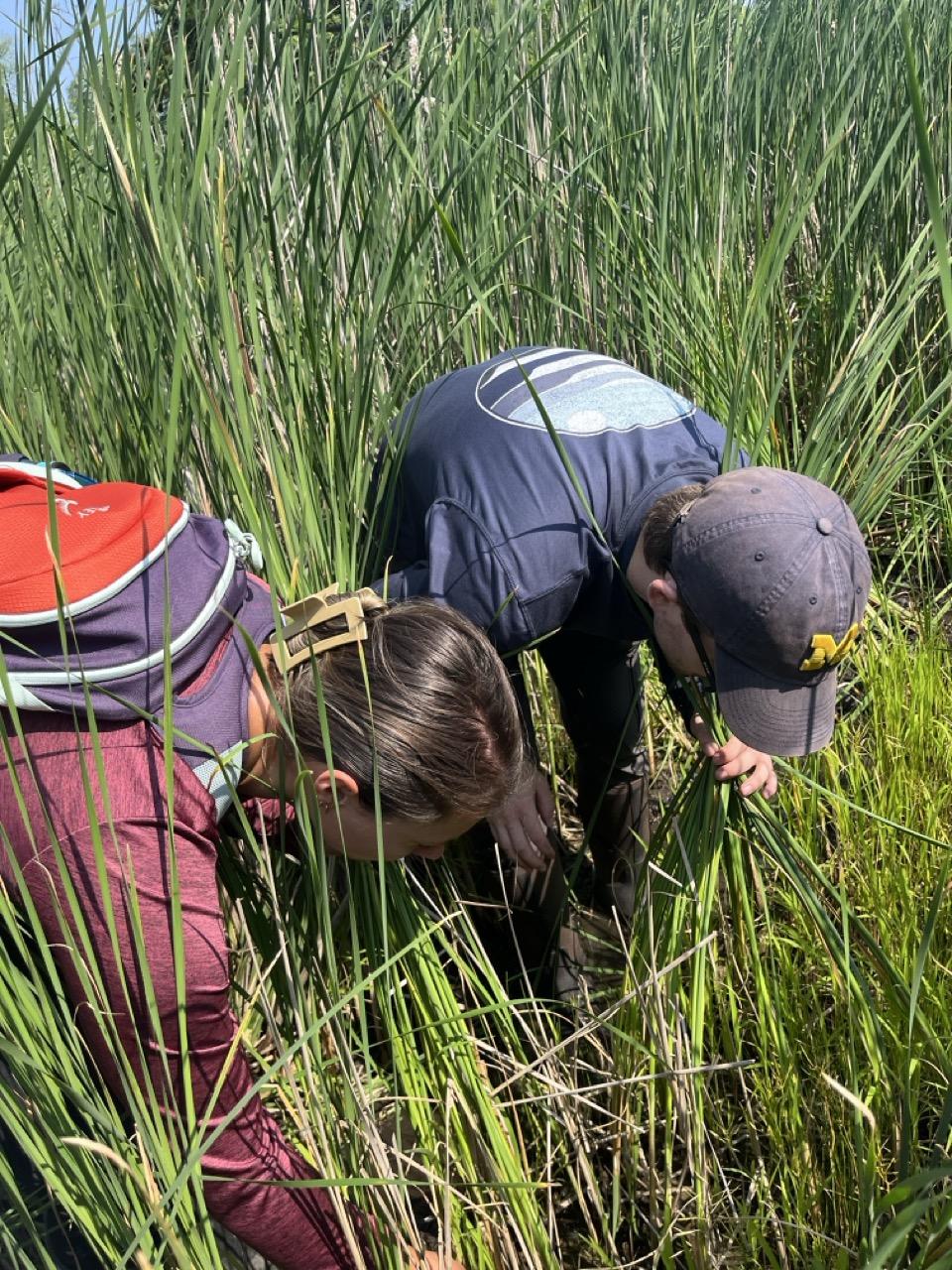
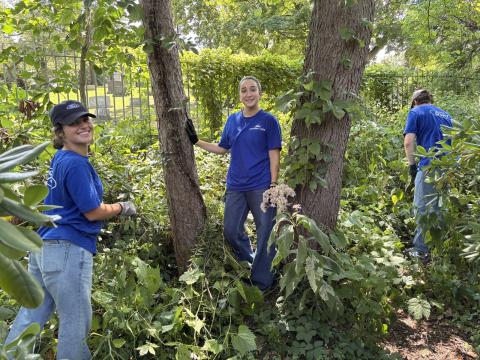
Ally focused on ecological monitoring of woody invasives in wetlands, narrowing in on common buckthorn, a pervasive invasive in SE Michigan. “There’s been a lot of management efforts at the Botanical Gardens in wetter areas for common buckthorn. And it is extremely beneficial to see if those plants are being eradicated or rebounding following management.” Her data show that buckthorn in wetland areas, such as the prairie fen, takes three to four years to reach maturity. But without the use of chemicals, it’s uncertain whether the buckthorn can be eradicated. She also monitored native woody plants along Fleming Creek to determine how they regenerate following disturbance, like after cutting as part of invasive plant control or by the resident beavers. “The beavers are starting to take down some pretty important native plants, and they usually do so in a very calculated way, where the plants grow back, they produce a recurring resource for themselves, but deer browse is a huge factor that limits their survival. The deer are eating everything the beaver cut before it can reach intermediate status.” Ally determined which plants needed to be caged to prevent deer herbivory and created an inventory of native plants along Fleming Creek in all life stages. For healthy ecological succession, it is best to have a mix of native woody plants in all of their life stages. “Right now, there are a lot of mature native woody plants along the creek, which is great. A lot of food for the beaver and crucial for butterflies and moths as well.” However, woody seedling regeneration is minimal, and there are even fewer trees and shrubs in an intermediate stage. “It seems like there is probably going to need to be human intervention in the form of protecting seedlings and resprouting native woody plants, probably in the form of caging, because the hypothesis is that deer browse is preventing the plants cut by beaver from growing back,” she shared.
Community Engaged Insect Inventory
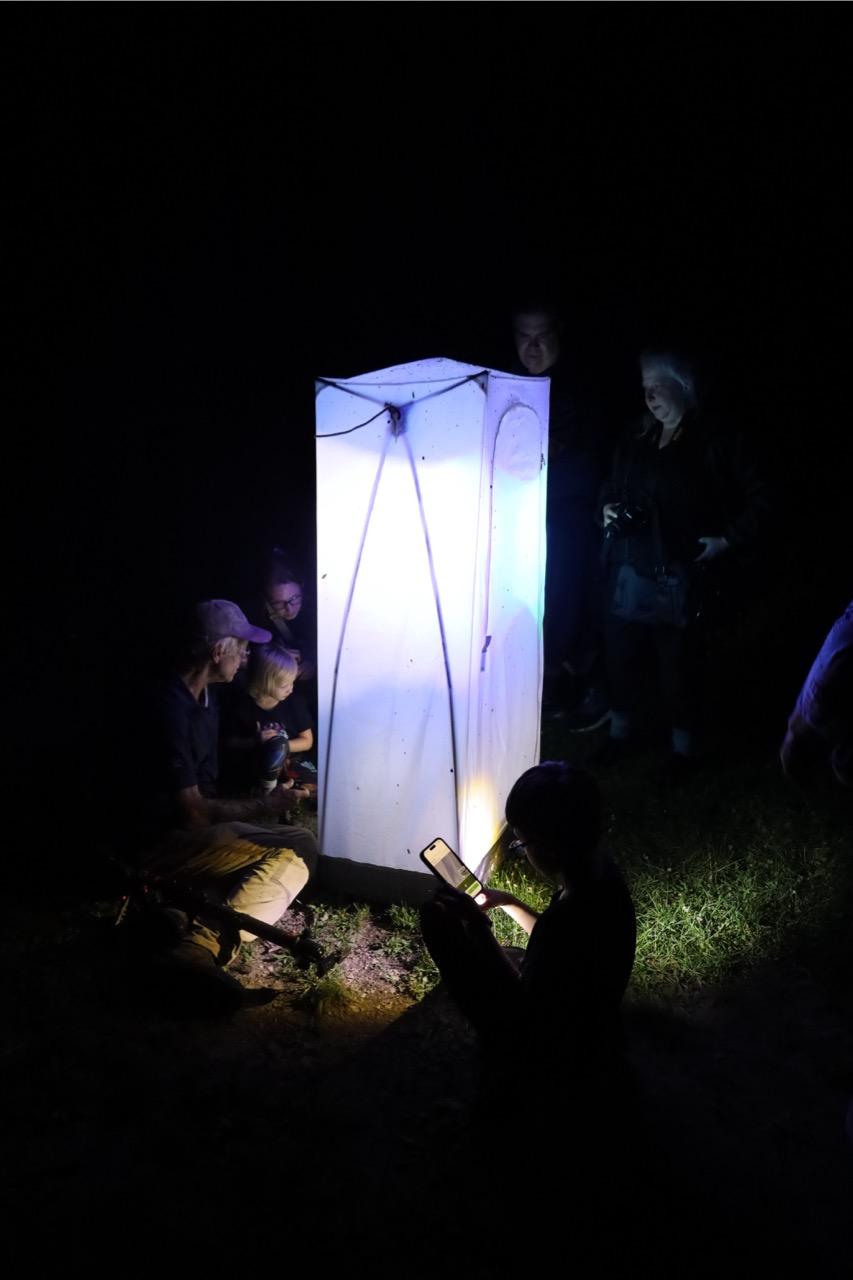
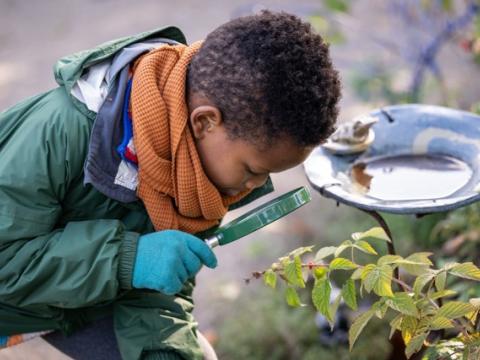
Alongside their monitoring work, the team also sought to understand which insects are present at MBGNA. Insects are essential to ecosystem functioning; they are a major food source for local wildlife, and serve as key pollinators for native plants. The team focused on butterflies and moths, the order Lepidoptera. A better understanding of which insects are showing up across MBGNA landscapes can help inform what native plants to protect and grow to support these important pollinators. The team took a community science approach to this arm of their project, working with the Washtenaw Bird & Nature Alliance (WBNA) to host moth nights and butterfly walks, inviting the public in to learn about insects, and help aggregate data through iNaturalist. “There was something very interesting about the crowd. There was every single group I could imagine.” Brendan shared. “People who are clearly new to exploring the environment came, and it was really cool to see that the moth night events clearly grabbed a new subset of people.” You can read more about Moth Nights here.
Ant Mounds in Dow Field
Lastly, the team assessed the presence of ant mounds in Dow Field, revisiting data collected by intern Elizabeth Tolrud, working with Mike Kost in 2023. “We were curious if there were any new ant mounds, or if the ones that were previously marked were still there,” Linnea explains. The team worked again with Julie Rotramel to map the ant mounds, then collected diameter and height data and recorded whether the mounds actually had ants present. They hope this work can continue after their project wraps up. “The hope is that someone will eventually pick this up, continue monitoring those ant mounds, and also collect samples of ants from each ant mound to identify the species of ants in the prairie and how those ants are contributing to the ecosystem functioning of Dow Field,” Linnea shared.
All Together Now
While the monitoring projects are distinct and spatially distributed across MBGNA lands, as a whole, they will help lay the groundwork for better management practices to promote biodiversity. “The implication of our work is to know if the management is working. You need to go back to the site and measure everything, and you need to do that for multiple years.” Brendan explains. “If management isn't working, the only way you're going to know is by taking that data repeatedly and figuring out why it’s not having its intended effect, and then figuring out how we should shift from there,” Linnea added.
Interested in doing this work yourself? Good news! Community scientists play a critical role in this work. “Everyone has a place in ecological inventory and monitoring,” Brendan shared. “No matter what your background, what your capacity is, taking a picture of something and putting it on iNaturalist matters, pulling one invasive plant matters, planting a native plant in your garden bed, as all those things matter, all those things count. So there's room for everyone. And it's a great thing for everyone to try to get involved in whatever way they can.” Brendan shared. And anyone can be a scientist. “I think sometimes a scientist is almost like a gate-kept word, like it has to be given to someone in higher education or someone who has worked in a field for a very long time,” Linnea shared. “But scientists can apply to anyone who's searching to discover, right? So that's why we tried to put an emphasis on community science. Getting the public excited is what's going to help the people and the planet,” Linnea shared.